

I have a soft spot for dinner bowls because I can make one meal feel completely different just by changing what goes on top. This Greek beef bowl is one of my favorites when I want something filling, fresh, and a little messy in the best way.
I start with seasoned ground beef and chickpeas, then build everything around creamy hummus, fluffy white rice, cool tzatziki, crunchy cucumbers, juicy tomatoes, and tangy pickled onions. It looks like a lot when everything is sitting on the counter, but most of it can be made ahead.
I also really like the chickpeas here. They stretch the beef without making the bowl feel like I am trying to save money, and they pick up all the garlic, oregano, and beefy flavor from the pan.
The first time I made this, I overcomplicated the toppings and ended up with way too many little bowls to wash. Now I keep it simple. A good hummus, homemade tzatziki, something crunchy, something tangy, and a little feta is plenty for me.
Ingredients I Used for the Recipe
- 1 tablespoon extra-virgin olive oil: I use this to coat the pan and give the beef a little extra richness.
- 1 pound lean ground beef, 93/7: I like lean beef because it still has enough fat for good flavor without leaving the bowl greasy.
- 1 teaspoon garlic powder: I add this directly to the beef for an easy savory garlic flavor.
- 1 teaspoon dried oregano: This gives the beef that familiar Greek-inspired flavor I want in every bite.
- 1 teaspoon freeze-dried dill, optional: I use this when I have it around because dill works especially well with the beef, cucumbers, and tzatziki.
- 1 15-ounce can chickpeas, drained and rinsed: I add these to stretch the beef and give the bowl a little more texture and staying power.
- Salt and black pepper, about 1/2 teaspoon each: I season the beef before it hits the pan and taste again before serving.
- Hummus, 2 to 4 tablespoons per bowl: I spread this across the bottom as the creamy base.
- White rice, about 1 scoop per bowl: I use cooked rice to make the bowl hearty and soak up all the juices and sauces.
- Tzatziki sauce, as needed: I spoon this over the finished bowl for a cool, creamy contrast.
- Pickled onions, optional: I add these for a sharp, tangy bite that cuts through the beef and hummus.
- 1 cup thinly sliced cucumber: I use cucumber for crunch and freshness.
- 1 cup cherry tomatoes, halved or quartered: These add juicy sweetness and make the bowl feel fresh instead of heavy.
- Olive oil, salt, pepper, and dill for the vegetables: I use just enough to lightly season the cucumber and tomatoes.
- Optional toppings: I like fresh lemon, parsley, fresh dill, and crumbled feta when I want to finish the bowl with a little extra brightness or creaminess.
How I Make My Greek Beef Bowls
Step 1 – Get My Bowl Components Ready
I like having the rice, hummus, tzatziki, and pickled onions ready before I cook the beef. The beef takes very little time, so stopping halfway through to make toppings is usually what turns this into a longer dinner than it needs to be.
I usually make the tzatziki and pickled onions earlier in the day or even a day ahead. The tzatziki gets better after chilling for a while, and the onions have more time to develop that sharp, tangy flavor I love.
Step 2 – Brown the Beef Properly
I heat the olive oil in a large pan over medium heat. Then I season the ground beef all over with about 1/2 teaspoon salt and 1/2 teaspoon black pepper before adding it to the pan.
This is where I used to rush. I would immediately break the beef into tiny pieces, and it cooked fine, but it never had quite the same flavor. Now I let it sit for about a minute on one side so it can actually brown.
Step 3 – Break Up the Beef and Add the Chickpeas
After the first side gets some color, I flip the beef, let the other side brown, and then break it into small crumbles with a wooden spoon. I do not worry about making every piece exactly the same size.
I add the drained chickpeas, garlic powder, and oregano, then stir everything together. I keep cooking until the beef is nicely browned and any excess liquid in the pan has cooked away.
If I am using dill, I stir it in near the end. I taste the mixture before turning off the heat because this is the easiest point to add another pinch of salt, pepper, oregano, or dill if it needs it.
Step 4 – Toss Together the Fresh Vegetables
I put the sliced cucumber and tomatoes into a bowl and give them a light drizzle of olive oil. Then I add a little salt, pepper, and dill.
I do not measure this part very carefully. I used to think I needed exact amounts for every little component, but for a bowl like this, tasting is much more useful. I want the vegetables seasoned but still crisp and fresh.
Step 5 – Build the Bowl From the Bottom Up
I start with 2 to 4 tablespoons of hummus and spread it across the bottom of the bowl. This little layer makes a big difference because every scoop gets some creamy hummus instead of leaving it sitting in one spot.
Next comes a scoop of cooked white rice, followed by a generous portion of the beef and chickpea mixture. I add the cucumber and tomatoes beside it rather than mixing everything together right away.
Then I spoon tzatziki over the top and add pickled onions. If I have feta, parsley, dill, or a lemon nearby, I finish with whichever one sounds good that day.
Step 6 – Finish With Something Bright
A squeeze of fresh lemon is probably my favorite final touch. It wakes everything up, especially if I have made a generous bowl with plenty of beef, rice, and hummus.
I serve the bowls right away while the beef and rice are warm and the vegetables and tzatziki are cool. That hot-and-cold combination is a big part of why I enjoy this meal so much.
The Little Things That Make These Bowls Better
I think the biggest difference comes from not treating every ingredient as an afterthought. The beef is important, but the bowl really works because the creamy, crunchy, juicy, tangy, and savory parts all show up together.
I especially recommend making the tzatziki early. I have eaten it right after mixing and thought it was good, then tasted it again after an hour in the refrigerator and realized how much more flavorful it had become.
I also would not skip browning the beef just because the recipe is supposed to be quick. Those extra few minutes of letting the beef sit against the hot pan give me much better flavor than constantly stirring it around.
For the rice, I usually make a batch during meal prep instead of cooking a small amount every night. Once the rice is already chilled and ready, the whole bowl comes together surprisingly fast.
The same goes for pickled onions. I like having a small container in the refrigerator because they work on these bowls, salads, sandwiches, and plenty of other meals. They bring a sharp little bite that keeps creamy ingredients from feeling too heavy.
Tips I Learned From Making These More Than Once
- I let the beef brown before breaking it apart. I get much better flavor when I give the meat a minute or two against the hot pan instead of stirring constantly.
- I season in stages. I season the beef at the beginning, add the oregano and garlic powder while it cooks, then taste at the end and adjust the salt and pepper.
- I do not overload the bowl with toppings. Hummus, rice, beef, vegetables, tzatziki, and pickled onions already give me plenty of contrast.
- I make tzatziki ahead whenever possible. I like giving it at least an hour in the refrigerator because the flavor settles and gets more developed.
- I season the cucumber and tomatoes. A tiny drizzle of olive oil, plus salt, pepper, and dill, makes them taste like part of the recipe instead of plain vegetables thrown on top.
- I use 93/7 beef when I can. I find it gives me the beefy flavor I want while keeping the finished bowl from becoming overly oily.
- I keep the chickpeas. I know they are optional, but I like the texture and how much they help stretch the beef into several satisfying bowls.
- I add lemon at the end. I find the fresh acidity especially helpful when I have been generous with hummus and tzatziki.
How I Store and Meal Prep Greek Beef Bowls
This is one of those meals I actually enjoy making ahead because the individual components hold up well. I store the cooked beef and chickpeas in a sealed container in the refrigerator for about 4 to 5 days.
I keep the cooked rice in a separate container and use it within about 5 days. Keeping it separate means I can warm only what I need instead of reheating the whole bowl every time.
I also keep the cucumbers, tomatoes, and feta separate. The vegetables stay much nicer that way, especially the cucumber, which can get watery if it sits mixed with everything else for several days.
Tzatziki and pickled onions can also be prepared ahead and kept refrigerated for several days. I like putting them into small containers so I can grab everything quickly when I am hungry and do not feel like assembling a whole production.
For meal prep, I portion the beef and chickpeas into containers, keep the rice nearby, and prepare the fresh toppings separately. When dinner rolls around, I spread hummus into a bowl, add rice and reheated beef, then finish it with the cold toppings.
That little bit of separation is worth it to me. I still get a fresh-tasting dinner even though most of the work happened earlier in the week.
I also like how flexible these Greek beef bowls are. Some nights I add extra feta and lemon. Other nights I want more cucumber and less rice. If I have fresh parsley or dill sitting in the refrigerator, I throw it on top without thinking too hard about it.
That is really the reason this recipe has stayed in my dinner rotation. I get a warm, savory beef and chickpea mixture, creamy hummus and tzatziki, crisp vegetables, chewy rice, and bright pickled onions all in one bowl. It feels like a complete meal, but I can still make it my own depending on what I have around.
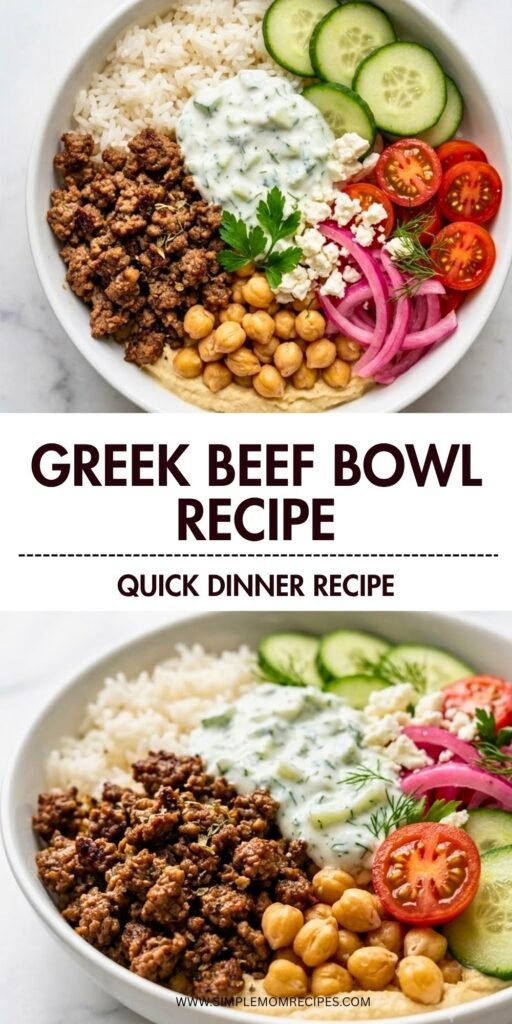
Greek Beef Bowl Recipe
Description
I layer savory Greek-seasoned beef and chickpeas with fluffy rice, creamy hummus, cool tzatziki, crisp cucumber, juicy tomatoes, and tangy pickled onions. I finish each bowl with lemon, herbs, or feta when I have them for a bright, satisfying meal that works especially well for meal prep.
ingredients
Beef and Chickpea Mixture
Bowl Components
Instructions
Prepare and Cook
Get the bowl components ready
I get the cooked rice, hummus, tzatziki, and pickled onions ready before I start the beef. I also slice the cucumber and tomatoes so everything is ready to assemble.I prefer making tzatziki and pickled onions earlier in the day or a day ahead because the flavors improve as they chill.Brown the beef
I heat the olive oil in a large skillet over medium heat. I season the ground beef with the salt and black pepper, add it to the hot pan, and let it sit for about 1 minute before breaking it apart so it can brown properly.I avoid constantly stirring the beef because letting it sit against the hot pan gives me better browning and deeper flavor.Add the chickpeas and seasonings
I turn the beef, let the other side brown, then break it into small crumbles. I add the drained chickpeas, garlic powder, and oregano and stir everything together. I keep cooking until the beef is browned and excess liquid has cooked away. If I am using dill, I stir it in near the end.I taste the mixture before turning off the heat and adjust the salt, pepper, oregano, or dill if needed.Season the vegetables
I add the sliced cucumber and tomatoes to a bowl and toss them with the olive oil, salt, pepper, and dill. I keep the seasoning light so the vegetables stay crisp and fresh.I prefer tasting the vegetables rather than measuring every seasoning precisely.Build the bowls
I spread about 3 tablespoons of hummus across the bottom of each bowl. I add about 1 cup of cooked white rice, followed by a generous portion of the warm beef and chickpea mixture. I arrange the cucumber and tomatoes beside the beef.Spreading the hummus across the bottom helps me get some creamy hummus in nearly every bite.Add the cool toppings
I spoon tzatziki over each bowl and add pickled onions. If I am using feta, parsley, or fresh dill, I scatter those over the top.I keep the vegetables and tzatziki cool while the rice and beef are warm for a nice hot-and-cold contrast.Finish and serve
I squeeze fresh lemon over the finished bowls and serve them right away while the beef and rice are warm and the vegetables and tzatziki are cool.I find lemon especially useful when I have added plenty of hummus and tzatziki because the acidity keeps the bowl tasting bright.
Nutrition Facts
Servings 4
- Amount Per Serving
- Calories 650kcal
- % Daily Value *
- Total Fat 30 gg47%
- Saturated Fat 7 gg35%
- Trans Fat 1 gg
- Cholesterol 70 mgmg24%
- Sodium 850 mgmg36%
- Potassium 850 mgmg25%
- Total Carbohydrate 65 gg22%
- Dietary Fiber 10 gg40%
- Sugars 8 gg
- Protein 36 gg72%
- Calcium 115 mg mg
- Iron 6 mg mg
* Percent Daily Values are based on a 2,000 calorie diet. Your daily value may be higher or lower depending on your calorie needs.
Note
I like making the tzatziki and pickled onions ahead because it makes assembly much faster. For meal prep, I keep the beef and chickpeas, rice, cucumber, tomatoes, feta, tzatziki, and pickled onions in separate containers. The cooked beef and chickpeas can be refrigerated for about 4 to 5 days, and cooked rice can be kept refrigerated for about 5 days. I reheat only the rice and beef I need, then add the cold toppings just before serving. Nutrition is an estimate for one bowl using the listed base ingredients and does not include optional feta, lemon, parsley, or fresh dill.

