

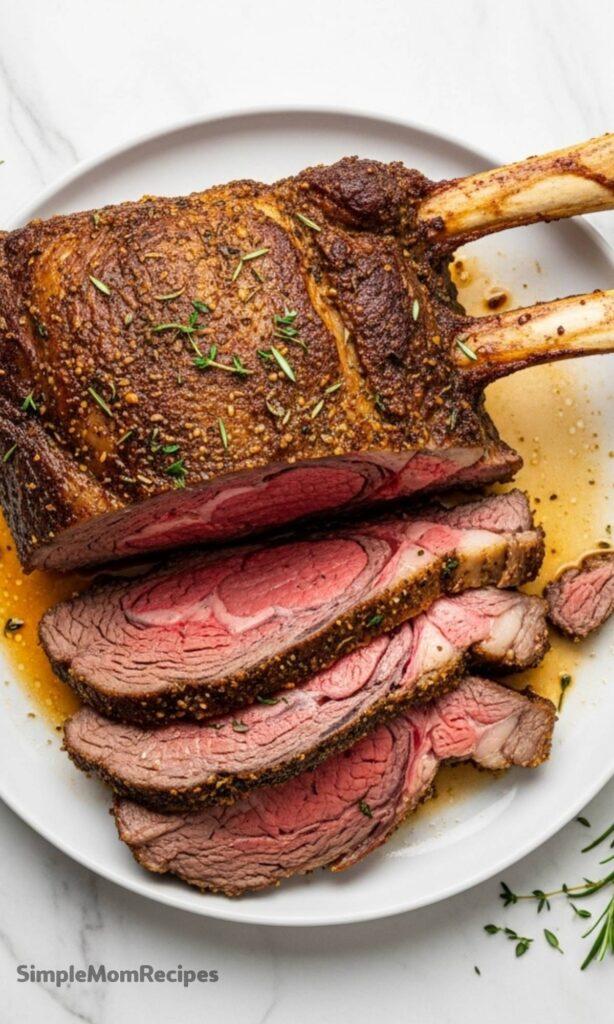
That moment you carry a perfectly cooked, bone-in prime rib to the table is pure magic. The room quiets, eyes widen, and everyone knows a feast is about to begin. It’s the undisputed champion of holiday dinners, a rich and meaty masterpiece that promises, and delivers, pure celebration on a plate.
I used to be so intimidated by the thought of cooking one, afraid of ruining such a gorgeous piece of meat. Honestly, the secret isn’t a complex ritual; it’s just a bit of planning and trusting a simple, reliable method.
Everything You Need to Know Before You Start
Before we get to the butter and herbs, let’s talk strategy. A standing rib roast, which is another name for your bone-in prime rib, comes from the upper rib section of the cow. This cut is prized for its incredible marbling, which is the key to its tenderness and flavor.
The bones themselves help conduct heat evenly and add a deep, savory richness during the long roast.
For a truly stress-free experience, have a friendly chat with your butcher. Ask them to “cut the ribs away and tie them back on” to the main roast. This brilliant trick gives you the best of both worlds: the flavor and even cooking from the bones, and the effortless carving of a boneless roast later.
Just snip the twine and slice. They might even “french” the bones, trimming them for a fancy steakhouse presentation.
Storing Your Roast Before the Big Day
Sometimes you score a beautiful roast a few days before you plan to cook it. If your butcher says it’s fresh and you’re cooking within 5-6 days, you can absolutely store it in the fridge.
Many enthusiasts even recommend letting it rest uncovered on a wire rack over a baking sheet in the coldest part of your refrigerator. This allows the surface to dry slightly, which can promote a better crust later. Just trim off any dried bits before cooking.
If you’re at all uncertain or need to store it longer, freezing is a perfectly good option. Wrap it tightly to prevent freezer burn. A slow thaw in the refrigerator for a couple of days will preserve its texture beautifully, ready for your big day.
Ingredients Needed for the Recipe
This recipe is all about highlighting the natural, beefy excellence of the prime rib, enhanced with a savory-sweet crust. Here’s what you’ll gather.
- Prime Rib Roast (Bone-In): The star of the show. A 5 to 7-pound roast is a great size for a family feast. Remember the butcher trick: have the bones removed and tied back on for easy carving.
- Salted Butter, softened: Helps the seasoning stick and contributes to a rich, golden-brown exterior as it roasts.
- The Seasoning Rub: A simple blend that creates an incredible crust. You’ll need sea salt, black pepper, minced fresh rosemary and thyme, garlic powder, onion powder, smoked paprika, and dark brown sugar. The brown sugar is a game-changer, promoting caramelization.
- High-Heat Cooking Oil: Such as canola or vegetable oil, for the final sear to create that perfect, crispy finish.
How to make Prime Rib (Bone in)?
This method uses a reverse sear: low, slow roasting followed by a quick, hot finish. It gives you unparalleled control over doneness and an unbeatable crust.

Step 1: Prepare and Season the Roast
Start by patting your roast completely dry with paper towels. A dry surface is crucial for the seasoning to adhere and for proper browning. Smear the softened salted butter all over the roast, coating every surface. In a bowl, combine all your seasoning rub ingredients. Massage this mixture generously into the meat, covering it completely. Don’t be shy—get it into every nook and cranny.
Step 2: Let the Seasoning Work Its Magic
Once seasoned, you have a choice. For good flavor, let the roast sit with the rub on for at least 30 minutes at room temperature before roasting. For truly exceptional flavor, place the uncovered roast on a rack in your refrigerator and let it rest with the rub for up to 24 hours.
This allows the salt to deeply penetrate and season the meat throughout. Before cooking, let the chilled roast sit out for about 30 minutes to take the chill off.
Step 3: The Low and Slow Roast
Preheat your oven to its lowest setting, ideally around 170°F to 200°F. Place the roast on a rack set inside a roasting pan, with the bones acting as a natural rack underneath. Roast it uncovered for several hours (about 5 to 6.5 hours for a 5-pound roast).
This gentle heat cooks the meat evenly from edge to edge without shocking it. The real guide here is a meat thermometer, not the clock.
Step 4: Check for Doneness and Rest
This is the most important step. Insert a digital meat thermometer into the very center of the roast, avoiding bone or large fat pockets. Remove the roast from the oven when it is 5-10 degrees below your final desired temperature, as it will continue to cook while resting. For a perfect medium-rare, I pull mine at 125-130°F.
Once out of the oven, loosely tent it with foil and let it rest for a full 20 to 30 minutes. This allows the frantic juices to settle back throughout the meat, ensuring every slice is juicy.
Step 5: The Final Sizzling Sear
After resting, it’s time for the grand finale. Heat your high-heat cooking oil in a large cast-iron skillet over medium-high until it shimmers. Carefully place the roast in the hot skillet and sear it for about 2 minutes on each side, turning until a deep, crispy, mahogany crust forms all over.
This quick blast of heat won’t cook the interior further but will create that irresistible texture and flavor. Slice, serve, and prepare for applause.
Tips
- Invest in a Good Thermometer. This is non-negotiable for a perfect roast. An instant-read or leave-in probe thermometer takes all the guesswork out of cooking expensive meat.
- Never Skip the Rest. Rushing to carve is the fastest way to end up with a dry roast. Letting it rest ensures the juices stay in the meat, not on your cutting board.
- Slice Against the Grain. When carving, identify the direction of the muscle fibers and slice perpendicular to them. This cuts the fibers short, making each bite incredibly tender.
- Save Every Bit. Don’t discard the bones or the delicious drippings in the pan. The bones make an incredible base for beef stock, and the drippings are liquid gold for a simple au jus or gravy.
Giving Leftovers a Brilliant Second Act
If you’re lucky enough to have leftovers, you have the start of another fantastic meal. Wrap leftover prime rib tightly and store it in the fridge for 3-4 days, or freeze it for longer storage.
The key to reheating is gentle, moist heat to prevent it from drying out. One excellent method is to warm slices in a skillet with a bit of beef broth or leftover au jus over low heat until just warmed through.
Leftover prime rib makes phenomenal sandwiches, especially a classic French Dip, or can be diced and added to a hearty steak salad or a comforting pot pie.
Serving Your Prime Rib Feast
Presentation is part of the joy. Carve the roast at the table if you can, slicing it into thick, half-inch slabs. Serve it with a selection of sauces on the side—a classic creamy horseradish sauce is almost mandatory for cutting the richness, along with a savory au jus made from the pan drippings.
For sides, think of classic, comforting flavors that complement but don’t compete. Creamy mashed potatoes or buttery roasted potatoes are perfect for sopping up juices.
Add some crisp roasted green beans or glazed carrots, and perhaps a bright, acidic salad to balance the meal. It’s a combination that never fails to satisfy.


Prime Rib Recipe (Bone in)
Description
I know how intimidating cooking a Prime Rib (bone in) can be—it’s a whole lot of meat! But I promise it’s easier than it looks. I cover my roast in a simple seasoning rub, then cook it low and slow in the oven and finish with a quick sear on the stove (for the perfect crust!). This tried-and-true method means you can better control the doneness of your meat for a juicy, tender roast every time. I never cook prime rib any other way, and neither should you!
Ingredients
Instructions
-
Pat your roast dry with clean paper towels. Then, smear the softened 3 tablespoons of salted butter all over the roast.
-
Combine 2 tablespoons sea salt, 2 teaspoons black pepper, 2 tablespoons fresh rosemary, 1 tablespoon fresh thyme, 1 tablespoon garlic powder, 1 teaspoon onion powder, 1/2 tablespoon smoked paprika, and 3 tablespoons dark brown sugar in a mixing bowl. Whisk to combine.
-
Using a spoon, sprinkle the seasoning rub, one side at a time, on the meat and rub in with your hands. (I like to evenly pile a little extra on top at the end!)
-
Let your roast sit with this rub on it for a minimum of 30 minutes, or up to 24 hours, in the fridge, uncovered.
-
Bring your meat back to room temperature before cooking by letting it sit out for 30 minutes (not longer than 1 hour). Preheat your oven to the lowest temperature it can be set to—typically 170°F (77°C). Transfer your rubbed prime rib to your roasting vessel with a roasting grate on the bottom.
-
Roast your beef *rib side down* in the oven uncovered for 5½ to 6½ hours, depending on your preferred level of doneness.
-
Remove your roast from the oven when your digital meat thermometer reads the following: Rare: 120°F (will reach 125°F while resting); Medium rare: 130°F (will reach 135°F); Medium: 135°F (will reach 140°F); Well done: 145°F or higher.
-
Remove roast from the oven and let it rest for 20 minutes before reverse searing.
-
To reverse sear the prime rib, add 2 tablespoons of high-heat cooking oil to a large cast iron skillet on medium-high heat. Once hot, add the roast and sear each side for 2 minutes (do not exceed 8 minutes total).
-
Once seared, carve and serve immediately. Alternatively, preheat oven to 500°F during resting, then roast for 15 minutes just before serving for a quick crust.
Nutrition Facts
Servings 5
- Amount Per Serving
- Calories 520kcal
- % Daily Value *
- Total Fat 37g57%
- Saturated Fat 15g75%
- Cholesterol 135mg45%
- Sodium 1220mg51%
- Potassium 620mg18%
- Total Carbohydrate 6g2%
- Sugars 5g
- Protein 42g84%
- Calcium 4 mg
- Iron 25 mg
* Percent Daily Values are based on a 2,000 calorie diet. Your daily value may be higher or lower depending on your calorie needs.
Note
- Roast fat side up for self-basting. The bones act as a rack and help with even cooking.
- Always use a meat thermometer. It’s the only reliable way to get your desired doneness.
- Don’t cover your roast while cooking—air circulation helps form a better crust.
- Save bones and drippings to make beef stock or au jus.
- Marinate overnight for deeper flavor and tenderizing.