

Fresh vegetables hit a hot pan, a quick squeeze of lemon cuts through the steam, and suddenly this simple pasta feels way more alive than it should.
I don’t measure olive oil anymore. I just tilt the bottle and hope for the best. That’s how this started tonight. Pan already heating, vegetables half chopped, and me realizing I forgot to salt the pasta water until it was already boiling. Not ideal, but I kept going.
Pasta primavera always sounds fancy, but honestly it’s just vegetables doing most of the work. No heavy sauce to hide behind. Which means if I mess something up, I taste it immediately. I’ve burned zucchini before. I’ve overcooked carrots into something weirdly sweet and soft. It happens. Still edible though, which is kind of the beauty of this dish.
Also, I don’t stand over the stove sautéing everything anymore. I got tired of it. Roasting the vegetables on a sheet pan feels like cheating in the best way. They get those slightly crisp edges without me babysitting them, and I can deal with the pasta without panic.
A quick moment before cooking started
I stood in front of the fridge longer than I’d like to admit. Half a bell pepper, one zucchini going soft, carrots that needed using. This dish is basically my excuse to clean out vegetables before they give up completely.
I almost added cream. Thought about it for a second. Then I remembered how heavy that gets and backed off. Lemon and olive oil do enough here. They don’t fight the vegetables, they just kind of nudge everything forward.
Ingredients I Used for the Recipe
- 12 oz short pasta – I used farfalle because it grabs bits of vegetables nicely
- 2 zucchini – sliced into half moons for quick roasting
- 2 carrots – cut into thin sticks so they cook faster
- 1 red bell pepper – for sweetness and color
- 1 yellow bell pepper – because I had half left from yesterday
- 1 small red onion – sliced thin, it softens and gets slightly sweet
- 3 garlic cloves – minced, I always add extra
- 1 tablespoon dried oregano – gives that herby base
- 1 teaspoon fresh thyme – optional but worth it
- Salt and black pepper – I adjust this at the end too
- 3 tablespoons olive oil – probably more, I don’t track it closely
- 1 cup grape tomatoes – halved, added later for freshness
- Zest of 1 lemon – this changes everything
- 1/2 cup grated parmesan – salty and sharp finish
- Reserved pasta water – just a splash to loosen things up
How to make Pasta Primavera?
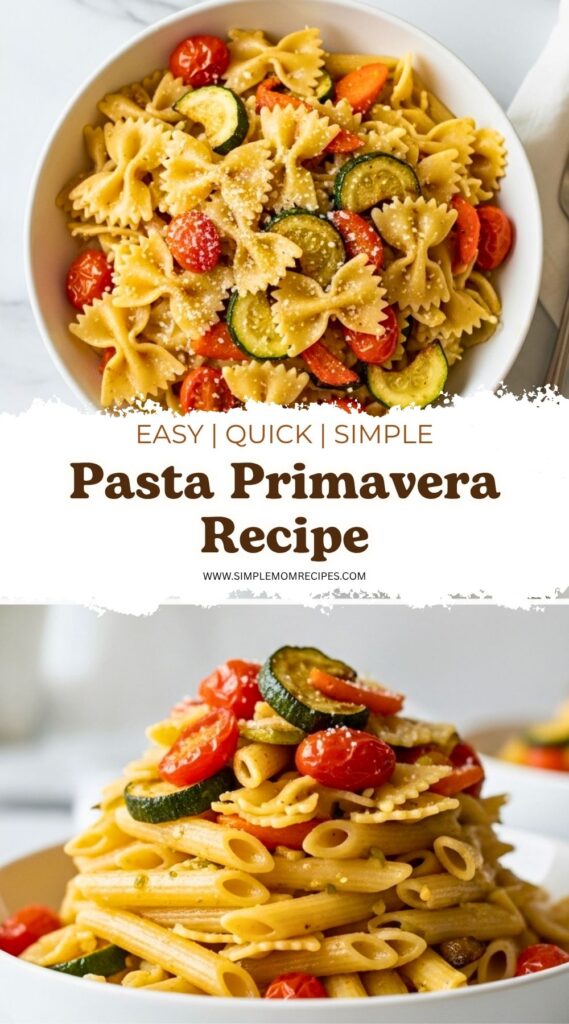
Step 1 – Get the oven and water going
I preheat the oven to 220°C. At the same time, I bring a big pot of water to boil. I forget the salt sometimes, but try not to. It matters more than I used to think.
Step 2 – Chop everything, not perfectly
I cut the vegetables while the oven heats. Some pieces end up thicker than others. I used to stress about uniform cuts. Now I don’t. The thinner ones get crisp, the thicker ones stay soft. That mix is actually nice.
Step 3 – Toss and season
I throw the zucchini, carrots, peppers, and onion into a bowl. Add garlic, oregano, thyme, salt, pepper, and olive oil. I mix with my hands because spoons don’t coat everything properly. It’s messy but faster.
Step 4 – Roast without overthinking
Spread everything on a sheet pan. One layer matters. If they overlap too much, they steam instead of roast. I’ve made that mistake enough times.
Roast for about 20 minutes. I stir once halfway but sometimes forget and it still works out.
Step 5 – Cook the pasta
While the vegetables are roasting, I cook the pasta. I stop it just before fully done. Slight bite left. I save a cup of the pasta water before draining. I used to skip that step and regret it every time.
Step 6 – Bring it all together
In a big bowl, I combine pasta, roasted vegetables, tomatoes, and lemon zest. Add a splash of pasta water and a little more olive oil.
I toss everything. Sometimes too aggressively and things break apart. It’s fine.
Step 7 – Finish with cheese and taste
Parmesan goes in last. I taste and adjust salt. Sometimes I add more lemon. Depends on how bright I want it.
Something that almost ruined it
I nearly left the vegetables in too long. Got distracted scrolling something on my phone. When I opened the oven, the edges were darker than planned. Not burnt, but close.
I almost panicked. Then I tasted one. It was actually better. Slightly smoky, sweeter. That’s when I stopped aiming for “perfectly cooked” vegetables. A little extra color adds depth you don’t get otherwise.
Texture, smell, and the part I notice every time
The smell hits first. Garlic and oregano, but softer because of the roasting. Not sharp like a pan fry. Then the lemon cuts through everything right at the end. It’s subtle but noticeable.
Texture is where this dish wins or loses. I want contrast. Soft pasta, slightly crisp vegetables, juicy tomatoes that almost burst when you bite them. If everything turns soft, it’s just… dull.
I also like when some pieces stick slightly to the pan and get those browned edges. I scrape those off and mix them in. That’s flavor right there.
Tips
- Don’t overcrowd the sheet pan. Use two if needed. It makes a real difference.
- Cut carrots thinner than the rest. They take longer otherwise.
- Save your pasta water. Even a small splash helps the sauce come together.
- Add lemon at the end, not during cooking. It stays brighter that way.
- Taste before adding extra salt. Parmesan already brings saltiness.
- If vegetables start burning too fast, just lower the oven slightly. No need to restart anything.
- Use whatever vegetables you have. This dish doesn’t care about rules.
I make this when I don’t want to think too much but still want something that feels like a real meal. It’s forgiving. It lets me mess up a little and still end up with something good.
And every time, I tweak something without planning to. Less garlic one day, more lemon the next. It never comes out exactly the same, which is probably why I keep making it.
Also, I still pour olive oil without measuring. That part isn’t changing.

Pasta Primavera Recipe
Description
This vibrant Sheet Pan Pasta Primavera swaps heavy cream for a light, lemony finish that lets the roasted seasonal vegetables shine. By roasting zucchini, peppers, carrots, and onions at high heat, you unlock a deep caramelized sweetness that sautéing just can't match. It’s an easy, healthy, and mostly hands-off vegetarian dinner ready in just 40 minutes.
Ingredients
Roasted Vegetables
Pasta & Finish
Instructions
Prep and Preheat
Preheat your oven to 450°F (230°C). Bring a large pot of generously salted water to a boil.Season the Vegetables
In a large mixing bowl, combine the zucchini, yellow squash, carrots, bell peppers, and red onion. Add the minced garlic, dried oregano, fresh thyme, a generous pinch of kosher salt, and black pepper. Drizzle with about 3 tablespoons of extra virgin olive oil. Toss well until all vegetables are evenly coated.Roast the Veggies
Spread the vegetables in a single layer on a large sheet pan (use two pans if necessary to avoid overcrowding). Roast on the middle rack for 10 minutes. Remove from oven, stir/toss the vegetables, and spread them out again. Return to oven and roast for another 10-12 minutes, or until tender and edges are beginning to brown and caramelize.Cook the Pasta
While the vegetables are roasting, add the pasta to the boiling water. Cook according to package directions until al dente (usually 10-12 minutes). Before draining, reserve about 1 cup of the starchy pasta cooking water. Drain the pasta.Combine and Serve
Transfer the drained pasta to a large serving bowl. Add the roasted vegetables, halved grape tomatoes, and lemon zest. Pour in a splash of the reserved pasta water and a drizzle of extra virgin olive oil. Toss gently to combine, adding more pasta water if needed to create a light sauce. Season with additional salt, pepper, oregano, or thyme if desired. Serve immediately topped with grated parmesan cheese.
Nutrition Facts
Servings 6
- Amount Per Serving
- Calories 420kcal
- % Daily Value *
- Total Fat 12g19%
- Saturated Fat 2.5g13%
- Cholesterol 5mg2%
- Sodium 380mg16%
- Potassium 680mg20%
- Total Carbohydrate 65g22%
- Dietary Fiber 6g24%
- Sugars 9g
- Protein 14g29%
* Percent Daily Values are based on a 2,000 calorie diet. Your daily value may be higher or lower depending on your calorie needs.
Note
Leftovers: Allow the pasta to cool completely, then cover tightly and refrigerate for up to 4 days. Reheat gently with a splash of water or enjoy cold as a pasta salad. Variations: Swap in broccoli, green beans, or asparagus. For protein, add grilled chicken or shrimp.

