

One thing I appreciate about halibut is its texture. It’s firm enough that it doesn’t fall apart the second you touch it with a fork, but once you take a bite, it flakes beautifully. That’s honestly my favorite part. It feels hearty without being heavy.
I usually end up making this after busy days when I’m too tired for anything complicated. Sometimes I’ll roast chopped potatoes beside the fish. Other times it’s just a crisp green salad with a squeeze of lemon. Either way, dinner comes together without leaving me with a sink full of dishes.
Ingredients I Used for the Recipe
- 2 pounds halibut, cut into 4 fillets – The star of the meal. Firm, flaky, and naturally mild.
- 1/4 cup Dijon mustard – Gives the fish a gentle tang and creates a flavorful coating.
- 2 garlic cloves, minced – Adds savory flavor without overpowering the halibut.
- 4 tablespoons butter, one tablespoon per fillet – Melts over the fish and keeps everything moist while baking.
- 2 teaspoons salt, or to taste – Brings out the natural flavor of the fish.
- Freshly cracked black pepper – Adds a little warmth and balance.
- Fresh chopped dill or tarragon – Sprinkled on top before serving for freshness.
- Lemon wedges – Served alongside to brighten every bite.
I don’t usually add much beyond this list. Every now and then I’ll throw a few potato wedges onto the baking sheet because they roast beautifully in the same amount of time. It’s an easy side that doesn’t require another pan.
How to Make Baked Halibut with Dijon Mustard
Step 1 – Heat the Oven
Preheat your oven to 450 degrees. I like letting the oven fully heat before the fish goes in because that quick blast of heat helps the halibut cook evenly without drying out.
Step 2 – Mix the Dijon Coating
Stir together the Dijon mustard and minced garlic in a small bowl until everything is well combined. It takes less than a minute, but this mixture carries almost all the flavor in the recipe.
Step 3 – Coat the Fish
Spread the mustard mixture evenly over each halibut fillet. Season generously with salt and freshly cracked pepper, then place one tablespoon of butter right on top of every piece.
I usually let the fish sit while the oven finishes heating. Those few extra minutes seem to help everything settle together.
Step 4 – Bake the Halibut
Place the fillets skin side down in a cast iron skillet or on a sheet pan. Position the rack near the top of the oven and bake for about 10 to 12 minutes.
The exact cooking time depends on the thickness of the fish. I always start checking around the ten minute mark instead of blindly following the clock.
Step 5 – Finish Under the Broiler
Switch the oven to broil and cook for another 2 to 3 minutes. This gives the Dijon topping a little color and creates a slightly richer flavor.
I never walk away during this part. Broilers move fast, and what looks perfect one minute can become burned the next.
Step 6 – Add the Finishing Touches
Scatter chopped dill or tarragon over the fish and serve with fresh lemon wedges. A squeeze of lemon right before eating wakes everything up.
If I’m serving guests, this is usually when everyone starts asking what smells so good. It’s funny because the ingredient list is incredibly short.
A Few Things I’ve Learned After Making It Again and Again
I used to think fish had to be covered with sauces to stay interesting. After cooking halibut this way, I changed my mind. Good ingredients really don’t need much help.
One mistake I made early on was overcooking it. I figured another five minutes wouldn’t hurt. It absolutely did. Halibut stays juicy only when you stop cooking it at the right moment.
Now I trust the fish instead of the timer. Once it flakes easily with a fork and still looks moist inside, I pull it from the oven. Residual heat finishes the job.
I also stopped buying tiny fillets whenever I could. Slightly thicker pieces stay much juicier, especially during the broiling step.
This recipe has become part of some really nice evenings around my table. There’s something relaxing about pulling a skillet out of the oven, pouring a cold glass of white wine, and sitting outside while dinner is still steaming. Those meals usually end with everyone lingering a little longer than expected.
When I want to stretch the meal, roasted potatoes are usually my first choice. Since the oven is already hot, it feels wasteful not to throw them in. A green salad also works well when I want dinner to stay lighter.
Leftovers are surprisingly good too. I flake the cold halibut into a salad the next day with a squeeze of lemon and a little olive oil. It’s one of those lunches that feels far nicer than the amount of work it took.
Tips
- Choose halibut fillets that are similar in thickness so they cook evenly.
- Pat the fish dry before adding the mustard mixture.
- Don’t skip the butter. It helps keep the fish tender.
- Watch carefully while broiling because the topping browns quickly.
- Use fresh lemon instead of bottled juice for the brightest flavor.
- Fresh dill and tarragon both work well, so use whichever you enjoy more.
- If serving potatoes, cut them into small pieces so they finish roasting alongside the fish.
- A simple green salad makes an easy side without adding extra cooking.
- Check the fish early rather than late. Overcooked halibut loses its wonderful texture.
- Serve immediately while the butter and mustard sauce are still warm.
One thing I really appreciate about this recipe is how dependable it is. I don’t need fancy techniques or a long shopping list. I just need good fish and a handful of ingredients I usually already have sitting in my kitchen.
Whenever someone tells me they’re nervous about cooking seafood, this is often the recipe I recommend first. It’s forgiving, straightforward, and rewarding. Even if you’ve never cooked halibut before, this is the kind of meal that gives you confidence after the very first try.
Sometimes the simplest dinners end up becoming the ones I remember most. This baked halibut with Dijon mustard is exactly that kind of recipe. It’s fresh, comforting, and easy enough for a weeknight while still feeling special enough to serve when friends stop by. I keep coming back to it because it never asks me to do too much, yet it always delivers a meal that feels worth sitting down and slowing down for.
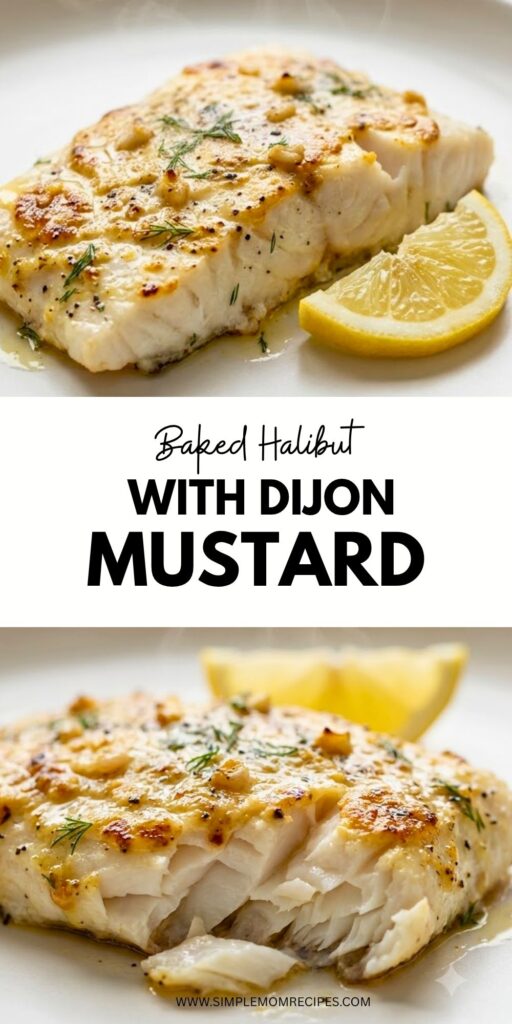
Baked Halibut with Dijon Mustard Recipe
Description
This baked halibut with Dijon mustard is an easy seafood dinner that's packed with fresh flavor without requiring a long list of ingredients. Flaky halibut fillets are coated with a simple Dijon and garlic mixture, topped with butter, then baked until perfectly tender before being briefly broiled for a lightly golden finish. Fresh herbs and lemon complete this elegant meal that's quick enough for busy weeknights yet impressive enough for guests.
Ingredients
Instructions
- Preheat the oven to 230°C (450°F). Allow it to fully heat before baking.
- In a small bowl, combine the Dijon mustard and minced garlic until smooth.
- Pat the halibut fillets dry and place them skin-side down on a baking sheet or cast iron skillet.
- Spread the Dijon mixture evenly over each fillet. Season with salt and black pepper.
- Top each fillet with one tablespoon of butter.
- Bake near the top oven rack for 10 to 12 minutes, depending on the thickness of the fish.
- Switch the oven to broil and cook for another 2 to 3 minutes until the Dijon topping becomes lightly golden.Watch carefully to prevent burning.
- Remove from the oven, sprinkle with chopped dill or tarragon, rest for 3 minutes, and serve with fresh lemon wedges.
Nutrition Facts
Servings 4
- Amount Per Serving
- Calories 365kcal
- % Daily Value *
- Total Fat 18 gg28%
- Saturated Fat 8 gg40%
- Trans Fat 0 gg
- Cholesterol 118 mgmg40%
- Sodium 760 mgmg32%
- Potassium 890 mgmg26%
- Total Carbohydrate 2 gg1%
- Dietary Fiber 0 gg0%
- Sugars 1 gg
- Protein 46 gg92%
- Calcium 3% mg
- Iron 8% mg
* Percent Daily Values are based on a 2,000 calorie diet. Your daily value may be higher or lower depending on your calorie needs.
Note
- Choose evenly sized fillets: They cook more consistently.
- Pat the fish dry: This helps the Dijon coating stick better.
- Don't skip the butter: It keeps the halibut moist while baking.
- Watch closely while broiling: The topping browns very quickly.
- Serve immediately: Fresh lemon and herbs provide the best flavor when added just before serving.

