

I love the point in fall when I start buying apple cider almost without thinking about it. I’ll pour a glass, heat some for breakfast, and then somehow end up with half a jug sitting in my refrigerator. That is usually when I make this apple cider doughnut loaf cake.
This cake has the cozy flavor I want from an apple cider doughnut, but I get to bake it in one loaf pan instead of dealing with a pot of hot oil and a whole afternoon of frying. The outside gets brushed with buttery cider and covered in cinnamon sugar, while the inside stays soft, tender, and warmly spiced.
The part I really like is the reduced cider. I used to think reducing cider was an annoying extra step, but I changed my mind after making this cake. It concentrates the apple flavor so much that the finished loaf actually tastes like an apple cider doughnut instead of just a cinnamon cake with a little cider mixed in.
I also like that I can bake it ahead. A loaf like this is dangerous in my kitchen, though. I tell myself I’ll save it for breakfast, then I cut one little evening slice, and suddenly I’m standing at the counter cutting another one.
A Loaf Cake That Finally Tastes Like an Apple Cider Doughnut
I wanted the flavor to be obvious here, not subtle. Apple cider should be the first thing I notice, followed by cinnamon, nutmeg, butter, and that sugary doughnut-like coating.
Reducing the cider does most of the heavy lifting. I start with 1 1/2 cups of cider and simmer it until I have about 3/4 cup. I divide that reduced cider because some goes into the batter, some gets soaked into the warm cake, and the last little bit gets mixed with butter for the coating.
That three-part use of the cider is what makes this loaf special to me. I get apple flavor inside the cake and right on the surface instead of having all the cider flavor disappear into the batter.
The batter itself is fairly thin, so I don’t panic when it looks looser than a typical quick bread batter. Once it bakes, it turns into a soft cake with a close, tender crumb that holds together beautifully when sliced.
I use a regular 8 1/2 x 4 1/2-inch loaf pan when I have one, although a 9 x 5-inch pan works too. I always line it with parchment with enough overhang to lift the cake out later. That little step makes the coating process much less frustrating.
Ingredients I Used for the Recipe
- 1 1/2 cups apple cider: I reduce this to concentrate the apple flavor. I reserve the reduced cider in portions for the batter, soaking, and final coating.
- 8 tablespoons unsalted butter: I melt most of it for the cake because it gives the loaf a rich, soft texture. I use the remaining 1 tablespoon for the buttery cider coating.
- 1 1/4 cups plus 2 tablespoons all-purpose flour: I use this as the main structure for the loaf. I can replace up to 1/2 cup with whole wheat flour when I want a slightly heartier crumb.
- 2 tablespoons cornstarch: I add this to keep the crumb light and tender rather than heavy.
- 1 1/4 teaspoons baking powder: I use this for lift. I prefer the full 1 1/4 teaspoons because that is the amount that works best with the recipe as written.
- 1/2 teaspoon baking soda: I use a small amount to help the cake rise and balance the acidic sour cream.
- 1/2 teaspoon Morton kosher salt: I use the smaller Morton amount because kosher salt brands have different crystal sizes, and I don’t want the salt to overpower the cider and spices.
- 2 large eggs, room temperature: I use these to give the cake structure and help create a smooth, cohesive batter.
- 3/4 cup granulated sugar: I whisk this with the eggs to sweeten the cake and help give the crumb its soft texture.
- 1/2 cup sour cream: I stir this into the cooled reduced cider for moisture and a tender crumb. Buttermilk also works if that is what I have.
- 1 teaspoon vanilla extract: I add this to round out the apple, butter, and spice flavors.
- 1/2 teaspoon ground cinnamon: I mix this into the cake for that familiar cider doughnut warmth.
- 1/4 teaspoon ground nutmeg: I use just enough to make the cinnamon taste deeper without making the loaf taste overly spiced.
- 1/4 cup granulated sugar: I use this for the cinnamon-sugar coating.
- 1/2 teaspoon ground cinnamon: I mix this with the sugar for the topping.
- 1/4 teaspoon ground nutmeg: I add this to the topping because I love catching that little nutmeg note on the crust.
- A generous pinch of kosher salt: I add this to the cinnamon-sugar topping so the sweetness tastes balanced.
How to Make Apple Cider Doughnut Loaf Cake?
Step 1 – Make the Cinnamon-Sugar Topping
I start with the topping because it takes almost no time and I like having it ready before the cake comes out of the oven.
I mix 1/4 cup sugar, 1/2 teaspoon cinnamon, 1/4 teaspoon nutmeg, and a generous pinch of kosher salt in a small bowl. I set it aside while I make the loaf.
Step 2 – Reduce the Apple Cider
I pour 1 1/2 cups apple cider into a medium saucepan and bring it to a boil over medium-high heat. Once it starts boiling, I lower the heat and let it simmer until it reduces by about half.
For me, this usually takes around 8 to 10 minutes. I’m looking for about 3/4 cup of concentrated cider. I measure out 4 tablespoons and set that aside for later.
I let the remaining reduced cider cool for about five minutes, then stir in the sour cream and vanilla. I set that mixture aside too.
Step 3 – Melt the Butter
I melt 8 tablespoons of unsalted butter in the same saucepan over low heat. I don’t want it aggressively hot, so I take it off the heat once it has melted and let it cool slightly.
I keep the saucepan nearby because I’ll use it again for the final buttery cider coating. One less pan to wash always feels like a win.
Step 4 – Mix the Dry Ingredients
In a medium bowl, I whisk together the flour, cornstarch, baking powder, baking soda, salt, cinnamon, and nutmeg.
I take an extra few seconds here to break up any little lumps. I don’t want to overmix the finished batter, so getting the dry ingredients evenly combined now makes the next part easier.
Step 5 – Whisk the Eggs and Sugar
I put the eggs and 3/4 cup sugar into a large bowl and whisk them vigorously for about two minutes. I’m looking for a pale, slightly frothy mixture.
Then I slowly pour in the melted butter while whisking constantly. I learned not to dump the butter in all at once. A slow stream gives me a smoother mixture and keeps little pools of butter from hanging around on the surface.
Step 6 – Finish the Batter
I add the dry ingredients in three additions, alternating them with the sour cream and cider mixture. I start and finish with the dry ingredients.
I whisk only until I no longer see dry flour or obvious lumps. The batter is thin, and that is completely fine. I don’t keep stirring it just because it doesn’t look like a traditional thick loaf batter.
Step 7 – Bake the Loaf
I heat my oven to 325°F and lightly butter an 8 1/2 x 4 1/2-inch or 9 x 5-inch loaf pan. I line it with parchment, leaving some overhang on the long sides.
I scrape the batter into the pan and set the pan on a rimmed baking sheet. I bake it for about 60 to 80 minutes, rotating the pan halfway through.
I start checking around the 60-minute mark because ovens can be wildly different. When a toothpick inserted into the center comes out clean, I know I’m close.
Step 8 – Soak the Warm Cake
As soon as the loaf comes out, I poke holes all over the top with a toothpick. Then I spoon 3 tablespoons of the reserved reduced cider over the warm cake.
I let it sit in the pan for about 10 minutes. I don’t rush this part because the warm cake needs a little time to absorb the cider.
Step 9 – Brush and Sugar the Loaf
I melt the remaining tablespoon of butter in the reserved saucepan and mix it with the last tablespoon of reduced cider.
I use the parchment overhang to lift the loaf onto a wire rack set over a baking sheet. Then I brush the warm butter-cider mixture over the top and sides.
Right away, I coat the loaf generously with the cinnamon-sugar mixture. I usually tilt and rotate the loaf carefully so I can cover the sides too. The baking sheet underneath catches all the extra sugar, which saves me from having it scattered across the counter.
I let the loaf cool completely before slicing. This is probably the hardest step for me because the smell is ridiculous at this point, but the texture is much better when I give it time to settle.
Tips I Learned From Making This Loaf
- Don’t skip reducing the cider. I know it adds another step, but it gives the cake a much stronger apple flavor.
- Watch the salt. I pay attention to whether I’m using Morton or Diamond Crystal kosher salt because the measurements are not interchangeable by volume.
- Keep the cider divided. I measure the reserved portions immediately so I don’t accidentally use too much in the batter and have none left for soaking or coating.
- Don’t overmix the batter. Once the flour disappears, I stop whisking. I get a softer loaf that way.
- Start checking the cake early. My oven may need a different amount of time than yours, so I use the toothpick test instead of blindly following the clock.
- Use parchment with overhang. I find this especially helpful when coating the loaf because I can lift and rotate the cake without trying to pry it out of the pan.
- Coat the cake while it is warm. The butter-cider mixture sticks much better while the loaf is still warm.
- Don’t be shy with the cinnamon sugar. I cover the top and sides generously. That crust is a big part of what makes the loaf taste like a cider doughnut.
- Try whole wheat carefully. I can replace up to 1/2 cup of the all-purpose flour with whole wheat flour, but I keep the rest of the flour unchanged so the cake stays tender.
- Buttermilk works too. When I don’t have sour cream, I can use buttermilk instead. I still get a moist cake with a pleasant tang.
- A neutral oil can replace the butter in the cake. I prefer butter for the flavor, but a neutral oil works when I want to keep things simple.
- Give the finished loaf time to cool. I know it is tempting to slice immediately, but the crumb sets as it cools and the slices hold together much better.
How I Like to Serve It
I usually slice this loaf a little thicker than I would a regular cake. The cinnamon-sugar coating gives each slice enough flavor that I don’t need frosting or a glaze.
For breakfast, I like it with coffee. In the afternoon, I’m perfectly happy with a slice by itself. In the evening, a mug of warm apple cider next to it makes the whole thing feel especially cozy.
I also think this is one of those cakes that gets better as the days go by. I wrap it tightly and keep it at room temperature, then slice it whenever I want something sweet. I’ve kept it for several days this way without a problem.
If I’m making it for a gathering, I like baking it the day before. That takes some pressure off because I’m not trying to bake, cool, coat, and serve a cake all at once. The next day, I can just unwrap it, slice it, and put it on a plate.
And if I have extra cinnamon sugar left over, I don’t throw it away. I save it for toast, oatmeal, or the next batch of muffins. Once I have a little jar of that cinnamon-nutmeg mixture sitting around, I start finding excuses to use it.
This apple cider doughnut loaf cake has become the kind of fall bake I reach for when I want something familiar but a little more special than plain quick bread. It takes a few extra steps, mostly because of the cider reduction and the finishing coat, but I think those steps are worth it.
I get a tender buttery cake, concentrated apple flavor, warm cinnamon and nutmeg, and that sweet crackly coating that makes every slice feel like a cider doughnut without actually making doughnuts. That is exactly what I want from a fall loaf.
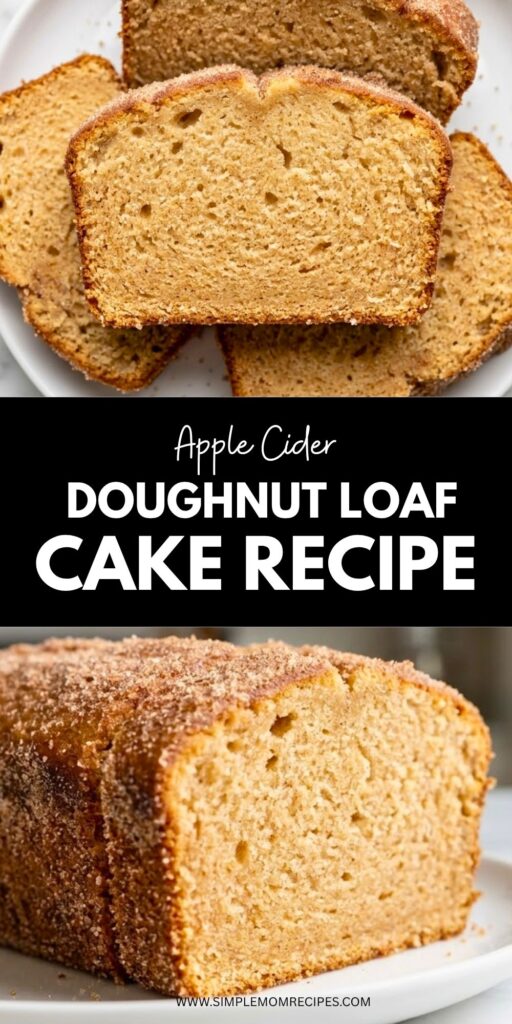
Apple Cider Doughnut Loaf Cake Recipe
Description
This apple cider doughnut loaf cake has everything I love about a classic fall cider doughnut in an easy loaf cake. I reduce apple cider to concentrate the flavor, bake it into a soft buttery cake, then soak the warm loaf with more cider and finish it with a buttery cinnamon-sugar coating. The result is tender, warmly spiced, and packed with apple cider flavor without any frying.
ingredients
For the Cake
For the Cinnamon-Sugar Coating
Instructions
Prepare the Topping
Make the Cinnamon-Sugar Mixture
Mix the granulated sugar, cinnamon, nutmeg, and a generous pinch of kosher salt in a small bowl. Set aside.
Prepare the Cider and Batter
Reduce the Apple Cider
Pour 1 1/2 cups apple cider into a medium saucepan and bring it to a boil over medium-high heat. Reduce the heat and simmer for about 8 to 10 minutes, or until the cider has reduced by half to approximately 3/4 cup.Reserve the Reduced Cider
Measure 4 tablespoons of the reduced cider and set it aside for soaking and finishing the cake. Let the remaining reduced cider cool for about 5 minutes, then stir in the sour cream and vanilla.Keep the reserved cider divided so there is enough for the warm cake and final coating.Melt the Butter
Melt 8 tablespoons of unsalted butter in the same saucepan over low heat. Remove from the heat once melted and let it cool slightly. Reserve the remaining 1 tablespoon of butter for the final coating.Combine the Dry Ingredients
In a medium bowl, whisk together the flour, cornstarch, baking powder, baking soda, kosher salt, cinnamon, and nutmeg until evenly combined.Whisk the Eggs and Sugar
In a large bowl, whisk the eggs and 3/4 cup granulated sugar vigorously for about 2 minutes, until the mixture is pale and slightly frothy.Add the Butter
Slowly pour the melted butter into the egg mixture while whisking constantly until smooth and well combined.Adding the butter gradually helps create a smoother batter.Finish the Batter
Add the dry ingredients in three additions, alternating with the sour cream and cider mixture. Begin and finish with the dry ingredients. Whisk only until no dry flour or obvious lumps remain.The batter will be relatively thin, which is normal for this loaf.
Bake and Finish
Prepare the Pan
Preheat the oven to 163°C (325°F). Lightly butter an 8 1/2 x 4 1/2-inch or 9 x 5-inch loaf pan and line it with parchment paper, leaving an overhang on the long sides.Bake the Loaf
Pour the batter into the prepared loaf pan and place it on a rimmed baking sheet. Bake for about 60 to 80 minutes, rotating the pan halfway through baking. Begin checking around 60 minutes. The cake is ready when a toothpick inserted into the center comes out clean.Baking time can vary depending on the oven and loaf pan size.Soak the Warm Cake
As soon as the loaf comes out of the oven, poke holes all over the top with a toothpick. Spoon 3 tablespoons of the reserved reduced cider evenly over the warm cake.Let the cake absorb the cider while it is still warm.Rest the Cake
Let the loaf sit in the pan for about 10 minutes.Make the Buttery Cider Coating
Melt the remaining 1 tablespoon of butter in the reserved saucepan and mix it with the final 1 tablespoon of reduced cider.Coat the Loaf
Use the parchment overhang to lift the loaf onto a wire rack set over a baking sheet. Brush the warm butter-cider mixture over the top and sides of the loaf.Add the Cinnamon Sugar
Immediately coat the warm loaf generously with the cinnamon-sugar mixture, tilting and rotating the loaf carefully to cover the sides as well.The baking sheet underneath will catch excess cinnamon sugar.Cool and Slice
Let the loaf cool completely before slicing so the crumb has time to set and the slices hold together cleanly.
Nutrition Facts
Servings 10
- Amount Per Serving
- Calories 300kcal
- % Daily Value *
- Total Fat 14g22%
- Saturated Fat 8g40%
- Trans Fat 0.4g
- Cholesterol 75mg25%
- Sodium 170mg8%
- Potassium 105mg3%
- Total Carbohydrate 41g14%
- Dietary Fiber 1g4%
- Sugars 25g
- Protein 4g8%
- Calcium 4 mg
- Iron 6 mg
* Percent Daily Values are based on a 2,000 calorie diet. Your daily value may be higher or lower depending on your calorie needs.
Note
- Don’t skip the cider reduction: Reducing the cider concentrates the apple flavor and keeps the finished loaf from tasting like a plain cinnamon cake.
- Measure the reserved cider: Divide the reduced cider before making the batter so there is enough left for soaking and the final coating.
- Watch the salt: Morton and Diamond Crystal kosher salt have different crystal sizes, so volume measurements are not interchangeable.
- Don’t overmix: Once the dry ingredients disappear, stop mixing. Overmixing can make the loaf heavier instead of soft and tender.
- Start checking early: Begin checking the loaf around 60 minutes because ovens and pan sizes can change the baking time.
- Use parchment overhang: The parchment makes it much easier to lift and rotate the loaf when adding the buttery cider coating.
- Coat while warm: The butter-cider mixture and cinnamon sugar adhere much better while the loaf is still warm.
- Be generous with cinnamon sugar: Cover the top and sides well because the sugary coating is an important part of the apple cider doughnut flavor.
- Whole wheat option: Up to 1/2 cup of the all-purpose flour can be replaced with whole wheat flour for a slightly heartier crumb.
- Buttermilk option: Buttermilk can replace the sour cream when needed and still gives the loaf moisture and a pleasant tang.
- Storage: Wrap the cooled loaf tightly and keep it at room temperature for several days.
- Make ahead: This loaf works well when baked the day before serving, making it convenient for fall gatherings and breakfasts.

