
There’s this very specific point when a vanilla cake is baking where the kitchen just shifts. It stops smelling like separate ingredients and turns into something warm and sweet and kind of comforting in a way I can’t really explain. I’ve learned to trust that moment more than the timer.
I didn’t always get vanilla cake right. It used to come out too dense, or weirdly dry on the edges. I kept thinking vanilla was “simple,” but honestly it’s not forgiving. Every little step shows up in the final bite.
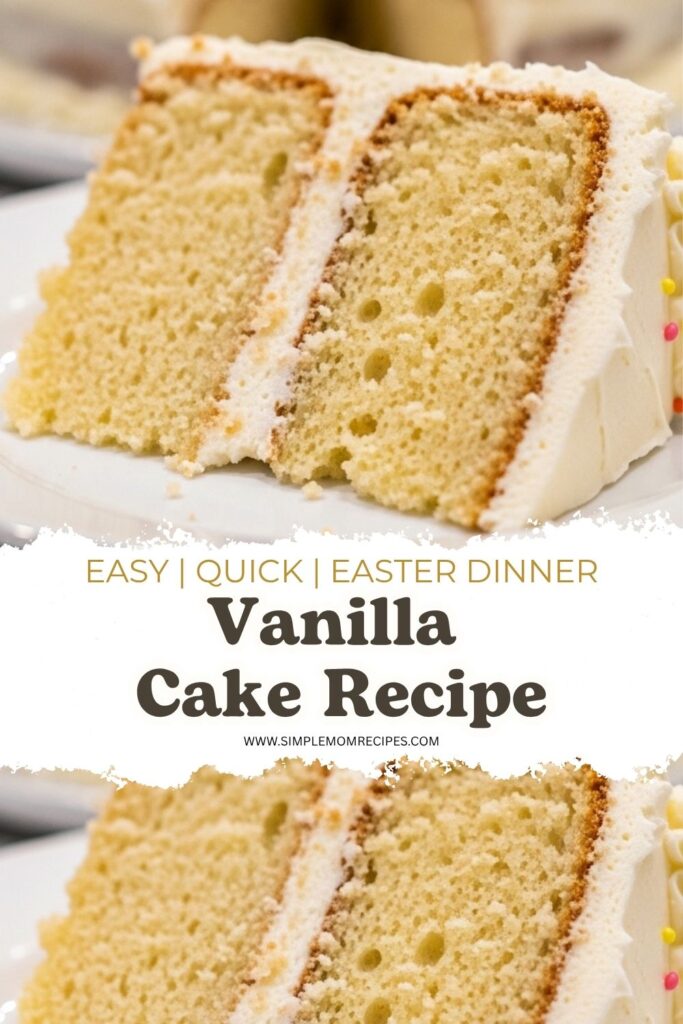
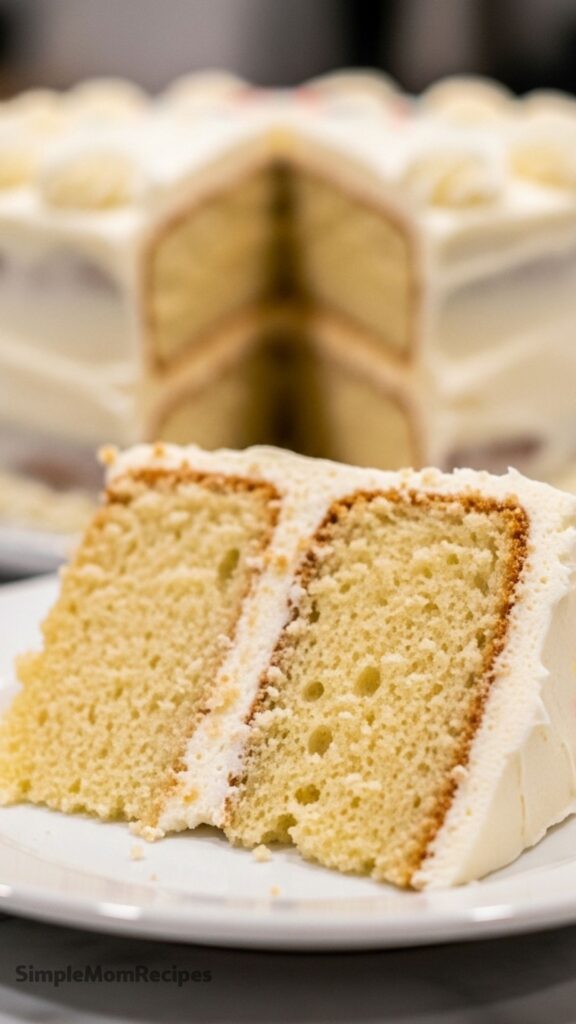
Now though, this version? It’s soft, buttery, and the crumb is even all the way through. It holds together when you slice it but still feels light. And yeah, it melts a little when you eat it. That part still makes me pause every time.
Ingredients I Used for the Recipe
- 2½ cups all-purpose flour – this builds the structure, but I try not to pack it too tight or it gets heavy
- 2¼ teaspoons baking powder – helps the cake rise and stay fluffy
- ¾ teaspoon salt – balances the sweetness and keeps it from tasting flat
- 1⅔ cups granulated sugar – gives sweetness and helps with that soft texture
- ¾ cup unsalted butter (softened) – this is where the richness comes in
- 3 large eggs (room temperature) – adds structure and makes the cake feel airy
- 1 tablespoon vanilla extract – the main flavor, so I don’t skimp here
- 1 cup buttermilk (room temperature) – keeps the cake moist and slightly tender
- 1½ cups unsalted butter (for frosting) – makes the frosting creamy
- ¼ teaspoon salt (for frosting) – cuts the sweetness just enough
- 5 cups powdered sugar – gives the frosting its body
- ¼ cup heavy cream or milk – loosens the frosting so it spreads easily
- 2 teaspoons vanilla extract (for frosting) – ties everything together
- Sprinkles – optional, but I usually add them when I want it to feel a little fun
How to make Vanilla Cake?
Step 1 – Prep everything before starting
I preheat the oven to 350°F and grease two 8-inch pans. I also line the bottoms with parchment because I’ve had cakes stick before and it’s not worth the stress.
Step 2 – Mix the dry ingredients
I whisk together the flour, baking powder, and salt. Sometimes I sift it if the flour looks clumpy. It makes a difference in how smooth the batter feels later.
Step 3 – Cream butter and sugar
This step matters more than I used to think. I beat the butter until smooth, then add the sugar and keep mixing until it looks pale and fluffy. It should look lighter, not just mixed.
Step 4 – Add eggs and vanilla
I add the eggs one at a time, not all at once. I used to rush this and the batter would split a bit. Now I take a few seconds between each one. Then I mix in the vanilla.
Step 5 – Alternate dry ingredients and buttermilk
I add the flour mixture in parts, switching back and forth with the buttermilk. It keeps everything smooth. I stop mixing as soon as it looks combined because overmixing makes the cake dense.
Step 6 – Divide and bake
I pour the batter evenly into the pans and tap them lightly on the counter. It helps get rid of big air bubbles. Then I bake for about 30 minutes.
Step 7 – Cool the layers
I let the cakes sit in the pan for a few minutes, then flip them out onto a rack. If I try to move them too early, they break. Learned that the hard way.
Step 8 – Make the frosting
I beat the butter until fluffy, then slowly add powdered sugar with a little cream in between. Once it’s smooth, I mix in the vanilla. It should feel soft, not stiff.
Step 9 – Assemble the cake
I spread frosting over one layer, place the second layer on top, then cover everything. Sometimes I go neat, sometimes messy. It still tastes the same.
The small things that changed my cake completely
I used to skip buttermilk because it felt like an extra step. Big mistake. It’s the reason this cake stays soft even the next day. There’s a slight tang too, not sour, just enough to balance the sweetness.
Another thing – I stopped eyeballing flour. Even a little extra can make the cake feel heavy. Now I fluff it before scooping, and it’s way more consistent.
Also, I switched to using the whisk attachment instead of the paddle once, and the batter came out lighter. It’s subtle, but I noticed it right away in the texture.
Frosting moods I keep coming back to
I don’t always frost this cake the same way. Sometimes I keep it simple with classic buttercream. Other times I go a little extra.
- Classic vanilla buttercream – sweet, fluffy, easy to spread
- Chocolate frosting – when I want contrast
- Strawberry frosting – feels lighter and a bit fresh
- Less frosting, more cake – honestly underrated
There are days I barely frost the sides and just leave it kind of rustic. It feels more relaxed that way.
Tips
Don’t rush the butter step
If the butter isn’t soft enough, it won’t cream properly. I press it lightly – if it gives a little, it’s ready.
Check your cake by sound
This sounds odd, but I listen. If it’s still crackling, it needs another minute. When it’s quiet, it’s usually done.
Don’t overmix once flour is added
I stop as soon as the batter comes together. Going beyond that makes it dense.
Let it cool fully before frosting
I’ve tried rushing this and the frosting melted right off. Not worth it.
If making ahead, swap a little butter with oil
Just a couple tablespoons helps keep it softer longer. I do this when I know it’ll sit overnight.
Tap the pans before baking
It feels small, but it helps avoid those weird holes inside the cake.
This cake isn’t flashy, but it’s reliable in a way I keep coming back to. It works for birthdays, random evenings, or just when I want something that feels a little comforting without being complicated.

Vanilla Cake Recipe
Description
This classic vanilla cake is incredibly moist, tender, and full of rich buttery flavor. Made with buttermilk for the perfect soft crumb, it holds up beautifully for layering yet melts in your mouth with every bite. Perfect for birthdays, weddings, or any celebration.
ingredients
For the Cake
For the Frosting
Instructions
For the Cake
-
Preheat oven to 175°C (350°F). Grease two 8-inch round cake pans, line bottoms with parchment paper, and optionally wrap with baking strips.
-
In a medium bowl, sift or whisk together flour, baking powder, and salt. Set aside.
-
In a stand mixer with whisk attachment, beat butter on medium speed until smooth. Add sugar and beat on high for 2-3 minutes until light and fluffy.
-
Reduce speed to medium. Add eggs one at a time, scraping bowl between each. Add vanilla and mix on high for 1 minute.
-
Reduce speed to low. Add flour in three batches, alternating with buttermilk. Once almost combined, fold remaining batter by hand with a spatula. Do not overmix.
-
Divide batter evenly between prepared pans. Tap pans gently on counter to release air bubbles.
-
Bake for 30 minutes until edges pull away from pan and a toothpick comes out clean.
-
Cool cakes in pans for 10 minutes, then invert onto a wire rack. Remove parchment and cool completely.
For the Frosting & Assembly
-
In a stand mixer with whisk attachment, beat butter and salt on medium-high until light and fluffy, about 5 minutes.
-
Reduce speed to low. Gradually add powdered sugar one cup at a time, adding 1 tablespoon of cream between each addition.
-
Add vanilla and increase speed to high for one minute until fluffy.
-
Place one cake layer on a serving plate. Spread 1 cup of frosting evenly over the top.
-
Add the second cake layer. Frost the top and sides with remaining buttercream. Decorate with sprinkles if desired.
Nutrition Facts
Servings 12
- Amount Per Serving
- Calories 385kcal
- % Daily Value *
- Total Fat 20gg31%
- Saturated Fat 12gg60%
- Trans Fat 0.5gg
- Cholesterol 95mgmg32%
- Sodium 210mgmg9%
- Potassium 85mgmg3%
- Total Carbohydrate 48gg16%
- Dietary Fiber 0.5gg2%
- Sugars 34gg
- Protein 4gg8%
- Calcium 6% mg
- Iron 8% mg
* Percent Daily Values are based on a 2,000 calorie diet. Your daily value may be higher or lower depending on your calorie needs.
Note
- Measure flour correctly: Use a kitchen scale for best results. If using cups, fluff flour with a spoon, spoon into cup, and level with a knife.
- Room temperature ingredients: Ensure butter, eggs, and buttermilk are at room temperature for a smooth batter.
- No buttermilk? Add 1 tablespoon of lemon juice or white vinegar to 1 cup of whole milk. Let sit for 5 minutes.
- Make ahead: Unfrosted cake layers can be wrapped and frozen for up to 3 months.
- Pan variations: This batter works for 9x13 sheet cake (30 min), 18 cupcakes (18-22 min), or four 6-inch layers (25 min).

