

Then one year I actually paid attention while making it. Chopped everything myself, tasted as I went, adjusted the sweetness. That was it. I got hooked.
Now I have to physically stop myself from eating half of it before dinner even starts. It’s sweet, a little spiced, a little crunchy, and somehow comforting in a way I didn’t expect.
Also, quick note – this comes together fast. Like, under 15 minutes fast. Which is kind of wild for something that carries so much meaning.
What makes this version feel right to me
This is the classic Ashkenazi-style charoset. Apples, walnuts, cinnamon, a splash of something sweet like wine or grape juice. Nothing complicated.
I’ve tried fancier versions before. Dried fruits, different spices, even one with pomegranate. They were good, but I always come back to this one.
There’s something about the balance here. The apples bring freshness, the walnuts give texture, and the cinnamon pulls it all together without trying too hard.
And yeah, it’s symbolic too. It’s meant to look like mortar, which always stuck with me. But at the same time, it tastes like something you’d want on toast the next morning.
Ingredients I Used for the Recipe
- 2 medium apples – I usually go for something crisp like Granny Smith or Fuji, finely diced for that fresh base
- 2 cups walnuts – toasted and chopped, they add crunch and a deep nutty flavor
- 4 teaspoons brown sugar (or coconut sugar) – just enough to round out the tartness with a subtle sweetness
- 1/2 teaspoon cinnamon – this is what makes it feel warm and familiar
- 1/4 teaspoon ground cardamom – optional but I always use it, adds a soft, slightly floral depth
- 1/2 teaspoon orange zest – brightens everything up more than you’d expect
- 1/4 teaspoon salt – tiny amount, but it sharpens all the flavors
- 1/2 cup sweet kosher wine or grape juice – brings it together and gives that classic richness
How to make Traditional Passover Charoset Recipe?
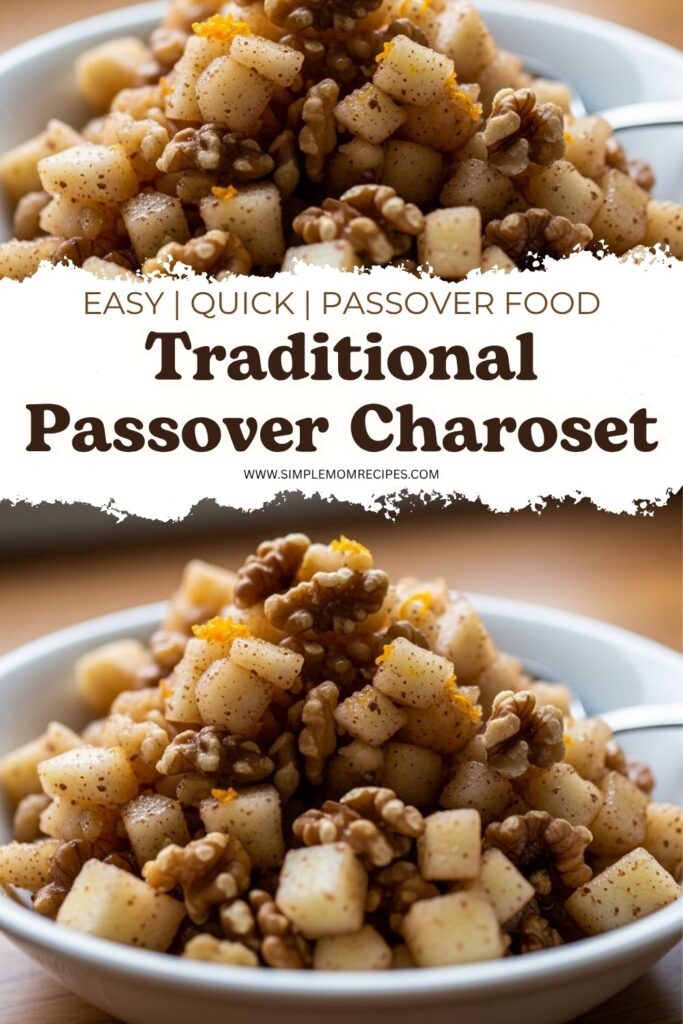
Step 1 – Chop the apples
I start by dicing the apples really small. Not mushy, just fine enough that everything mixes evenly.
I’ve rushed this step before and ended up with big chunks that didn’t blend well. So now I take an extra minute here. It’s worth it.
Step 2 – Toast the walnuts
I throw the walnuts into a dry skillet over medium heat. Stir them around for about 4 to 5 minutes until they smell nutty and a little deeper.
Don’t walk away. I’ve burned a batch before and it happens fast.
Step 3 – Let them cool and chop
Once the walnuts cool down, I chop them pretty fine. Not powder, just small enough to match the apples.
This is where the texture really starts to come together.
Step 4 – Mix everything in one bowl
I add the apples, walnuts, sugar, cinnamon, cardamom, orange zest, salt, and wine or juice into a big bowl.
Then I just mix until everything looks evenly coated and slightly glossy. It already smells amazing at this point.
Step 5 – Optional quick pulse
Sometimes I pulse it once or twice in a food processor if I want it a bit finer.
But I’m careful. The first time I tried this, I overdid it and ended up with something closer to paste. Not the goal.
Step 6 – Chill and let it sit
I transfer it to a container and let it chill in the fridge for at least a few hours.
This part matters more than I expected. The flavors kind of settle into each other, and it tastes deeper after resting.
How I actually serve and eat it
Traditionally, I put it on matzo during the Seder, sometimes with a bit of horseradish. That sweet and sharp combo just works.
But honestly, I eat it way beyond that. Straight from the fridge with a spoon, spread on toast, even mixed into oatmeal once when I had leftovers.
I’ve also made those little matzo sandwiches for kids at the table. It’s easier than explaining the symbolism when they’re hungry and impatient.
Tips
Don’t skip toasting the walnuts
It’s a small step, but it changes everything. Raw walnuts are fine, but toasted ones bring out a deeper flavor that makes the whole dish feel complete.
Keep the texture in mind
Charoset should be chunky, not smooth. If it starts looking like a spread, you’ve gone too far.
Let it rest before serving
I used to skip this because I was in a rush. Big mistake. Even a couple of hours makes a noticeable difference.
Adjust sweetness to your taste
Some apples are sweeter than others. Taste as you go and tweak the sugar if needed. I’ve had batches where I barely needed any.
Make it work for you
If you don’t want to use wine, grape juice works just fine. I’ve done both, and honestly, it still turns out great.
At the end of the day, this is one of those recipes that feels simple but sticks with you. It’s tied to tradition, sure, but it’s also just really good food.
And every time I make it, I end up standing in the kitchen, spoon in hand, telling myself “just one more bite” about five times in a row.
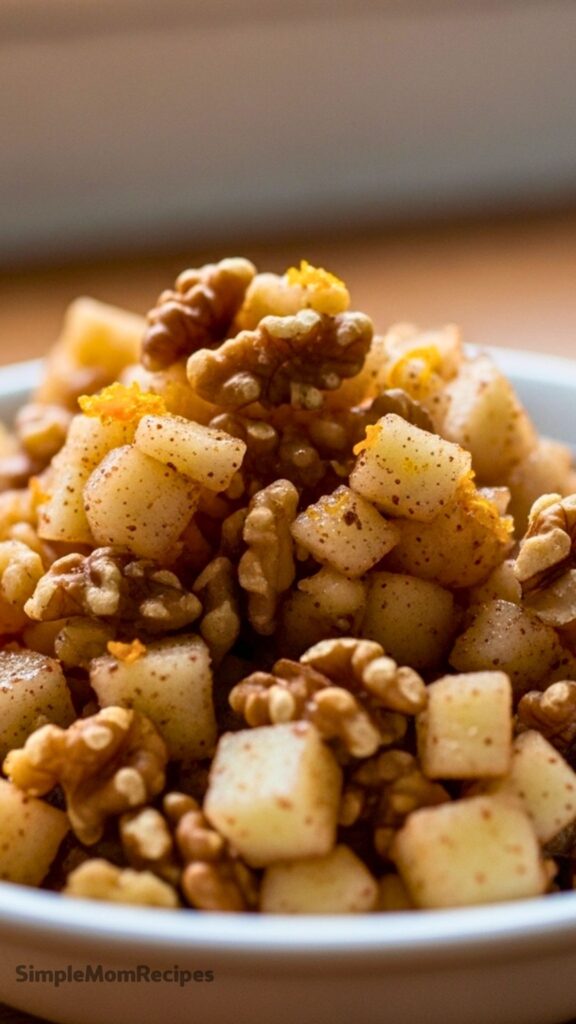
Traditional Passover Charoset Recipe
Description
This traditional charoset recipe is a little sweet, a little spiced, and absurdly delicious on some matzo. It comes together in one bowl, in under 15 minutes, with just 8 simple ingredients. Whether you're prepping for a Passover Seder or just craving something naturally sweet and spiced, this stuff seriously over-delivers—minimal effort, maximum flavor, and a classic that never gets old.
ingredients
Instructions
- Finely dice the apples into small, uniform pieces and set them aside.
- In a dry skillet over medium heat, toast the walnuts for 4-5 minutes, stirring frequently, until fragrant and lightly browned.Watch closely to prevent burning
- Allow the walnuts to cool completely, then finely chop them.
- In a large mixing bowl, combine the diced apples, chopped walnuts, brown sugar, cinnamon, cardamom, orange zest, salt, and sweet kosher wine or grape juice. Stir until the mixture is evenly combined.
- Optionally, if you prefer a finer texture, pulse the mixture a few times in a food processor. Be careful not to over-process—you want a chunky consistency, not a purée.
- Transfer the mixture to an airtight container and refrigerate for at least 4 hours to allow the flavors to meld.Can be made up to 24 hours ahead
- Serve chilled or at room temperature with matzah. For a Hillel sandwich, spread charoset on a piece of matzah, add a small amount of horseradish, and top with another piece of matzah.
Nutrition Facts
Servings 8
- Amount Per Serving
- Calories 236kcal
- % Daily Value *
- Total Fat 19.5gg30%
- Saturated Fat 2gg10%
- Trans Fat 0gg
- Cholesterol 0mgmg0%
- Sodium 75mgmg4%
- Potassium 150mgmg5%
- Total Carbohydrate 12.5gg5%
- Dietary Fiber 2.8gg12%
- Sugars 8gg
- Protein 4.6gg10%
- Calcium 3% mg
- Iron 4% mg
* Percent Daily Values are based on a 2,000 calorie diet. Your daily value may be higher or lower depending on your calorie needs.
Note
- Lightly Toasted Walnuts: Toasting walnuts in a skillet for 4-5 minutes brings out their nutty flavor without overpowering the dish. Stir them often to prevent burning.
- Mind the Dice: Chop your apples and walnuts into uniform, super-fine dice. Don't over-process—charoset should be chunky, not puréed.
- Let It Marinate: Refrigerating for at least 4 hours (or overnight) helps the flavors combine and build up, so don't rush this step!
- Nut-Free Option: Substitute walnuts with sunflower seeds or pumpkin seeds for an allergy-friendly version.
