

There’s something quietly magical about a spaghetti squash, really.
You start with this smooth, pale yellow oval, and with a bit of heat and a simple fork, it transforms into a whole bowl of sunny, delicate strands.
Choosing Your Main Ingredient
Look for a squash that feels heavy for its size and has firm, unblemished skin.
The color can range from a creamy ivory to a vibrant yellow, but a consistent hue is a good sign of even ripeness.
Ingredients Needed for the Recipe
- One Spaghetti Squash: The star of the show, it naturally separates into noodle-like strands when cooked.
- Extra-Virgin Olive Oil: A light drizzle helps the skin crisp up and adds a subtle, fruity flavor.
- Sea Salt & Freshly Ground Black Pepper: These basics highlight the squash’s mild, slightly sweet taste perfectly.
A Word on Tackling That Tough Skin
Let’s be honest, cutting into a winter squash can feel like a workout.
If your squash is particularly stubborn, there are two easy ways to soften it up first, and I promise they’re lifesavers.
For the oven method, prick the whole squash a few times with a fork.
Roast it at 400°F for about 10 minutes, just until the exterior gives a little under pressure.
For a quicker fix, use that same fork to prick the skin all over.
Microwave the whole squash in one-minute bursts until it becomes easier to handle, then slice.
How to make How to Cook Spaghetti Squash?
Step 1 – Preheat and Slice
Start by heating your oven to 400°F, letting it come to temperature while you prep.
Carefully cut the squash in half from stem to base, using a sharp chef’s knife and steady pressure.
Step 2 – Scoop and Season
Use a sturdy spoon to scrape out all the seeds and stringy pulp from the center of each half.
Give the insides a very light drizzle of oil and a modest sprinkle of salt and pepper; you can always add more later.
Step 3 – Roast to Perfection
Place the halves cut-side down on a baking sheet and poke the skins a few times with a fork.
Roast for 30 to 40 minutes, until the outside is gently browned and the flesh is tender yet still has a slight resistance.
Step 4 – Fluff and Serve
Take the squash from the oven and flip the halves over so they can cool slightly.
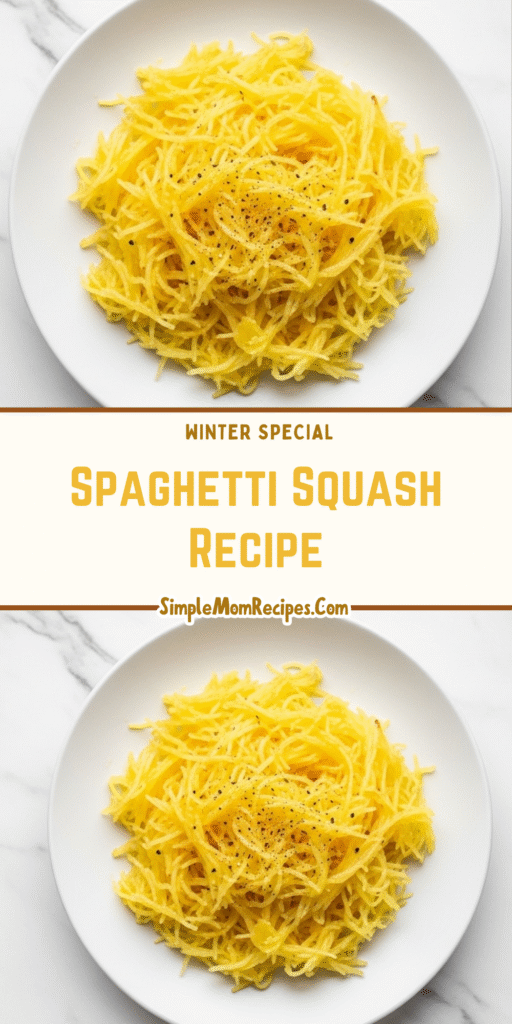
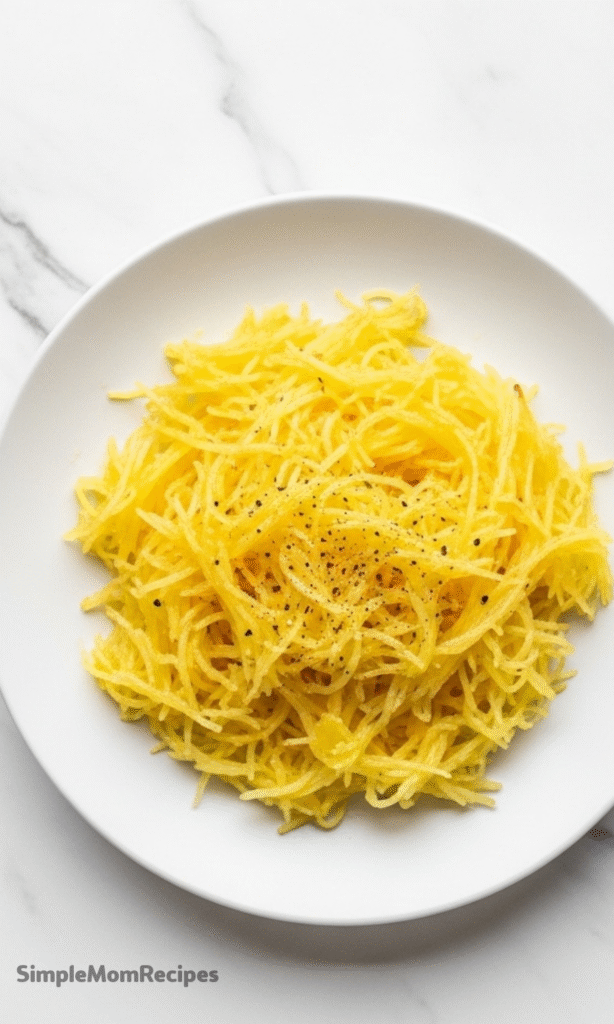
Once you can touch it, take a fork and scrape from the edges inward, watching those beautiful strands appear.
Ways to Enjoy Your Squash Noodles
Simply seasoned, it makes a wonderful, low-effort side dish all on its own.
For something heartier, try tossing the warm strands with a vibrant lemon pesto or sautéing them with chickpeas and kale.
Tips
- Don’t over-oil the squash before roasting, as it can steam and become watery instead of caramelizing nicely.
- Roasting time is a guideline, not a rule. A smaller squash may be done in 25 minutes, a larger one might need 45.
- For the best texture, aim for “al dente”—the strands should separate easily but still have a pleasant bite.
- Let the squash cool for a few minutes before fluffing; it’s much easier to handle and the strands hold their shape better.
Storing Leftovers
Any unused strands will keep beautifully in a sealed container in the fridge for up to four days.
They reheat wonderfully in a skillet over medium heat, which helps evaporate any excess moisture.

Spaghetti Squash Recipe
Description
Spaghetti squash is a fun, underrated vegetable that transforms into tender, noodle-like strands when roasted. This simple method yields al dente, flavorful squash—perfect as a healthy side dish or a base for creative mains. Lightly seasoned and roasted cut-side down, it’s easy to prepare and endlessly versatile!
ingredients
Instructions
-
Prep the squash
Preheat your oven to 400°F (204°C).If the squash is too hard to cut, soften it first: either roast whole for 10 minutes or microwave in 1-minute bursts until slightly soft. -
Cut and clean
Place the squash on a cutting board. Using a sharp knife, cut it in half lengthwise. Scoop out the seeds and stringy pulp with a spoon. -
Season lightly
Drizzle the cut sides lightly with olive oil and sprinkle with a small amount of salt and pepper. Avoid over-seasoning to prevent excess moisture. -
Roast cut-side down
Place the squash halves cut-side down on a parchment-lined baking sheet. Poke a few holes in the skin with a fork to allow steam to escape. -
Bake to al dente
Roast for 30–40 minutes, depending on size. The squash is ready when the outside is lightly browned and the flesh is fork-tender but still slightly firm (not mushy).Cooking time varies by squash size and oven. Start checking at 30 minutes. -
Scrape and serve
Remove from oven and flip halves cut-side up. Once cool enough to handle, use a fork to scrape the strands from the skin, starting at the outer edge and working inward. Fluff gently. -
Final seasoning
Taste and season with additional salt and pepper if desired. Serve warm as a simple side or use in your favorite recipes.
Nutrition Facts
Servings 4
- Amount Per Serving
- Calories 42kcal
- % Daily Value *
- Total Fat 2gg4%
- Saturated Fat 0.3gg2%
- Trans Fat 0gg
- Cholesterol 0mgmg0%
- Sodium 28mgmg2%
- Potassium 181mgmg6%
- Total Carbohydrate 10gg4%
- Dietary Fiber 2.2gg9%
- Sugars 4gg
- Protein 1gg2%
- Calcium 32 mg
- Iron 0.6 mg
* Percent Daily Values are based on a 2,000 calorie diet. Your daily value may be higher or lower depending on your calorie needs.
Note
- Tip for tough squash: Microwave 1–2 minutes or roast whole for 10 minutes at 400°F to soften before cutting.
- Avoid mushiness: Roast just until al dente (30–40 min). Overcooking makes strands watery and soft.
- Serving ideas: Try with chickpeas and kale or with lemon pesto.
- Storage: Keep cooked strands in an airtight container in the fridge for up to 4 days.
