

There’s something truly special about a perfectly fried piece of catfish. It’s a taste that brings me right back to hot summers and family gatherings, where the platter never stayed full for long.
That crispy, golden crust giving way to tender, flaky fish is a Southern classic for a reason. The best part is, achieving that restaurant-quality crunch at home is far simpler than you might think.
This particular recipe is my go-to, a trusted method that never lets me down. It uses a straightforward, three-step process and just a handful of ingredients, getting dinner on the table in less than twenty minutes.
Plus, the coating is naturally gluten-free, relying on cornmeal for its fantastic texture. So, whether you’re hosting a fish fry or just craving some down-home comfort, this recipe is ready for you.
Ingredients Needed for the Recipe
Gathering your ingredients is the first simple step. You’ll notice this list is refreshingly short, focusing on flavor and texture without any complicated additions.
Every item has a clear purpose, working together to create that iconic fried catfish experience we all love.
- Catfish Fillets: The star of the show. Look for fresh or thawed fillets that are of even thickness for consistent cooking.
- Buttermilk: This is our secret for tender, flavorful fish. It acts as a brine, seasoning the fish throughout and helping the coating stick beautifully.
- Yellow Cornmeal: This is what creates that essential, craveable crunch. It fries up light and crispy, without any heaviness.
- Cayenne Pepper, Salt, Black Pepper: The simple seasoning trio. The cayenne adds a gentle warmth that’s traditional, but you can adjust it to your taste.
- High-Heat Oil: Such as vegetable, canola, or peanut oil. You’ll need enough for about 1.5 to 2 inches in your skillet. This high smoke point is key for safe, effective frying.
- For the Tartar Sauce: Mayonnaise, relish (dill or sweet), onion powder, garlic powder, a touch of sugar, salt, and a splash of apple cider vinegar or lemon juice. It’s the cool, tangy companion every piece needs.
Why Soak Catfish in Buttermilk?
You might wonder if the buttermilk soak is truly necessary. In my experience, it makes a wonderful difference. Catfish are bottom feeders, which can sometimes impart a stronger, earthier flavor to the meat.
Soaking the fillets in buttermilk for a short time mellows that potential “muddiness” remarkably well. Beyond flavor, it also tenderizes the fish just slightly and creates a sticky surface that grabs onto the cornmeal coating, ensuring it stays put during frying.
How to make Southern Fried Catfish?
The magic of this recipe lies in its beautiful simplicity. It’s a three-step dance: soak, coat, and fry. Paying close attention to a few key details during each phase guarantees spectacular results.

Trust the process, especially when that fish hits the hot oil. A little patience here rewards you with a flawless, crispy crust.
Step 1 – Prep and Soak the Fish
Start by patting your catfish fillets completely dry with paper towels. This is important, as extra surface moisture can make the coating soggy.
Place the fillets in a shallow dish or a large resealable bag, then pour the buttermilk over them. Make sure each piece is fully submerged.
Let them soak in the refrigerator for about ten minutes. This is the perfect time to mix your tartar sauce and get your coating station ready.
Step 2 – Create the Coating and Heat the Oil
In a wide, shallow bowl, combine the cornmeal, salt, black pepper, and cayenne. Use a fork to whisk it all together, ensuring the spices are evenly distributed throughout the cornmeal.
Now, pour your oil into a heavy skillet. I strongly recommend a cast-iron skillet or a Dutch oven. Their heavy bottoms maintain a steady, even heat, and the high sides contain splatters.
Heat the oil over medium heat. You’re aiming for a temperature between 312°F and 325°F. A good thermometer is your best friend here for accuracy.
Step 3 – Dredge and Fry to Perfection
Take one fillet directly from the buttermilk, letting the excess drip off for a second. Place it into the cornmeal mixture.
Press gently and pat the coating onto all sides, even the edges. I like to coat it twice for extra crunch, dipping it back in the buttermilk briefly before the second round.
Before adding the fish, test your oil. Sprinkle a tiny pinch of cornmeal into it. If it sizzles immediately, you’re ready to go. Working in batches of one or two fillets, carefully lower them into the hot oil.
This is the golden rule: do not touch them. Let them fry undisturbed for a full two and a half to three minutes. This allows a solid, crisp crust to form.
After that time, use tongs or a spider strainer to carefully flip each fillet. They should be a lovely light golden brown. Fry on the second side for another three minutes.
The internal temperature should reach 145°F. Transfer the finished fillets to a plate lined with paper towels to drain. You can keep them warm and crispy in a 200°F oven while you cook the remaining batches.
Essential Equipment Notes
Having the right tools for the job takes the stress out of frying. Your choice of pan and thermometer isn’t just a suggestion, it’s a game-changer for consistent, safe results.
A flimsy pan can lead to hot spots that burn the coating before the fish is cooked. And guessing at oil temperature is a sure path to greasy, undercooked, or overcooked food.
Invest in a simple digital thermometer and use a heavy pan. This setup gives you control and confidence, turning what seems like a chef’s technique into an easy weeknight meal.
Tips
- Resist the urge to move the fillets in the oil before the first side is set. This is the number one reason coatings fall off. Just stand back and watch the magic happen.
- Fry in small batches. Overcrowding the pan drastically drops the oil temperature, leading to soggy, oil-soaked fish. Two fillets at a time in a standard skillet is usually perfect.
- Keep cooked fillets warm in a 200°F oven, but do not cover them with foil. Trapped steam will instantly soften that hard-earned crispy crust.
- Your first batch will always be a lighter, golden color. The second batch will fry in already-used oil and become a bit darker. This is completely normal and doesn’t affect flavor.
- If the oil starts to smoke even lightly, immediately remove the pan from the heat and let it cool down. Smoking oil is a sign it’s too hot and can impart a bitter flavor.
- When flipping, use tools that give you control. Tongs can sometimes pierce the coating, so a wide fish spatula or a spider strainer is ideal for a gentle turn.
Serving Your Southern Feast
Now for the fun part, building your plate. That beautiful, hot fried catfish deserves the perfect supporting cast.
A generous wedge of lemon for squeezing and a dollop of that homemade tartar sauce are non-negotiable starters. From there, you can build a true Southern-style dinner.
Classic sides include a tangy, crunchy coleslaw, a big pot of simmered collard greens, or stewed okra and tomatoes. For something hearty, you can’t beat a side of pinto beans and rice or creamy maple baked beans.
And if you’re not in the mood for a full plate dinner, this recipe adapts beautifully. Cut the fillets into strips for catfish po’boys on a toasted hoagie roll with remoulade, or into bite-sized pieces for irresistible catfish nuggets perfect for dipping.
Storing and Reheating Leftovers
While fried catfish is always best fresh, you can absolutely enjoy leftovers. The key is avoiding moisture to preserve what crispiness you can.
Let the cooked fillets cool completely on a wire rack. Once cool, wrap them loosely in foil or place them in a single layer in an airtight container.
They’ll keep in the refrigerator for up to three days. Freezing is not recommended, as the coating will become very soggy upon thawing.
To reheat, skip the microwave. Instead, place the fillets on a baking sheet and into a preheated 450°F oven for about 10 to 15 minutes. This will warm them through and crisp up the exterior again much better than any other method.
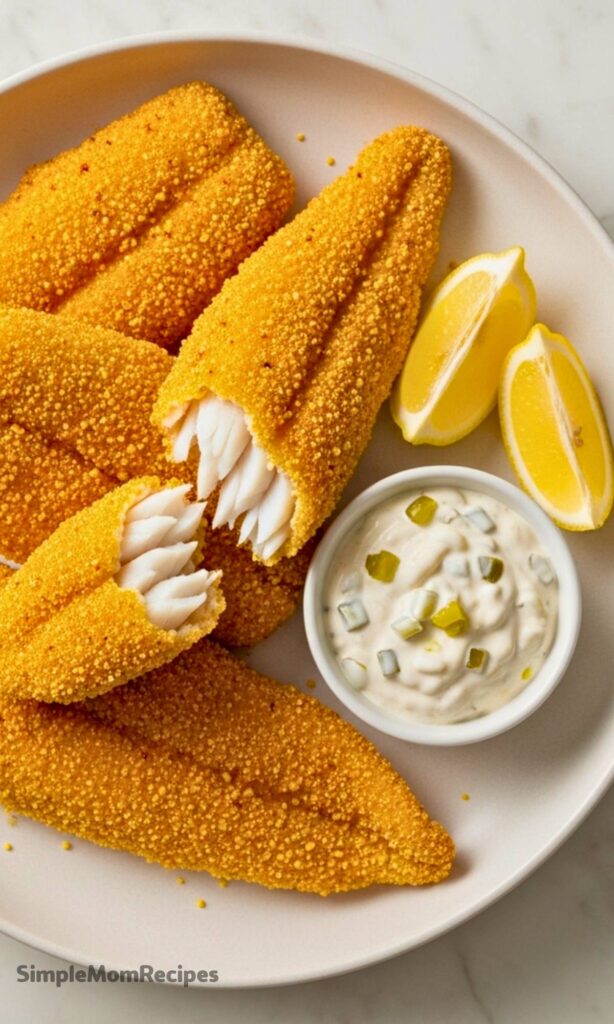
Southern Fried Catfish Recipe
Description
This restaurant-quality Southern Fried Catfish is easy to make with just 7 ingredients and ready in under 20 minutes! The crispy, golden coating is made with cornmeal—no egg or flour—making it a perfect choice for a gluten-free diet. Served with a simple homemade tartar sauce, this classic dish is a true crowd-pleaser.
ingredients
Catfish Coating Ingredients
Tartar Sauce Ingredients
Instructions
Catfish Fillet Preparation
- Pat the catfish fillets dry with a paper towel.
- Place the fish in a large baking dish or a plastic storage bag. Pour in the buttermilk, ensuring the fillets are well coated. Let them sit in the refrigerator for 10 minutes.
- Meanwhile, prepare the tartar sauce. In a small bowl, combine all tartar sauce ingredients. Mix well and refrigerate until ready to serve.
Coating and Frying
- In a large bowl, mix together the cornmeal, cayenne pepper, salt, and black pepper until well blended.
- Pour the oil into a heavy-duty skillet (preferably cast-iron) to a depth of about 2 inches. Heat the oil over medium heat to a temperature of 312-325°F (155-163°C). To test if the oil is ready, sprinkle a little cornmeal into it; if it sizzles immediately, it's hot enough.
- Working with one fillet at a time, remove it from the buttermilk (letting excess drip off) and place it into the cornmeal mixture. Pat the cornmeal onto the fillet firmly to ensure an even, thick coating on all sides. Repeat with the remaining fillets.
- Carefully place 1-2 coated fillets into the hot oil. DO NOT MOVE THEM for the first 2.5 to 3 minutes to allow the crust to set.
- After 2.5-3 minutes, use tongs to carefully flip the fillets. Cook for another 3 minutes on the second side, or until the fish is cooked through and flakes easily. The internal temperature should reach 145°F (63°C).
- Remove the cooked fillets from the oil and place them on a paper towel-lined plate to drain excess oil. Keep them warm in a 200°F (93°C) oven if not serving immediately. Repeat with the remaining fillets.
- Serve the catfish hot with lemon wedges and the prepared tartar sauce.
Nutrition Facts
Servings 4
- Amount Per Serving
- Calories 420kcal
- % Daily Value *
- Total Fat 25g39%
- Saturated Fat 4.5g23%
- Cholesterol 85mg29%
- Sodium 580mg25%
- Potassium 420mg12%
- Total Carbohydrate 22g8%
- Dietary Fiber 1.5g6%
- Sugars 2g
- Protein 28g57%
- Calcium 80 mg
- Iron 1.5 mg
* Percent Daily Values are based on a 2,000 calorie diet. Your daily value may be higher or lower depending on your calorie needs.
Note
- Thawing: If using frozen catfish, thaw it first by rinsing under cold water in a colander or by placing it in the refrigerator overnight.
- Pan Choice: A heavy-duty skillet like cast-iron or a Dutch oven is best to prevent splatter and maintain even heat.
- Oil Amount: The amount of oil needed depends on your skillet size; aim for about 2 inches of depth.
- Don't Touch! Resist the urge to move the fillets for the first 3 minutes of cooking, or the coating will fall off.
- Browning: The second batch of fillets will be darker than the first because they're cooked in used oil. For uniform color, you can start with fresh oil for each batch.
