

There is something incredibly comforting about a dish that arrives at the table with a promise. Shrimp étouffée makes a big one. It promises a rich, complex gravy, tender shrimp, and a warmth that goes beyond temperature. For me, it is a weekend project, a meal that asks for your attention for a couple of hours but pays you back tenfold.
The result is not just dinner. It is a celebration in a bowl. The magic happens when you understand that you are building a sauce first, a magnificent one, and the shrimp are the gracious final guests. Get that foundation right, and you are in for something truly special.
Gathering Your Foundation
Before you start, know this is a layered process. You will make a stock, then build the étouffée. Do not let that intimidate you. Each step is simple, and the pace is actually quite relaxing. Just have your ingredients prepped and ready to go.
Ingredients Needed for the Recipe
- Shell-on or head-on shrimp: This is your star. The shells and heads are absolutely crucial for a deeply flavorful homemade stock, which is the soul of the dish.
- Yellow onions, celery, garlic: These form the aromatic base, or the “holy trinity” when combined with bell pepper, creating the foundational flavor layer.
- Green and/or red bell pepper: The final part of the trinity. Green offers a classic, slightly grassy note, while red adds a touch of sweetness.
- Butter and all-purpose flour: Together, these will become your roux. This paste is what thickens the étouffée and gives it its distinctive, toasty character.
- Dried herbs and spices (oregano, thyme, cayenne, bay leaves): These are the Cajun-Creole heartbeat, providing warmth, earthiness, and just the right amount of kick.
- Tomato paste, dry sherry (optional): Used in the stock, these add a layer of savory depth and brightness, rounding out the shrimp flavor beautifully.
- Salt and baking soda: A quick brine for the shrimp, ensuring they stay plump and seasoned right to the center.
Why a Dark Roux Isn’t Everything
You will hear a lot of talk about roux color. Some folks swear by a chocolate-dark roux for gumbo, and that intensity has its place. But for shrimp étouffée, I have a different preference. I aim for a color close to peanut butter.
It gives you that wonderful, nutty toastiness without any bitter notes. It lets the sweet shrimp flavor shine through. A blond roux is a bit too mild here, but a dark one can overwhelm. Peanut butter is my happy, flavorful medium.
How to make Shrimp Étouffée
The process is a satisfying dance. You will peel, you will simmer, you will stir. And the smells that fill your kitchen will be your reward long before you take the first bite.
Step 1 – Prep and Brine the Shrimp
Peel and devein your shrimp, placing the meat in a bowl. Keep every single shell and, if you have them, the heads. This is gold for your stock. Toss the peeled shrimp with a couple teaspoons of salt and that half teaspoon of baking soda.
Mix it well, then pop the bowl in the fridge. The brine works quietly, seasoning the shrimp throughout and promising a tender texture. Now, forget about them. They are patiently waiting for their grand entrance later.
Step 2 – Build a Deeply Flavorful Stock
In your Dutch oven, heat some oil until it shimmers. Add all those reserved shells and heads. Listen to them sizzle. Cook, stirring often, for about four minutes. You want them to get some color and for the bottom of the pot to gather tasty browned bits.
Add diced onion, celery, and smashed garlic right into the pot with the shells. Let them soften together. Stir in tomato paste until it coats everything. If you are using sherry, pour it in now and let it bubble up, scraping all those good bits from the bottom.
Step 3 – Simmer and Strain
Pour in two quarts of water. Add a bay leaf and a few herb sprigs. Bring it all to a gentle simmer and let it cook for a good 45 minutes. Your kitchen will smell incredible. Strain the stock into a bowl or pot. Do not skim off the orange-tinted oil on top.
That oil is packed with shrimp essence. You want every drop of it for your étouffée. You should have a beautiful, fragrant broth that is the foundation of your entire dish.
Step 4 – Create Your Roux
In the same cleaned Dutch oven, melt your butter over medium-high heat. Once it is foaming, sprinkle in the flour. Stir constantly to form a smooth paste. Now, the watch begins. Keep stirring and scraping the bottom.
The roux will slowly change color. For me, that magic peanut butter stage takes about 10 to 15 minutes of steady attention. It is a mindful, almost meditative step. You are toasting the flour, building the first layer of flavor for your sauce.
Step 5 – Cook the Holy Trinity
When your roux is the perfect shade, add your fresh diced onion, celery, and bell pepper. The vegetables will sizzle as they hit the hot roux. Stir them well so every piece is coated in that flavorful paste.
Lower the heat to medium and cook for about four minutes, just until they start to soften. Then, stir in your chopped garlic and scallions. Their aroma will bloom instantly, so just cook for another minute.
Step 6 – Season and Add the Stock
This is where the personality comes in. Sprinkle in all those dried herbs and spices: oregano, thyme, garlic powder, onion powder, cayenne, and paprika. Stir for 30 seconds to wake them up. Now, start adding your warm shrimp stock, one ladleful at a time.
Stir thoroughly after each addition. It will look very thick and pasty at first, but it will loosen beautifully. Once all three cups are in, add the bay leaves and season with salt and black pepper. Bring it to a simmer.
Step 7 – Let the Sauce Meld
Cover the pot, reduce the heat to low, and let the sauce simmer gently. You will want to give it an occasional stir to prevent sticking. Let it go for about 30 minutes. This quiet time is essential.
The vegetables become incredibly soft, almost melting into the gravy. All those spices and the rich roux marry together into something cohesive and deep. This is your finished sauce, ready for its star.
Step 8 – Finish with the Shrimp
Uncover your pot. The sauce should be thick and luxurious. Grab your brined shrimp from the fridge and stir them in gently. They will cook quickly, in just a few minutes.
Watch them curl and turn pink. As soon as they are opaque and firm, they are done. Now, check the consistency. If the gravy is thicker than you like, thin it with a little more stock. Finally, give it one last taste and adjust the seasoning.
Serving Your Masterpiece
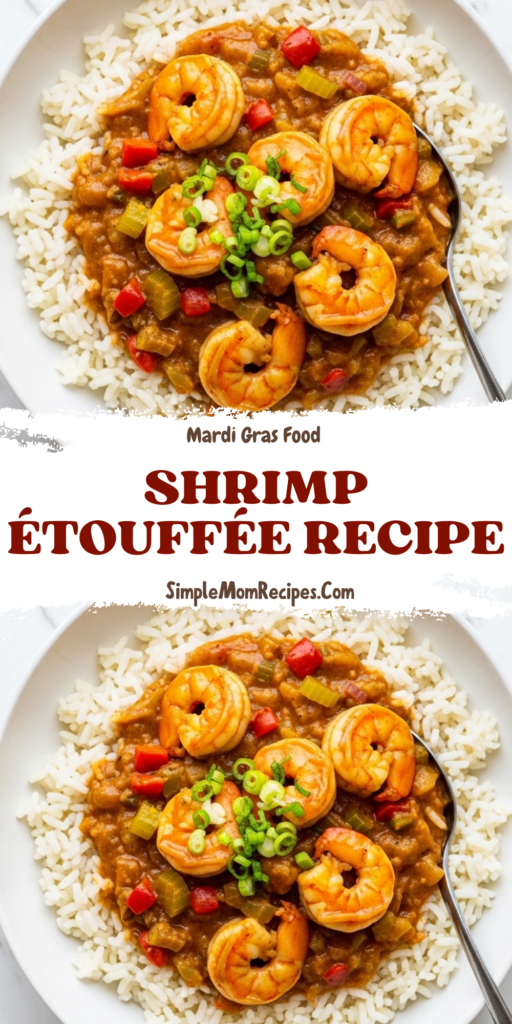
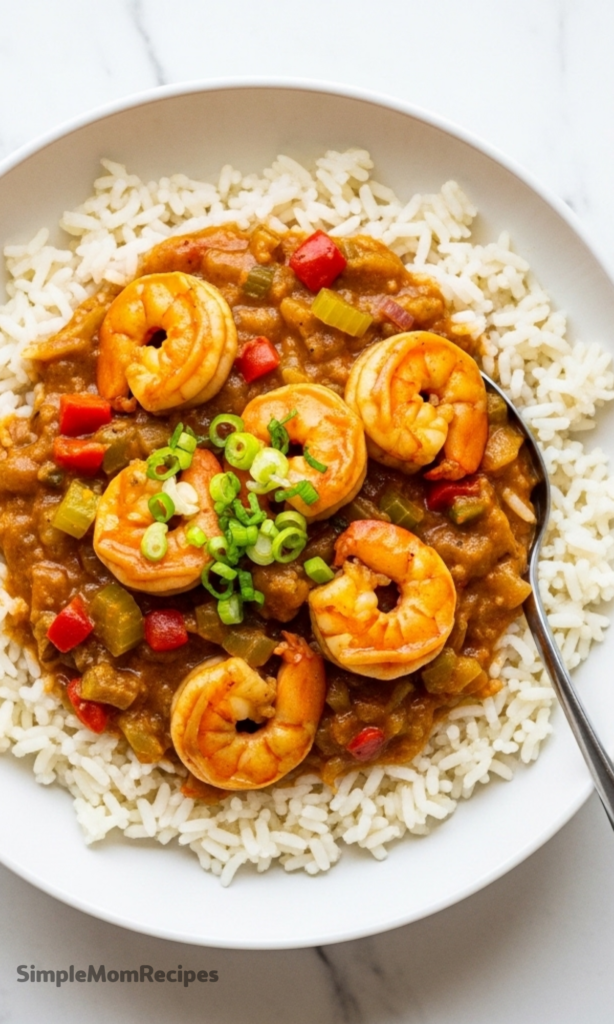
Spoon the étouffée over a mound of warm, fluffy long-grain rice. The rice is the perfect canvas, soaking up every bit of that glorious gravy. Garnish with a flurry of thinly sliced scallion greens.
The contrast of the green against the rich, rust-colored stew is just lovely. Serve it immediately, while everything is steaming hot. The first bite, with a little bit of rice, gravy, and shrimp, is pure comfort.
Tips
- Do not rush your roux. Steady, frequent stirring over medium heat is the key to avoiding burnt spots and achieving an even color.
- If you cannot find head-on shrimp, a good homemade chicken stock is a fantastic stand-in. Many traditional cooks use it, so do not hesitate.
- Start with the three cups of stock. You can always add more at the end, but you cannot take it out. This gives you total control over the gravy’s thickness.
- The baking soda in the shrimp brine is a small trick with a big effect. It helps the shrimp retain moisture, giving them a wonderful, snappy texture.
- Leftovers are even better the next day. The flavors continue to deepen in the fridge. Gently reheat it on the stove with a splash of water or stock.
Making It Your Own
This recipe is a wonderful template. Feel free to lean into what you love. If you adore a deeper, more robust flavor, take your roux a shade darker. Love heat? Add a pinch more cayenne or a few dashes of hot sauce at the end.
You can use a mix of red and green bell pepper for sweetness, or stick with all green for a more traditional profile. Some folks stir in a handful of chopped parsley right at the end for a fresh note. The dish is forgiving, so trust your taste.
Storing and Reheating Leftovers
Any leftover étouffée will keep well in an airtight container in the refrigerator for up to three days. The flavors really do improve overnight. When reheating, do so gently on the stovetop over low heat.
You will likely need to add a small splash of water, stock, or even just water to loosen the sauce back up. It thickens as it sits. Avoid the microwave if you can, as it can make the shrimp rubbery. A little patience on the stove is worth it.

Shrimp Étouffée Recipe: A Rich Stew of Flavor and Tradition
Description
Light or dark, thick or thin: shrimp étouffée the way you want it. This classic Cajun and Creole dish features tender shrimp smothered in a rich, roux-based sauce, served over warm long-grain rice. With options for customizing your roux depth and stock base, this recipe delivers deep flavor and authentic character every time.
ingredients
For the Shrimp Stock (optional)
For the Étouffée
Instructions
Make the Shrimp Stock (Optional)
-
Peel and devein shrimp, reserving shells (and heads if using head-on shrimp). In a bowl, combine peeled shrimp with salt and baking soda; refrigerate until needed.
-
In a heavy-bottomed pot, heat oil over high heat. Add shrimp shells and heads; cook 4 minutes, stirring constantly to avoid burning.
-
Add onion, celery, and garlic; cook until softened. Stir in tomato paste.
-
If using, add sherry or brandy and boil, scraping browned bits. Then add 2 quarts water (or just water if skipping alcohol).
-
Add bay leaf, parsley, and thyme. Simmer gently for 45 minutes. Strain stock—do not skim fat—and set aside.
Make the Étouffée
-
In a Dutch oven, melt butter over medium-high heat. Stir in flour to form a paste. Cook, stirring frequently, to desired roux color: blond (~5 min), peanut butter (~10 min), or brown (~20–30 min).
-
Add onion, celery, and bell pepper. Reduce heat to medium; cook 4 minutes until vegetables soften and are coated in roux.
-
Stir in garlic and scallions; cook 1 minute more.
-
Add dried oregano, thyme, garlic powder, onion powder, cayenne, and optional paprika; stir to combine.
-
Gradually add shrimp stock, stirring between additions, until a thick sauce forms. Bring to a simmer.
-
Add bay leaves, season with salt and pepper. Cover and simmer 30 minutes, stirring occasionally, until vegetables are very soft.
-
Stir in brined shrimp; cook just until pink and opaque (timing depends on size). If too thick, thin with additional stock to desired consistency.
-
Taste and adjust seasoning. Serve over warm rice, garnished with sliced scallions.
Nutrition Facts
Servings 7
- Amount Per Serving
- Calories 392kcal
- % Daily Value *
- Total Fat 13g20%
- Saturated Fat 6g30%
- Cholesterol 145mg49%
- Sodium 890mg38%
- Potassium 420mg12%
- Total Carbohydrate 48g16%
- Dietary Fiber 3g12%
- Sugars 6g
- Protein 19g38%
- Calcium 8 mg
- Iron 15 mg
* Percent Daily Values are based on a 2,000 calorie diet. Your daily value may be higher or lower depending on your calorie needs.
Note
- No head-on shrimp? Use store-bought or homemade chicken stock—it’s a common and authentic substitute in Louisiana cooking.
- Roux control: A blond roux yields a lighter, sweeter étouffée; a brown roux adds depth and slight bitterness. Peanut butter stage offers balance.
- Brining matters: The salt-and-baking-soda brine ensures plump, tender shrimp that won’t turn rubbery.
- Serve immediately: Étouffée is best fresh, but leftovers reheat well—add a splash of stock when warming.
