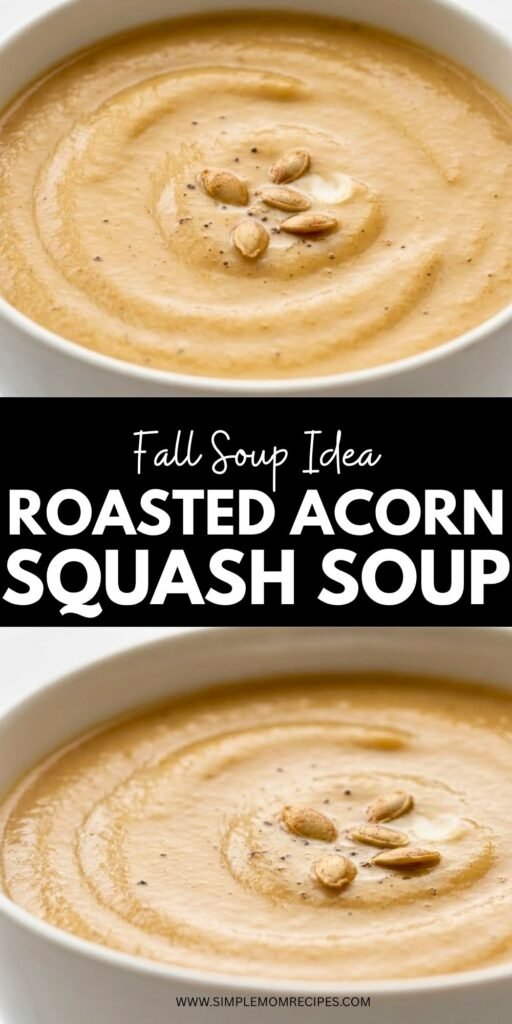
I make this roasted acorn squash soup when I want something cozy without making dinner feel like a whole project. The roasted squash gives the soup a naturally sweet, mellow flavor, while cinnamon and nutmeg make the whole pot taste like fall without turning it into a dessert.
I used to think acorn squash was mostly a side dish vegetable. I would roast it, scoop it out, add butter, and call it done. Then I started putting the roasted squash into soup and honestly, that changed how I looked at it.
The best part for me is the texture. After the squash cooks until it is very soft, it blends into the broth and vegetables so easily. I end up with a smooth soup that feels rich even though the ingredient list is pretty simple.
A Fall Soup I Like to Make Slowly
I start with the squash because roasting it gives me time to get the rest of the ingredients ready. I cut the acorn squash in half, scoop out the seeds, and put the halves cut-side down in a baking dish.
I add enough water to cover the bottom of the dish. I do not pour a lot in there. I just want enough to keep the squash from drying out while it roasts.
At 400 degrees F, the squash usually takes about 45 minutes. I know it is ready when a fork slides into the flesh without much resistance. If I have to push hard, I give it another few minutes.
I learned not to rush this part. A slightly undercooked squash makes scooping the flesh out annoying, and I have done that before when I was trying to get dinner on the table faster. It was not worth saving five minutes.
Once the squash is cool enough to handle, I scoop out the soft flesh and set it aside. I do not worry about making the pieces pretty because everything is going into the blender anyway.
While the squash cools, I chop the onion and carrot. I like a large sweet onion here because it gives the soup a softer, slightly sweet base that works really well with the squash.
Ingredients I Used for the Recipe
- 2 acorn squash, halved and seeded: I use the squash as the main body of the soup, and roasting brings out its natural sweetness.
- Water, as needed: I add enough water to cover the bottom of the baking dish while the squash roasts, and a little more later only if the soup needs thinning.
- 3 tablespoons unsalted butter: I use the butter to soften the onion, carrot, and garlic and give the soup a richer starting flavor.
- 1 large sweet onion, chopped: I like the gentle sweetness it adds without overpowering the squash.
- 1 large carrot, peeled and chopped: I add carrot for another layer of natural sweetness and a little more vegetable flavor.
- 1 clove garlic, minced: I use just one clove because I want the garlic to sit in the background rather than take over.
- 3 1/2 cups low-sodium vegetable stock: I use vegetable stock to bring everything together while keeping the soup vegetarian.
- 1/4 cup half-and-half: I stir this in near the end for a creamy finish without making the soup overly heavy.
- 1/2 teaspoon ground nutmeg: I use nutmeg for that warm, slightly earthy flavor that makes the soup feel especially comforting.
- 1/2 teaspoon ground cinnamon: I add cinnamon for a gentle fall flavor that works surprisingly well with savory vegetables.
- Salt and black pepper, to taste: I season at the end so I can adjust everything after the stock and squash have cooked together.
How to make Roasted Acorn Squash Soup?
Step 1 - Roast the Acorn Squash
I preheat my oven to 400 degrees F. I place the halved and seeded acorn squash cut-side down in a baking dish and add enough water to cover the bottom.
I roast the squash for about 45 minutes, checking it with a fork toward the end. I want the flesh very tender because that makes the next part much easier.
Step 2 - Scoop Out the Squash
I take the baking dish out of the oven and let the squash cool until I can handle it comfortably. Then I scoop the cooked flesh away from the skin and put it into a bowl.
I do not try to scrape every tiny bit from the skin. I just get the soft flesh out and move on. There is no prize for fighting with a squash.
Step 3 - Soften the Vegetables
I melt the butter in a large pot over medium-high heat. Then I add the chopped onion, carrot, and minced garlic.
I stir everything for about 5 to 7 minutes, mostly until the onion softens. I am not trying to brown the vegetables heavily. I want them tender and mellow so they blend smoothly later.
Step 4 - Add the Stock and Squash
I add the vegetable stock and roasted squash to the pot. I give everything a good stir, then let it simmer for about 20 minutes.
This is when the separate ingredients start tasting like one soup. I like giving it the full simmer time because the carrot and onion soften more, and the squash gets even easier to blend.
Step 5 - Blend Until Smooth
I carefully transfer the soup to a blender in batches and puree it until smooth. I never fill the blender all the way when the soup is hot because I would rather make a few extra trips than have a hot soup disaster in my kitchen.
I return the blended soup to the pot. If the texture looks thicker than I want, I can loosen it with a little water later.
Step 6 - Add the Cream and Spices
I stir in the half-and-half, nutmeg, and cinnamon. Then I taste the soup and add salt and black pepper until it tastes balanced.
I like the spices to be noticeable but not loud. Half a teaspoon of each gives me that warm flavor without making the soup taste like a cinnamon drink.
Step 7 - Adjust the Texture and Serve
I check the consistency before serving. If the soup is too thick for my liking, I add a little water and stir it in until it reaches the texture I want.
I usually serve it hot with something crunchy on top. Toasted pumpkin seeds are one of my favorite choices because they give the smooth soup a little contrast. A small swirl of cream works too when I want it to look a bit more special.
What I Like About the Flavor
The first thing I notice is the roasted squash. It has a gentle sweetness that does most of the work here, so I do not need to add sugar or anything fancy.
The sweet onion and carrot make that flavor rounder. The garlic keeps it from becoming too sweet, while the vegetable stock gives the soup enough savory depth to make it feel like dinner rather than a sweet puree.
Then there is the cinnamon and nutmeg. I know cinnamon in soup can sound strange at first, but I like using a small amount. It does not scream cinnamon. It just adds warmth.
I also like that the soup stays fairly light even with the creamy finish. The half-and-half adds a little richness, but I do not end up with the heavy feeling I sometimes get from soups made with lots of cream.
When I want a vegan version, I swap the butter for olive oil and use coconut milk instead of half-and-half. I find that version has a slightly different flavor, but it still works beautifully with the roasted squash.
Tips
- I roast the squash until it is really tender. I find that slightly undercooked squash is harder to scoop and does not blend as smoothly.
- I let the squash cool before scooping. I have burned my fingers rushing this part before, and waiting a few minutes is much easier.
- I do not brown the vegetables too much. I want soft onion and carrot rather than deeply browned vegetables competing with the roasted squash.
- I blend the soup in batches. I find this safer and easier than trying to fit the whole pot into a blender at once.
- I taste after adding the spices. The amount of salt I need depends on the vegetable stock, so I prefer to adjust it at the end.
- I thin the soup slowly. A little water can change the consistency quickly, so I add it in small amounts instead of pouring in a lot at once.
- I keep toppings simple. Toasted pumpkin seeds, a little cream, or coconut cream give me enough contrast without covering up the flavor of the soup.
- I do not worry if the soup looks plain. The flavor is the important part. A few pumpkin seeds on top can make it look finished in about ten seconds anyway.
How I Serve It When I Want a Cozy Dinner
I usually serve this soup with warm bread because I like having something to dip into the bowl. The soup is smooth and creamy, so a crisp piece of toast gives me the texture I am missing.
For a lighter meal, I am happy eating a bowl on its own. I sometimes add toasted pumpkin seeds right before serving, especially when I want some crunch without adding another side dish.
I also like making this when I know I will have a quiet evening at home. There is something nice about roasting the squash first, letting the vegetables simmer, and ending up with a pot of soup that feels much more involved than it really is.
One thing I have realized after making this a few times is that I do not need to pile on extra ingredients to make acorn squash interesting. The roasting, onion, carrot, warm spices, and creamy finish already give me plenty to work with.
That is probably why this recipe has become one of my favorite ways to use acorn squash. I get a bowl that is sweet, savory, creamy, warm, and very much tied to cooler weather. And when I have soup left over, I am always glad I made the bigger batch instead of trying to cook something completely different the next day.