I used to think corned beef and cabbage had to be boiled. That’s how I saw everyone do it, so I followed along without questioning it. The results were fine, but never something I got excited about.
Then one cold afternoon I decided to try baking it instead, mostly because I didn’t want a giant pot bubbling on the stove all day. That small decision completely changed how this dish turned out for me.
The oven makes everything slower, steadier, and way more flavorful. The meat gets tender without falling apart, and the vegetables actually taste like themselves instead of watered down versions.
Now this is the only way I make it. Not just in March. Anytime I want something cozy that feels like it cooked all day without me hovering over it.
Choosing the Beef and Why I Bake It Instead of Boiling
Corned beef is basically a brisket that’s been cured in a salty brine with spices. That’s what gives it that signature pink color and that deep savory flavor. Nothing mysterious going on there, just an old preservation method that happens to taste incredible.
At the store I usually grab a flat cut brisket. It’s leaner, slices cleaner, and doesn’t fight me when I’m trying to make nice pieces. I’ve used the point cut too, and while it’s richer, it can get a little messy and shreddy.
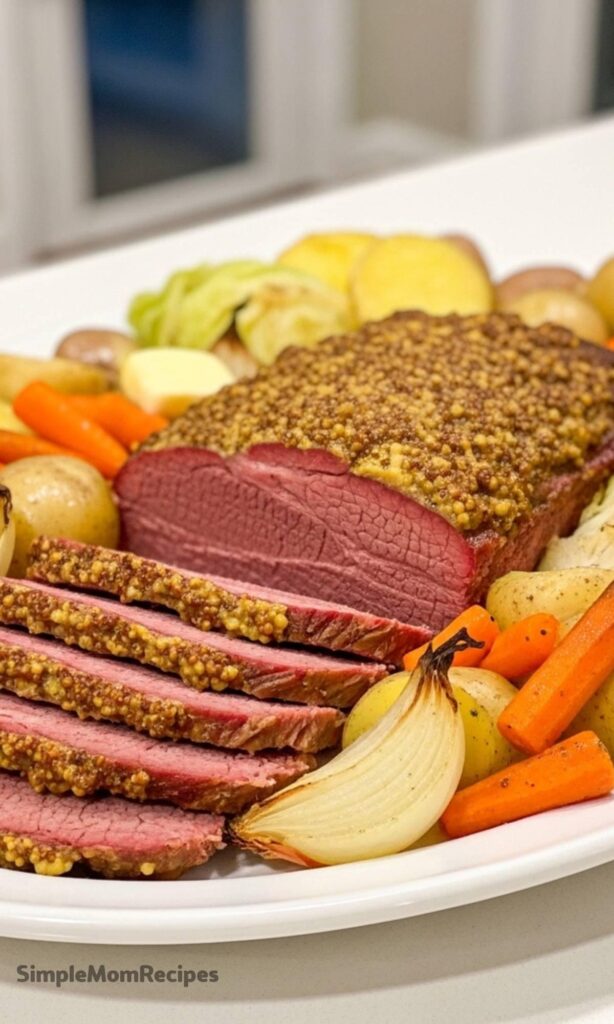
Baking keeps that balance I like. The fat renders slowly, the seasoning forms a crust, and the broth creates just enough moisture without drowning the meat.
Also, and this is honest, it frees me up to do other things. I can walk away. That matters more than I expected.
Ingredients I Used for the Recipe
3 1/2 to 5 pound flat cut corned beef brisket with spice packet - this is the star, already cured and packed with flavor.
1/4 cup stone-ground mustard - gives the top a tangy coating that turns into a crust while baking.
2 tablespoons brown sugar - softens the saltiness and helps caramelization happen.
Spice packet included with the meat - adds that classic corned beef flavor without extra measuring.
1 1/2 cups low-sodium beef broth - keeps everything moist without making it overly salty.
2 pounds yellow potatoes, quartered - they soak up all the juices and become incredibly creamy inside.
1 pound carrots, chopped into 1 inch pieces - bring a little sweetness and balance.
1 small onion, quartered - adds depth while roasting alongside the vegetables.
1 stick salted butter - melted over the vegetables so they roast instead of steam.
1 to 2 tablespoons steak seasoning - wakes up the vegetables and keeps them from tasting flat.
1 head green cabbage, cored and quartered - added later so it stays tender, not mushy.
How to make Oven Baked Corned Beef and Cabbage?
Step 1 - Preheat and Prep the Brisket
I start by heating the oven to 300°F. Low and slow is the whole idea here, so don’t rush this part.
I give the brisket a quick rinse to remove excess brine. You can skip it, but I like controlling the salt level. Then I pat it completely dry so the coating sticks.
Step 2 - Make the Mustard Crust
In a bowl I mix the stone-ground mustard, brown sugar, and the spice packet. It smells sharp and sweet at the same time, which is exactly what you want.
This mixture turns into a paste that spreads easily over the meat.
Step 3 - Coat and Set Up for Baking
I place the brisket fat side up in a Dutch oven or roasting pan. Then I spread that mustard mixture all over the top like I mean it.
The beef broth goes around the meat, not on top. I learned that the hard way after washing the coating off once. Still tasted good, just not as good.
Step 4 - Slow Bake Until Tender
I cover it tightly and slide it into the oven. It cooks about one hour per pound, give or take.
This is the quiet phase. The house starts smelling amazing, and I don’t have to touch anything.
Step 5 - Prepare the Vegetables
About an hour and a half before the meat is done, I toss the potatoes, carrots, and onion onto a baking sheet.
I drizzle melted butter over everything, sprinkle steak seasoning, and mix it with my hands. It feels rustic and messy, which somehow makes the final dish better.
Step 6 - Raise the Heat and Roast the Vegetables
I increase the oven temperature to 350°F and put the vegetables on the lower rack.
They start to roast instead of steam, getting golden edges and real flavor. This step changed everything for me.
Step 7 - Add the Cabbage Late in the Game
With about 45 minutes left, I add the cabbage to the pot with the brisket and sprinkle a little more seasoning.
Adding it earlier makes it fall apart. Waiting keeps it tender with just a slight bite.
Step 8 - Rest, Slice, and Bring It All Together
Once everything is done, I let the meat rest for about 10 minutes. Skipping this makes the juices run everywhere, which I definitely did the first time.
I slice against the grain so it stays tender, then serve it with the roasted vegetables and plenty of those pan juices.
What I Learned After Making This More Times Than I Can Count
The biggest surprise was how hands-off this meal really is. It feels like something complicated, but most of the time it’s just sitting in the oven doing its thing.
I used to rush brisket because I thought tenderness came from heat. Turns out it comes from patience. Every time I’ve tried to speed it up, I regretted it.
Roasting the vegetables separately was another turning point. When they cook in liquid the whole time, they lose personality. When they roast, they actually taste like potatoes and carrots.
And cabbage? I used to think I didn’t like it. I just didn’t like overcooked cabbage.
This dish also reheats incredibly well. Sometimes I think it’s even better the next day, when everything has had time to settle into itself.
Tips
Use a pan with a lid if you can. Trapping moisture is what keeps the brisket tender instead of dry.
Always slice against the grain. If you forget, the meat will feel chewy even if it’s perfectly cooked.
Don’t skip resting the meat. Ten minutes makes a huge difference in texture.
Add cabbage later than you think you should. Early cabbage turns into something closer to soup.
If your brisket seems done early, trust tenderness over time. A fork should slide in without effort.
Leftovers make incredible sandwiches. I pile slices onto toasted bread with a little mustard and call it lunch the next day.
And finally, don’t stress about perfection. This is one of those meals that actually rewards a relaxed approach. Let the oven do the work, let the smells fill the house, and just check on it now and then.
That’s really all there is to it. Simple ingredients, slow cooking, and a method that lets everything taste the way it should.
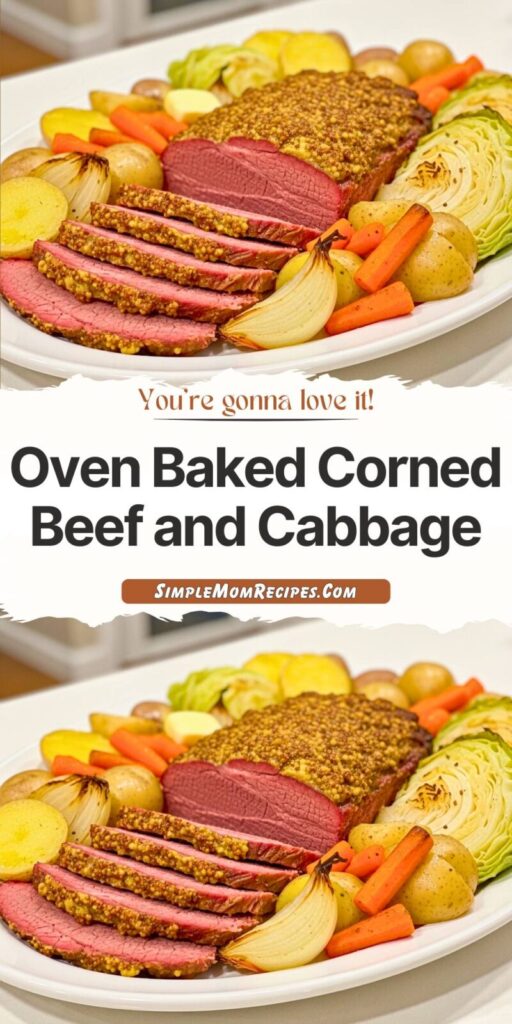
Corned beef and cabbage is a beloved dish, especially around St. Patrick's Day. However, it's too delicious to be relegated to just one holiday! This oven baked corned beef and cabbage is a simple yet flavorful recipe that will impress your family and friends any time of the year. Tender, slow-roasted brisket paired with buttery vegetables makes for the ultimate comfort meal.
ingredients
For the Corned Beef
3.5-5pounds flat cut corned beef brisket (point cut also works; includes spice packet)
Preheat your oven to 300°F (150°C). Rinse the corned beef to remove excess brine—this is optional, but it helps reduce the saltiness. Pat it dry with a paper towel.
2
In a bowl, mix together the stone-ground mustard, brown sugar, and the spice packet that came with the corned beef.
3
Spread the mustard mixture generously over the top of the corned beef with the fat side up. Place it in a large Dutch oven or roasting pan. Pour the low-sodium beef broth around the corned beef, being careful not to wash off the mustard mixture.
4
Cover the pot with a lid and place it in the oven. Cook for approximately 1 hour per pound (about 3.5 hours for a 3.5 lb brisket), or until the meat is tender.
Cooking times may vary based on oven and brisket size
5
With about 1.5 hours left in cooking time, prepare your vegetables. Place the quartered potatoes, chopped carrots, and quartered onion on a baking sheet. Melt the butter and drizzle it over the vegetables. Season with steak blend seasoning.
6
Increase the oven temperature to 350°F (175°C). Place the baking sheet with vegetables on the bottom rack of the oven.
7
With 45 minutes left in the corned beef cooking time, add the quartered cabbage to the pot with the corned beef. Sprinkle with a little more steak seasoning for extra flavor.
8
Once everything is cooked, remove from oven. Let the corned beef rest for about 10 minutes, then slice against the grain for the best texture.
Slicing against the grain ensures tender bites
9
Toss the roasted vegetables and transfer everything to a serving platter. Serve warm and enjoy!
Nutrition Facts
Servings 6
Amount Per Serving
Calories485kcal
% Daily Value *
Total Fat25gg39%
Saturated Fat10gg50%
Trans Fat0.5gg
Cholesterol120mgmg40%
Sodium1200mgmg50%
Potassium800mgmg23%
Total Carbohydrate30gg10%
Dietary Fiber5gg20%
Sugars8gg
Protein35gg70%
Calcium 60mg mg
Iron 3mg mg
* Percent Daily Values are based on a 2,000 calorie diet. Your daily value may be higher or lower depending on your calorie needs.
Note
Rinsing the brisket: Rinsing the corned beef before cooking helps reduce excess saltiness from the brine cure.
Slicing tip: Always slice corned beef against the grain for the most tender, easy-to-chew pieces.
Vegetable timing: Adding the cabbage later in the cooking process prevents it from becoming mushy while still allowing it to absorb delicious flavors.
Make ahead: This dish reheats beautifully! Store leftovers in an airtight container and reheat gently in the oven or microwave.
Keywords:
corned beef, cabbage, oven baked, St. Patrick's Day, Irish recipe, beef brisket, comfort food, one pot meal
Kelsey Perez
Food & Lifestyle Blogger
I’m a London-based food writer, recipe developer, and home cook who has been passionate about cooking for over 15 years. What started as a way to recreate my mother’s traditional dishes turned into a lifelong love for experimenting with flavors, writing about food, and helping others feel more confident in the kitchen.