

There’s something almost magical about a good bowl of miso soup, isn’t there?
It’s that deeply comforting, savory warmth that seems to settle everything right inside you.
A Simple Soup with a Big Story
This humble soup is a cornerstone of Japanese cuisine, a daily ritual for many.
Its soul comes from dashi, a simple broth that forms the foundation for so many dishes.
Ingredients Needed for the Recipe
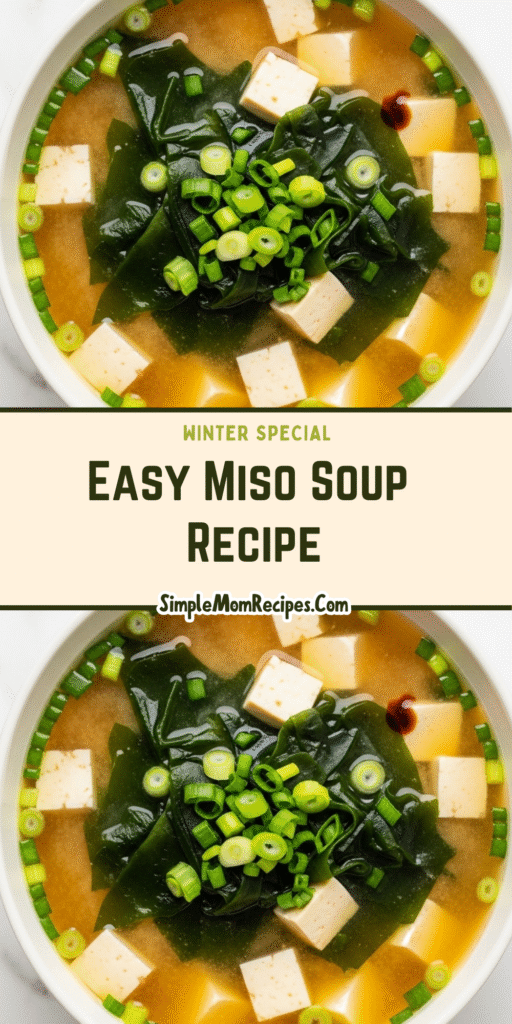
- White Miso Paste: The star of the show, bringing a savory, umami depth.
- Kombu: A dried seaweed that creates the flavorful base for our vegetarian dashi.
- Wakame: Another type of dried seaweed that rehydrates into lovely, soft green ribbons.
- Silken Tofu: It provides a delicate, soft texture that melts into the broth.
- Green Onions: They add a fresh, crisp bite and a pop of color.
- Tamari: Used for serving, it fine-tunes the saltiness to your personal taste.
How to make Miso Soup?
Step 1 – Craft the Dashi Broth
Give the kombu a quick rinse under cool water, then place it in a pot with the water.
Let it gently simmer on low heat for about ten minutes, keeping a watchful eye to prevent a rolling boil.
Step 2 – Wake Up the Wakame
While the dashi is working its magic, place the dried wakame in a bowl.
Cover it with warm water and watch in amazement as it transforms, expanding dramatically in just five minutes.
Step 3 – Create the Miso Slurry
This is the secret to a perfectly smooth soup, no lumps allowed.
Ladle a bit of the hot dashi into a small bowl, add the miso paste, and whisk until it’s completely silky.
Step 4 – Bring It All Together
Stir the miso mixture back into the main pot of dashi.
Drain the now-plump wakame and add it to the soup, along with the cubed tofu and green onions.
Step 5 – Warm Through and Serve
Let everything heat over very low heat for just a minute or two, until the tofu is warm.
Ladle into bowls and let everyone add a dash of tamari until the flavor sings for them.
Tips
- Never, ever let your miso soup boil after the paste is added. You’ll lose its wonderful fermented qualities.
- When shopping, look for white miso paste in the refrigerated section, usually near the tofu.
- If your miso paste is particularly firm, press it through a fine-mesh strainer for an ultra-smooth result.
- Feel free to adjust the amount of miso to your liking, starting with a little less and adding more if you want a stronger flavor.
Making It Your Own
This recipe is a wonderful canvas, just waiting for your personal touch.
Toss in a handful of spinach during the last minute of warming, or add thinly sliced mushrooms to the dashi as it simmers.
Your Miso Soup Moment
This soup is incredibly versatile, fitting perfectly into any part of your day.
Enjoy it as a light lunch with a side of steamed rice, or as a soothing starter to a larger meal.


Miso Soup Recipe
Description
Learn how to make miso soup at home! Brimming with savory, umami flavor, this easy vegan and gluten-free recipe is a delicious side dish, starter, or meal on its own. Made with kombu dashi, silken tofu, wakame seaweed, and green onions, it’s nourishing, simple, and ready in under 20 minutes.
ingredients
Instructions
-
Gently rinse the kombu. Place it in a medium pot with 4 cups water. Simmer over low heat for 10 minutes. Do not boil—this can make the kombu bitter.
-
While the kombu simmers, soak the dried wakame in a small bowl of warm water for 5 minutes to rehydrate. It will expand significantly.
-
Remove and discard the kombu from the pot.
-
In a small bowl, ladle a bit of hot dashi broth and whisk in the white miso paste until smooth to create a slurry.
-
Stir the miso slurry back into the pot of dashi.
-
Drain the rehydrated wakame and add it to the soup along with the cubed silken tofu and chopped green onions.
-
Warm the soup over very low heat for 1–2 minutes. Do not boil—this preserves the probiotics in the miso.
-
Serve hot, with tamari added to taste if desired.
Nutrition Facts
Servings 4
- Amount Per Serving
- Calories 45kcal
- % Daily Value *
- Total Fat 2 gg4%
- Saturated Fat 0.3 gg2%
- Trans Fat 0 gg
- Cholesterol 0 mgmg0%
- Sodium 750 mgmg32%
- Potassium 90 mgmg3%
- Total Carbohydrate 4 gg2%
- Dietary Fiber 1 gg4%
- Sugars 1 gg
- Protein 3 gg6%
- Calcium 30 mg
- Iron 0.8 mg
* Percent Daily Values are based on a 2,000 calorie diet. Your daily value may be higher or lower depending on your calorie needs.
Note
- Probiotic tip: Never boil miso soup after adding miso—high heat kills beneficial bacteria.
- Customize it: Add shiitake mushrooms, daikon, spinach, or cooked rice for a heartier meal.
- Storage: Store without miso for up to 3 days; add fresh miso when reheating to preserve flavor and nutrients.
