Some dinners just feel like a vacation, a brief, delicious escape from the everyday.
This Mediterranean shrimp is exactly that kind of meal, a one-pan wonder that brings the sunny, relaxed flavors of the coast right to your table.
Why This Recipe Works Every Time
Honestly, the beauty of this dish is its clever simplicity. It feels special, like something you’d order at a seaside taverna.
Yet it’s built mostly from pantry and freezer staples, coming together in about thirty minutes for a stress-free weeknight win.
Ingredients Needed for the Recipe
Here’s your shopping list, full of vibrant flavors and easy-to-find items.
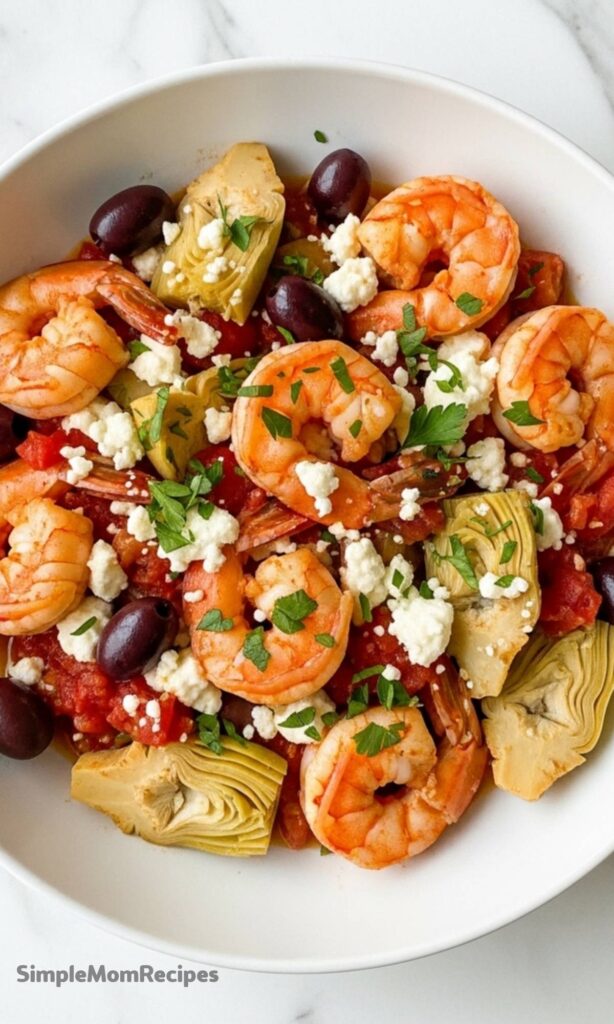
Shrimp: The star of the show. I nearly always use frozen, peeled, and deveined shrimp for convenience and cost.
Red Onion & Garlic: This duo builds a sweet, aromatic base that makes the whole kitchen smell incredible.
Fire-Roasted Tomatoes: They come in a can but offer a surprisingly deep, smoky flavor to the sauce.
Dried Oregano & Red Pepper Flakes: Classic Mediterranean savoriness and a gentle, warming heat.
Honey & Red Wine Vinegar: A quick splash of each balances the tomatoes’ acidity and makes all the flavors pop.
Artichoke Hearts & Kalamata Olives: These briny, tangy nuggets are the soul of the dish, adding wonderful texture and character.
Feta Cheese: It gets a little melty and wonderfully creamy under the heat, offering salty, rich bites throughout.
Fresh Parsley & Lemon Juice: Don’t skip these final touches; they add the essential burst of freshness that ties everything together.
Your Go-To Serving Companions
This shrimp is incredibly versatile when it comes to what you serve it with. You truly can’t go wrong.
A bed of fluffy rice or quinoa soaks up the fantastic sauce beautifully. For something lighter, a simple arugula salad with lemon vinaigrette is perfect.
And if you want to keep it utterly simple, just grab a loaf of crusty bread for dipping. It’s a complete, satisfying meal however you choose.
How to make Mediterranean Shrimp?
Make this recipe yours—just save it to your Pinterest board!"
Step 1 - Prep Your Ingredients
Start by patting your shrimp thoroughly dry with paper towels; this helps them sear instead of steam. Toss them with a bit of salt and pepper.
Chop your onion, mince the garlic, and drain the artichoke hearts. Having everything ready makes the cooking process smooth and quick.
Step 2 - Build the Flavor Base
In a large, ovenproof skillet, warm some olive oil over medium heat. Add the chopped red onion with a pinch of salt and pepper.
Cook them until they’re soft and fragrant, about five minutes, then stir in the garlic for just thirty seconds until you catch its scent.
Step 3 - Simmer the Sauce
Pour in the can of fire-roasted tomatoes with their juices, and add the oregano and red pepper flakes. Let this mixture simmer gently for about ten minutes.
This short simmer is magical, it deepens and melds all the flavors together. Then, stir in the red wine vinegar and honey.
Step 4 - Assemble the Dish
Take the skillet off the heat. Scatter the artichoke hearts and Kalamata olives evenly over the tomato sauce.
Now, arrange your seasoned shrimp in a single layer on top. Finally, crumble the feta cheese generously over everything.
Step 5 - Bake to Perfection
Transfer the skillet to your preheated 400°F oven. Bake for 10 to 12 minutes.
You’ll know it’s done when the sauce is bubbling, the feta has softened and browned in spots, and the shrimp are pink and cooked through.
Step 6 - The Final Flourish
Pull the skillet from the oven, and immediately squeeze fresh lemon juice all over the top. Sprinkle with the chopped parsley.
This step is non-negotiable, it brightens the entire dish. Serve it right from the skillet, hot and inviting.
Smart Storage & Reheating
Any leftovers are a true gift for the next day. Let the dish cool completely before transferring it to an airtight container.
It will keep in the refrigerator for up to three days. To reheat, warm it gently in a skillet over medium-low heat until just heated through.
You can even enjoy it cold, tossed with some fresh greens or pasta for a fantastic shrimp salad. I don’t recommend freezing, as the shrimp can become mushy.
Tips
Frozen shrimp is your friend. Thaw it overnight in the fridge or in a bowl of cold water for 30 minutes before you start cooking.
Use an oven mitt! That skillet handle will be extremely hot when it comes out of the oven, a reminder we all need sometimes.
If you’re not an olive fan, simply leave them out. The artichokes and feta will still provide plenty of that Mediterranean personality.
For a richer sauce, let it simmer on the stove for a few extra minutes before adding the shrimp and baking.
Recommended Tools for the Job
A good oven-safe skillet is the only truly essential piece of equipment here. A 10 or 12-inch cast iron or stainless steel pan works perfectly.
It moves seamlessly from the stovetop to the oven to the table, which means fewer dishes to wash. A simple citrus juicer and a set of measuring spoons round out the short list.
Now, go ahead and make it. This Mediterranean shrimp is your ticket to a little culinary sunshine, no passport required.
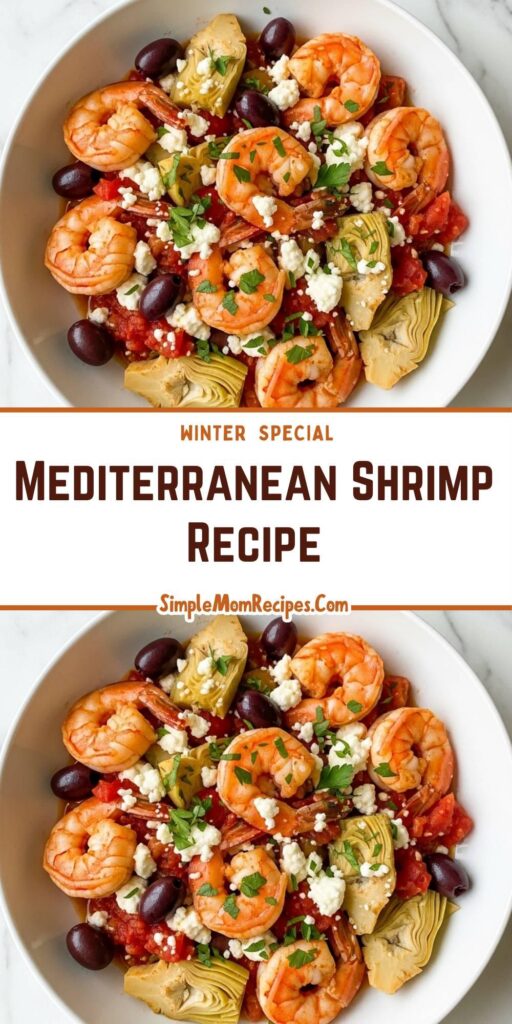
Juicy shrimp baked in a garlicky tomato sauce alongside classic Mediterranean ingredients like artichokes and olives, all simmering away under a shower of creamy feta cheese. This one-pan Mediterranean shrimp will transport you to a sunny, relaxing place—no matter the actual state of your kitchen or mental well-being.
ingredients
1pound large shrimp (40 to 50 per pound, peeled and deveined (fresh or frozen and thawed), tails on or off)
¾teaspoon kosher salt (divided)
½teaspoon ground black pepper (divided)
2tablespoons extra virgin olive oil
1 small red onion (chopped)
2cloves garlic (minced (about 2 teaspoons))
114.5-ounce can fire roasted diced tomatoes (in their juices)
1teaspoon dried oregano
¼teaspoon red pepper flakes
1teaspoon honey
1tablespoon red wine vinegar
114-ounce can artichoke hearts (drained and quartered)
½cup pitted Kalamata olives
¾cup crumbled feta cheese
2tablespoons chopped fresh parsley
2tablespoons fresh lemon juice (from about ½ medium lemon)
Instructions
1
Place a rack in the center of your oven and preheat the oven to 400°F. Pat the shrimp dry, place in a mixing bowl, and sprinkle with ½ teaspoon salt and ¼ teaspoon black pepper. Toss to coat, then set aside.
2
In a large, ovenproof skillet over medium heat, heat the olive oil. Add onion and sprinkle with the remaining ¼ teaspoon salt and ¼ teaspoon black pepper. Cook, stirring occasionally, until softened, about 5 minutes. Reduce the heat as needed so that the onion softens but does not brown. Add the garlic and cook just until fragrant, about 30 seconds.
3
Add the tomatoes, oregano, and red pepper flakes. Reduce the heat to medium-low and let gently simmer for 10 minutes. Stir in the red wine vinegar and honey. Remove from the heat.
4
Scatter the artichokes and olives over the top, then arrange the shrimp on top in a single layer. Sprinkle with the feta.
5
Bake for 10 to 12 minutes, until the tomatoes are bubbling, cheese has browned slightly, and the shrimp are cooked through. Squeeze the lemon juice over the top and sprinkle with parsley. Enjoy hot.
Nutrition Facts
Servings 3
Amount Per Serving
Calories340kcal
% Daily Value *
Total Fat18g28%
Saturated Fat6g30%
Cholesterol175mg59%
Sodium980mg41%
Potassium620mg18%
Total Carbohydrate16g6%
Dietary Fiber5g20%
Sugars6g
Protein30g60%
Calcium 210 mg
Iron 3 mg
* Percent Daily Values are based on a 2,000 calorie diet. Your daily value may be higher or lower depending on your calorie needs.
Note
TO STORE: Place leftovers in an airtight storage container in the refrigerator for up to 3 days.
TO REHEAT: Very gently rewarm Mediterranean shrimp in a large skillet on the stove over medium-low heat. Leftovers would also be tasty served cold as a salad over lettuce or pasta.
Freezing Not Recommended: The texture of the shrimp may become mushy once thawed.
I’m a London-based food writer, recipe developer, and home cook who has been passionate about cooking for over 15 years. What started as a way to recreate my mother’s traditional dishes turned into a lifelong love for experimenting with flavors, writing about food, and helping others feel more confident in the kitchen.