

There is something about the combination of lemon and lavender that just stops you in your tracks. It is not as common as chocolate or vanilla, which is exactly why I love making it for people. The look on their faces when they take that first bite—it is pure surprise. Happy surprise.
I have made this cake more times than I can count. For birthdays, for baby showers, for no reason at all except that I wanted a bright sunny cake sitting on my kitchen counter. And every single time, someone asks for the recipe. So here it is, finally, in a place where you can get to it easily.
This is not one of those complicated bakery-style cakes that requires a million special tools. It is straightforward. It is forgiving. And it tastes like a dream. The lavender is subtle, trust me on this. My rule with lavender has always been simple: you want to taste it and think “what is that lovely floral note?” not “did someone spray perfume on my dessert?”
So let us walk through it together. I will share all the little things I have learned from making this cake again and again. The tiny adjustments. The moments where you can relax. The places where you need to pay attention. By the time we are done, you will feel ready to bake this yourself.
Ingredients Needed for the Recipe
Before we start mixing anything, let us talk about what goes into this cake and why each ingredient matters. I am a firm believer that understanding your ingredients makes you a better baker. Not in a stuffy culinary school way. Just in a practical, this-makes-sense way.
- All-purpose flour (3 cups): This is your structure. I have tried this recipe with cake flour and it works, but all-purpose gives the cake a little more substance. It holds up well to the moisture from the oil and the tanginess of the lemon.
- Baking powder and baking soda (2 1/2 teaspoons and 1/2 teaspoon): They work together here. The baking powder does most of the heavy lifting for rise, and the baking soda helps with browning and tenderness. Do not skip either one.
- Kosher salt (1/2 teaspoon): Salt makes everything taste like itself. Without it, the cake would be flat and one-dimensional. It brightens the lemon and keeps the sweetness in check.
- Sugar (2 cups): This is not just for sweetness. We are going to treat it special. The sugar gets infused with lemon zest and lavender, which means every single granule carries flavor deep into the batter.
- Lemon zest (2 tablespoons): From about four lemons. Use a microplane if you have one. The fine zest dissolves right into the sugar. No one wants a big chewy piece of lemon peel in their cake.
- Dried culinary lavender (1 tablespoon): This is important. You need culinary lavender, not the stuff from the craft store. It is dried specifically for eating and has a much milder, more pleasant flavor.
- Unsalted butter (1/2 cup, room temperature): Butter brings flavor. Pure, simple, delicious flavor. Do not melt it. Do not use it cold. Let it sit out until it is soft enough that your finger leaves an indent when you press it.
- Vegetable oil (1/2 cup): This is my secret for a cake that stays moist for days. Butter gives flavor, oil gives tenderness. Together they are unstoppable.
- Large eggs (4, room temperature): Room temperature eggs mix into the batter smoothly instead of seizing up. If you forgot to take them out early, put them in a bowl of warm water for five minutes.
- Vanilla extract (1 teaspoon): Just enough to round out the edges. You will not taste vanilla specifically, but you would notice if it was missing.
- Fresh lemon juice (1/3 cup): Bottled juice will not give you the same brightness. Squeeze the lemons you zested. It is the perfect amount.
- Whole milk (1 cup): The fat in whole milk adds richness. Lower fat milks work in a pinch, but the texture will be slightly less tender.
For the frosting, you will need 1 1/2 cups of unsalted butter at room temperature, 6 cups of powdered sugar, 1/3 cup of whole milk, and 1 tablespoon of lemon extract. The lemon extract keeps the frosting flavorful without making it too thin, the way extra juice would.
Baking with Lavender Without Ruining Everything
I have to be honest with you about something. The first time I baked with lavender, I ruined it. I was young and ambitious and I thought “more is more.” So I tossed in a generous handful of dried lavender buds and crossed my fingers.
The cake came out of the oven smelling like a grandma’s attic. Not in a nostalgic cozy way. In a dusty potpourri way. It was barely edible. I learned a hard lesson that day about restraint.
Lavender is strong. It has this compound called linalool that also shows up in mint and citrus and cinnamon, but in lavender it concentrates in a way that can tip right over into soapiness. The key is treating it gently.
Grinding the lavender with sugar, like we do here, does two things. First, it breaks the buds down so you get flavor in every bite instead of surprise lavender bombs. Second, it disperses that flavor evenly so no single piece overwhelms the rest.
One tablespoon of dried lavender for a whole cake is the sweet spot. It is present. You know it is there. But it never shouts. It whispers.
How to make Lemon Lavender Cake Recipe?
Alright, let us get to the actual making part. This is where the magic happens. Take your time, read through each step before you start, and remember that baking is supposed to be enjoyable. If something goes slightly wrong, it will probably still taste great.

Step 1 – Get Your Pans Ready and Oven Heating
Preheat your oven to 350°F. Do not skip this step and do not trust the dial completely. If you have an oven thermometer, use it. My oven runs hot and I only figured that out after years of burning the bottoms of cakes.
Grease two 8-inch round cake pans with butter. Then cut circles of parchment paper for the bottoms. Press them in and grease the parchment too. Dust everything with flour and tap out the extra. This sounds fussy, but it guarantees your cakes will come out clean with no torn edges.
Step 2 – Whisk the Dry Ingredients Together
In a medium bowl, whisk together the flour, baking powder, baking soda, and salt. Whisking aerates the flour and makes sure the leavening agents are spread evenly. Set this bowl aside for now.
Step 3 – Infuse the Sugar with Lemon and Lavender
Get out your food processor. Add the sugar, all that lovely lemon zest, and the dried lavender. Close the lid and process for one to three minutes. Stop when the lavender is ground into tiny specks and the whole mixture looks pale yellow and smells incredible.
Open the lid and take a deep breath. This is what summer smells like. The sugar will be slightly damp from the oils in the zest. That is perfect.
Step 4 – Beat Butter, Oil, and the Infused Sugar
In your stand mixer with the paddle attachment, or in a large bowl with a hand mixer, combine the butter, vegetable oil, and that beautiful lemon-lavender sugar. Beat on medium-high speed for about four minutes.
Watch it transform. It will go from a grainy mess to something pale and fluffy and almost triple in volume. This is where the texture of your cake starts to build, so do not rush it.
Step 5 – Add Eggs and Vanilla
Crack your first egg into the mixer bowl and beat until it disappears. Add the next one. Then the next. Then the last one. Scrape down the bottom and sides of the bowl with a rubber spatula between eggs to make sure everything incorporates evenly.
Pour in the vanilla extract and mix it through. The batter might look a little curdled at this point. That is fine. The flour will bring it all together.
Step 6 – Alternate the Dry and Wet Ingredients
With the mixer on low speed, add half of the flour mixture. Mix just until you do not see dry flour anymore. Then pour in the milk and the fresh lemon juice. Mix again on low.
Add the rest of the flour mixture and mix until it just comes together. A few lumps are okay. Overmixing at this stage develops gluten and makes the cake tough. Use your spatula to scrape the bowl one last time and fold anything that did not get mixed.
Step 7 – Bake the Layers
Divide the batter evenly between your two prepared pans. I like to weigh them on a kitchen scale to be precise, but eyeballing works too. Smooth the tops gently with your spatula.
Bake for 30 to 35 minutes. Start checking at 30 minutes. A toothpick inserted in the center should come out clean or with just a few moist crumbs. The edges will pull away from the pan slightly and the center will spring back when you poke it.
Step 8 – Cool the Cakes Completely
Let the cakes rest in their pans for 15 minutes. Then run a knife around the edges, flip them out onto a wire rack, and peel off the parchment paper. Let them cool completely. This takes about an hour. Do not try to frost a warm cake. It will end in tears and melted buttercream.
Step 9 – Make the Lemon Buttercream Frosting
While the cakes cool, make your frosting. Beat the butter in your mixer on medium speed until it is smooth and satiny. About two minutes. It should look like pale yellow silk.
Add the powdered sugar, half of the milk, and the lemon extract. Start the mixer on low so the sugar does not fly everywhere, then increase to medium and beat for two minutes until light and fluffy. If it is too thick, add more milk a tablespoon at a time.
Step 10 – Assemble and Frost the Cake
Place one cake layer right-side up on your plate or cake stand. Spread a thick layer of frosting over it. About half a cup to a full cup. Top with the second layer, but place it upside down. This gives you a perfectly flat top to work with.
Apply a thin layer of frosting all over the cake. This is the crumb coat. It seals in any loose bits so your final coat stays clean and crumb-free. Pop the cake in the fridge for 20 minutes to set that layer.
Pull it out, stir your leftover frosting to smooth it, and apply the final coat. Make it thick and pretty. Use your spatula to create swirls or keep it simple. Either way, it will be beautiful.
Tips
These are the little things I wish someone had told me before I started baking layer cakes. They make the whole process smoother and the results more reliable.
- Room temperature ingredients are not a suggestion. Cold butter does not cream properly. Cold eggs can make your batter seize. Set everything out an hour before you start baking.
- If your kitchen is warm and your frosting starts looking soupy, stick the bowl in the fridge for ten minutes. Then beat it again. It will firm right up.
- Use a serrated knife to level your cake layers if they domed in the oven. Just slice the bump off the top so your layers stack flat. Save the scraps for snacking.
- When you grind the lavender with sugar, open the food processor carefully. Let the dust settle for a moment so you do not inhale floral sugar particles and sneeze everywhere.
- Do not skip the parchment paper. I know it feels like an extra step, but I promise you it saves so much frustration when you are trying to get those perfect layers out of the pans.
- Taste your lavender before you use it. Different brands have different strengths. If yours smells extremely strong, use a little less. If it is mild, the full tablespoon is perfect.
How to Store This Cake and Make It Ahead
One of the best things about this lemon lavender cake is how well it keeps. You can make parts of it days ahead and assemble when you are ready. It is perfect for people who like to plan ahead, which I am learning to be better at.
After baking the cake layers, let them cool completely. Wrap each one tightly in plastic wrap. They can sit at room temperature overnight or go into the freezer for up to three months. I often bake layers on a Sunday afternoon and frost them on a Wednesday for a Thursday celebration.
The frosting also freezes beautifully. Make it, cover it tightly, and store it in the fridge for a week or the freezer for three months. When you are ready to use it, let it thaw in the refrigerator overnight. Then beat it on medium speed for a few seconds until it is smooth again. If it seems stiff, add a tiny splash of milk.
Once the cake is fully assembled and frosted, it will stay fresh in a cake keeper on the counter for up to four days. If you have slices left over, cover the exposed cake parts with plastic wrap so they do not dry out. The frosting seals in moisture pretty well, but cut edges need a little extra protection.
I have kept this cake in the refrigerator before, especially in hot summer months when the buttercream wants to melt. Just take it out an hour before serving so it softens back to room temperature. Cold cake tastes less flavorful and the texture gets firm instead of tender.
A Few Easy Ways to Change Up the Recipe
Sometimes you want to make a recipe your own. I completely understand that. Baking should be creative, not just following directions like a robot. Here are some variations I have tried that worked really well.
If you want a simpler version, bake this batter in a 9×13 pan instead of layer cakes. Grease the pan well, pour in the batter, and bake for about 35 to 40 minutes. Let it cool and spread the frosting right over the top. No stacking required.
For a more rustic look, skip the fancy frosting and just dust the cake with powdered sugar. The lemon lavender flavor shines through without the richness of buttercream. It is lighter and quicker, perfect for a casual brunch.
You can swap the lemon extract in the frosting for vanilla extract if you prefer. It gives you a more classic buttercream that lets the lavender take center stage. I have done this when serving people who are extra sensitive to sour flavors.
Add a tablespoon of poppy seeds to the batter for a lemon lavender poppy seed cake. The little pops of texture are lovely and it makes the cake look speckled and interesting. Just fold them in at the very end before baking.
If you are serving this to a crowd that loves berries, serve each slice with a handful of fresh raspberries or blueberries on the side. The berries add color and a little burst of tartness that plays nicely with the floral notes.
This cake has become my signature dessert for spring and summer gatherings. It feels special without being fussy. It tastes complicated but comes together with basic techniques. And it always, always gets compliments. I hope you love making it as much as I do.
Lemon Lavender Cake Recipe
Description
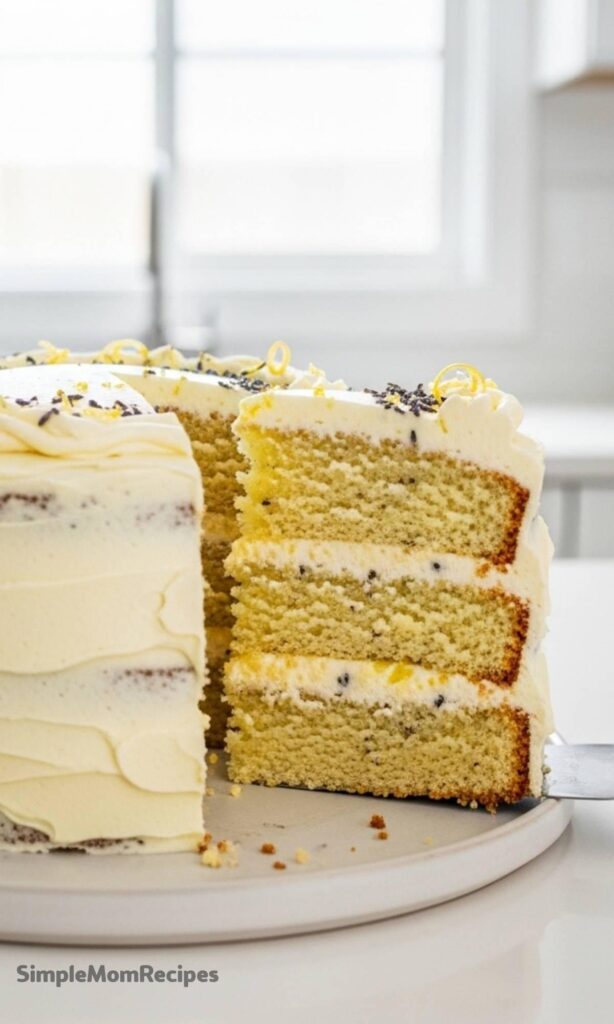
This Lemon Lavender Cake is a bright, floral dessert that captures the essence of spring and summer. Featuring a tender crumb infused with lemon zest and culinary lavender, it’s layered and frosted with a tangy lemon buttercream for a perfect balance of sweet and tart. Ideal for celebrations or afternoon tea, this cake is as beautiful as it is delicious.
ingredients
For the lemon lavender cake layers
For the lemon buttercream frosting
Instructions
Prepare the oven and pans
Preheat your oven to 350°F (177°C). Grease two 8-inch round cake pans with butter. Line the bottoms with parchment paper, grease the parchment, then dust with flour and tap out excess.Mix dry ingredients
In a medium bowl, whisk together the flour, baking powder, baking soda, and salt.Infuse the sugar
In a food processor, combine sugar, lemon zest, and dried lavender. Process for 1–3 minutes until the lavender is finely ground and evenly distributed.Cream butter, oil, and infused sugar
In a stand mixer fitted with a paddle attachment (or using a hand mixer), beat the butter, oil, and lemon-lavender sugar on medium-high speed until pale and fluffy—about 4 minutes.Add eggs and vanilla
Add eggs one at a time, beating well after each. Scrape down the bowl, then mix in the vanilla extract.Combine wet and dry ingredients
Add half the flour mixture and mix on low until incorporated. Pour in the milk and lemon juice, mix until combined. Add remaining flour mixture and mix just until no dry streaks remain—do not overmix.Bake the cake layers
Divide batter evenly between prepared pans. Bake for 30–35 minutes, or until a toothpick inserted in the center comes out clean and edges pull away from the pan.Cool the cakes
Let cakes cool in pans for 15 minutes, then invert onto wire racks to cool completely before frosting.Make the frosting
Beat butter until smooth (~2 minutes). Add powdered sugar, half the milk, and lemon extract. Beat until light and fluffy. Add more milk as needed for desired consistency.Assemble and frost
Place one cake layer right-side-up on a plate. Spread ½–1 cup frosting evenly. Top with second layer upside-down for a flat surface. Apply a thin crumb coat over entire cake and chill for 20 minutes. Then apply final thick layer of frosting and smooth sides.
Nutrition Facts
Servings 16
- Amount Per Serving
- Calories 643kcal
- % Daily Value *
- Total Fat 32g50%
- Saturated Fat 18g90%
- Cholesterol 105mg35%
- Sodium 320mg14%
- Potassium 180mg6%
- Total Carbohydrate 87g29%
- Dietary Fiber 1g4%
- Sugars 62g
- Protein 5g10%
- Calcium 10 mg
- Iron 2 mg
* Percent Daily Values are based on a 2,000 calorie diet. Your daily value may be higher or lower depending on your calorie needs.
Note
- Storage: Keep in a cake saver at room temperature for up to 4 days. Cover exposed slices with plastic wrap to prevent drying.
- Make ahead: Cake layers can be wrapped and frozen for up to 3 months. Frosting can be refrigerated for 1 week or frozen for 3 months.
- Lavender tip: Use only culinary-grade dried lavender. Too much can taste soapy—measure carefully!
