

I used to think corned beef was one of those meals you only made if you really knew what you were doing. Like you needed some inherited family wisdom and at least five hours of patience.
Turns out I was completely wrong. The Instant Pot took all that drama and threw it out the window.
The first time I made this, I kept hovering over the counter like I was supervising a science experiment. Now I toss everything in, press a button, and go fold laundry or scroll my phone like a normal person.
This has become my go-to when I want something hearty but don’t want to babysit a pot all afternoon. The meat comes out ridiculously tender. Not kinda tender. The kind where you barely touch it with a fork and it just gives up.
And the smell while it cooks? That alone makes it worth repeating.
Ingredients I Used for the Recipe
- 4 pound corned beef brisket – this is the star, obviously. I usually grab one with a nice fat cap because that’s where the flavor hides.
- 1½ cups water – helps create the pressure environment and keeps everything juicy.
- 1 medium onion, sliced – adds a mellow sweetness while it cooks down.
- 5 garlic cloves, smashed – I don’t even bother chopping. Just crush them for deep flavor.
- 1 bottle (12 ounces) beer – gives richness and depth. I’ve used different kinds and they all worked.
- Spice packet that comes with the brisket – this brings that classic corned beef flavor. If it looks skimpy, I add a little extra pickling spice from my cabinet.
How to make Instant Pot Corned Beef Recipe?
Step 1 – Rinse the Brisket (Don’t Skip This)
I know it feels weird to rinse meat, but this step matters. Corned beef sits in a salty brine, and if you don’t wash that off, the final dish can taste way too salty.
I give it a quick rinse under cold water and pat it dry. Nothing fancy.
Step 2 – Season It Like You Mean It
I rub the spice packet all over the brisket. Sometimes there’s not enough in there, which is honestly annoying, so I sprinkle extra spices if I have them.
Make sure you coat the top and sides. This is where the flavor builds while pressure cooking.
Step 3 – Build the Cooking Base
I pour 1½ cups of water into the Instant Pot, then set the rack inside. The rack keeps the meat slightly elevated so it doesn’t just sit in liquid the whole time.
Then I place the brisket fat-side up. That fat slowly melts down into everything.
Step 4 – Add Onion, Garlic, and Beer
I scatter sliced onion and smashed garlic over the top. No need to be neat here.
Then I pour the beer right over the brisket. It smells amazing already at this point, which always feels like a good sign.
Step 5 – Seal and Pressure Cook
I lock the lid, set the valve to seal, and cook on high pressure for 90 minutes.
If your brisket is a different size, a good rule I follow is about 22 minutes per pound. That guideline has never failed me.
Step 6 – Let It Release Naturally
Once the timer ends, I let the pressure release naturally for 10 minutes. This helps keep the meat tender instead of tightening up.
After that, I do a quick release for whatever pressure is left.
Step 7 – Rest Before Slicing
I transfer the brisket to a board and loosely cover it with foil. Letting it rest for a few minutes makes slicing easier and keeps juices inside.
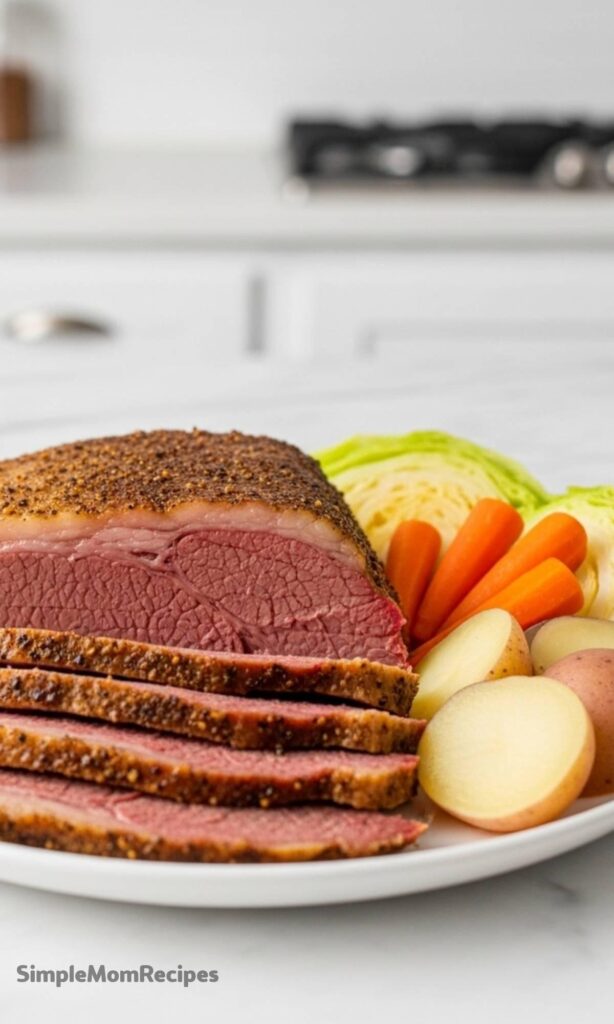
Slice against the grain. Always against the grain. I learned that the hard way once and ended up with chewy strips.
Step 8 – Optional Vegetables If You Want the Full Meal
If I’m making this as a full dinner, I strain the cooking liquid and return about 2 cups to the pot.
Then I add potatoes, carrots, and cabbage, seal it again, and cook for just 4 minutes on high pressure. That’s all they need.
How I Actually Serve It at Home
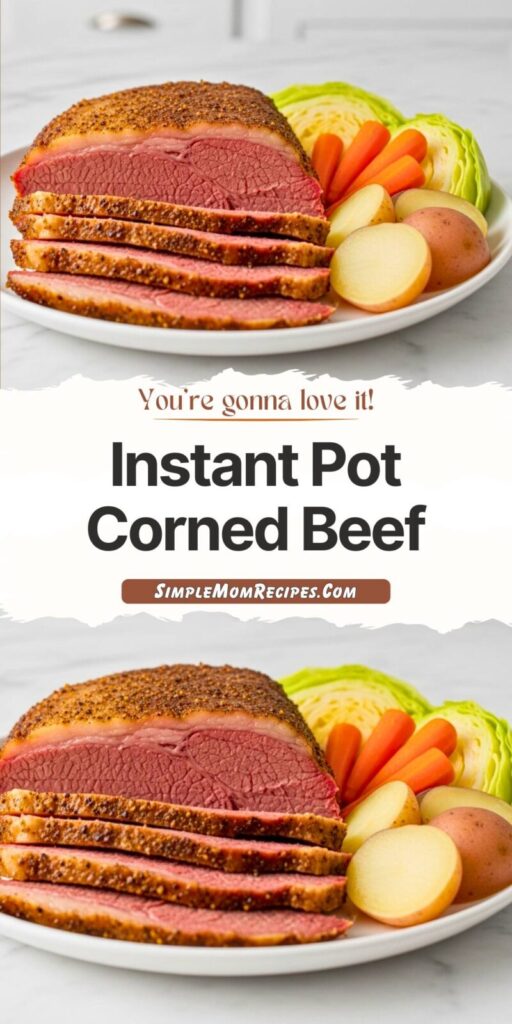
Some days I go traditional with cabbage and potatoes. Other days I don’t bother and just pile slices onto a plate with mustard.
This is also one of my favorite leftover meats because it transforms into completely different meals without trying.
I’ve stuffed it into sandwiches the next day, chopped it for hash, and even tossed it into tacos when I didn’t feel like cooking something new. It’s one of those foods that somehow tastes better the second time around.
There was one week where I made a big brisket and we ate off it for three days without getting bored. That’s when I realized this recipe wasn’t just a holiday thing anymore.
Why the Instant Pot Changed Everything for Me
Before using pressure cooking, I tried making corned beef on the stove once. It took forever and I kept checking the pot like I didn’t trust it.
The Instant Pot version is consistent. I don’t have to guess. I don’t have to poke it. I don’t even think about it while it cooks.
The texture comes out the same every time. Soft, sliceable, and never dry.
It also freed up my afternoon, which might be my favorite benefit if I’m being honest.
Tips I Learned After Making This More Times Than I Planned
- Don’t skip the rinse. I tried once just to see if it mattered. It absolutely did. Way too salty.
- Bigger isn’t harder. A larger brisket just needs more time. The pressure cooker handles it easily.
- Fat is your friend here. Don’t trim it off before cooking. It adds flavor and you can remove it later if you want.
- Use whatever liquid you like. Beer adds depth, but I’ve also used broth when that’s what I had. It still worked beautifully.
- Let the pressure release naturally for a bit. Rushing that step can make the meat tense up. Giving it those extra minutes really does make a difference.
- Slice against the grain. This is the difference between melt-in-your-mouth and why-is-this-chewy.
- Leftovers are gold. I actually look forward to them. That’s rare in my house.
At this point, this meal feels less like a special occasion dish and more like a reliable fallback when I want something comforting without working too hard.
And honestly, that’s probably why I keep coming back to it. It tastes like I put in way more effort than I actually did, which is my favorite kind of cooking.
Instant Pot Corned Beef Recipe
Description
This Instant Pot Corned Beef recipe delivers fork-tender, flavorful brisket with minimal effort. Perfect for St. Patrick's Day or any time you crave comforting, savory meat. The pressure cooker ensures juicy results every time, while traditional spices and beer create an authentic taste. Serve with cabbage, potatoes, and carrots for a complete meal, or enjoy the leftovers in tacos, sandwiches, and more.
ingredients
Instructions
- Remove the corned beef from packaging and rinse thoroughly under cold water to remove excess brine. Pat dry with paper towels.
- Rub the corned beef spice blend generously all over the brisket, ensuring even coverage on all sides.
- Add 1.5 cups of water to the Instant Pot insert. Place the rack inside, then add the seasoned brisket fat-side up. Top with sliced onions and garlic cloves.
- Pour the 12-ounce beer over the brisket. Sprinkle with additional spices if desired. Secure the lid and set the vent to the sealing position.
- Select Pressure Cook on High for 90 minutes. Once cooking completes, allow a natural pressure release for 10 minutes, then perform a quick release for any remaining pressure.
- Carefully remove the brisket and let it rest for 10 minutes before slicing against the grain. Serve warm with your favorite sides.
Nutrition Facts
Servings 8
- Amount Per Serving
- Calories 385kcal
- % Daily Value *
- Total Fat 25gg39%
- Saturated Fat 9gg45%
- Trans Fat 0gg
- Cholesterol 100mgmg34%
- Sodium 1200mgmg50%
- Potassium 520mgmg15%
- Total Carbohydrate 5gg2%
- Dietary Fiber 1gg4%
- Sugars 2gg
- Protein 28gg57%
- Calcium 2% mg
- Iron 15% mg
* Percent Daily Values are based on a 2,000 calorie diet. Your daily value may be higher or lower depending on your calorie needs.
Note
- Extra tender result: Allow the full natural release time before quick releasing to keep the meat juicy.
- Add vegetables: After removing the brisket, add potatoes, carrots, and cabbage to the pot and pressure cook for 4 more minutes for a complete one-pot meal.
- Leftover ideas: Shred leftover corned beef for tacos, nachos, Reuben sandwiches, or hash.
- Beer substitution: No beer? Use low-sodium beef broth, chicken broth, or apple cider for similar depth of flavor.
