I didn’t grow up making hot cross buns, honestly. The first time I tried them, I thought they were just slightly sweet rolls with raisins thrown in. Nothing special. I was wrong.
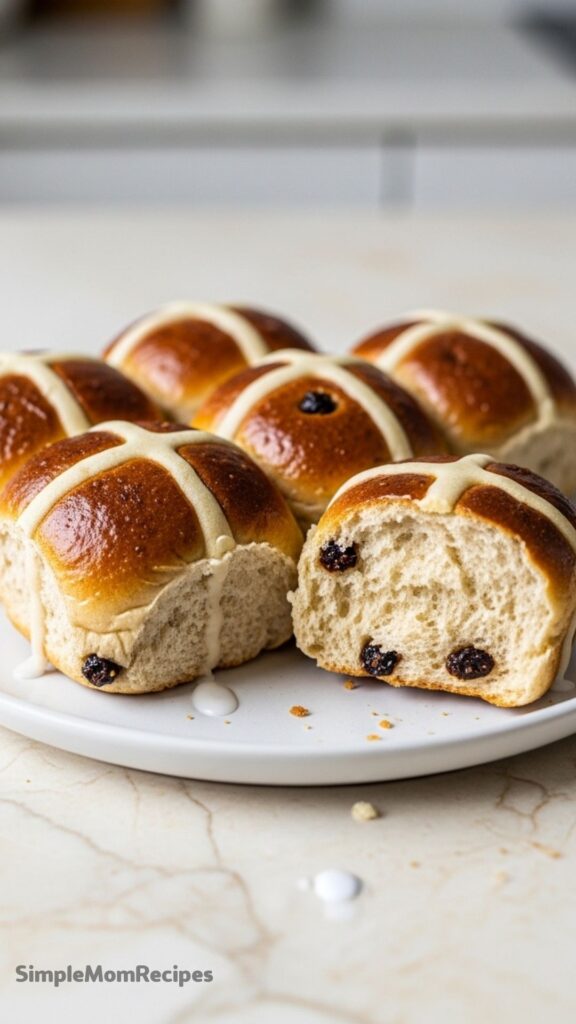
Once I made them myself, warm from the oven with that sticky orange glaze, it clicked. They’re somewhere between a soft dinner roll and a cinnamon roll, but not as heavy. Just enough spice, just enough sweetness.
Now I make them every year around Easter. Not perfectly, not fancy. Just real, a little messy, and always worth it.
Ingredients I Used for the Recipe
3/4 cup warm whole milk - helps activate the yeast and gives the dough richness
2 and 1/4 teaspoons yeast - this is what makes the buns rise and get fluffy
1 teaspoon sugar - just to wake up the yeast
1/2 cup brown sugar - adds sweetness and a slight caramel flavor
5 tablespoons butter, softened - makes the buns soft and slightly rich
1/2 teaspoon vanilla extract - adds a warm, subtle flavor
2 eggs - gives structure and softness to the dough
1 teaspoon salt - balances all the sweetness
1 and 1/4 teaspoons cinnamon - the main spice, warm and comforting
1/2 teaspoon nutmeg - adds depth, a little earthy
1/2 teaspoon allspice - brings that classic hot cross bun flavor
3 and 1/2 cups flour - forms the base of the dough
1 cup raisins - chewy little bursts of sweetness
1/2 cup flour + 6-8 tablespoons water - for the traditional cross on top
1 cup powdered sugar + 3 tablespoons orange juice - for the sticky orange icing
How to make Hot Cross Buns?
Step 1 - Wake Up the Yeast
I mix the warm milk, yeast, and a teaspoon of sugar in a bowl and let it sit for about 5 minutes. If it gets foamy, you're good. If it just sits there doing nothing, your yeast is probably dead. I’ve made that mistake more than once.
Step 2 - Build the Dough
I add brown sugar, butter, vanilla, eggs, salt, and all the spices. Then I mix in some flour first, just to get things going, before adding the rest along with the raisins.
The dough should feel soft and a little sticky. Not dry. I used to panic and keep adding flour, and that just gave me dense, sad buns.
Step 3 - Knead It (Even If You Don’t Feel Like It)
I knead the dough for about 5 minutes. Sometimes by hand, sometimes with a mixer. It gets smoother and a bit stretchy.
If it sticks to everything, I dust a tiny bit of flour. Not too much. I learned the hard way that over-flouring ruins the texture.
Step 4 - First Rise
I place the dough in a greased bowl, cover it, and let it sit for about 1 to 2 hours. It should double in size.
This part always tests my patience. I keep checking it every 20 minutes like that’s going to make it rise faster.
Step 5 - Shape the Buns
Once risen, I punch it down. Not aggressively, just enough to release the air. Then I divide it into about 14 to 16 pieces.
I roll each piece into a ball, tucking the edges underneath so the tops stay smooth. They don’t have to be perfect. Mine never are.
Step 6 - Second Rise
I place the dough balls into a baking dish, cover them again, and let them rise for another hour.
They puff up and start touching each other. That’s exactly what you want.
Step 7 - Pipe the Cross
I mix flour and water into a thick paste and pipe a simple cross over each bun. I just use a zip-top bag with the corner snipped off.
The lines don’t always come out neat. I stopped caring about that. They still taste the same.
Step 8 - Bake Until Golden
I bake them at 350°F (about 177°C) for 20 to 25 minutes. The tops turn golden brown and the kitchen smells like cinnamon and butter.
If they brown too fast, I loosely cover them with foil. I forget this step sometimes and end up with darker tops than I planned.
Step 9 - Add the Orange Icing
I whisk powdered sugar with orange juice and brush it over the warm buns. The glaze melts slightly and turns sticky.
This part is my favorite. I always add a little extra icing. No regrets.
What They Actually Taste Like (In My Kitchen)
They’re soft, but not super airy. A little dense in a good way. The spices come through, especially cinnamon, but they don’t overpower everything.
The raisins add sweetness, though I’ll admit I used to pick them out when I was younger. Now I kind of like them, especially when they’re plump and soft.
And that orange icing on top ties it all together. Without it, they feel incomplete to me.
Tips I Learned the Hard Way
I’ve messed these up enough times to have opinions now. So here’s what actually helped me.
Don’t skip soaking the raisins - I soak them in hot water for 5 to 10 minutes. They get softer and way better.
Don’t rush the rise - if the dough hasn’t doubled, just wait. I’ve baked it early before and the buns came out heavy.
Keep the dough slightly sticky - dry dough leads to dry buns. It’s tempting to add more flour, but don’t.
Use warm milk, not hot - too hot kills the yeast. I test it with my finger. If it feels comfortably warm, it’s fine.
Pipe thin crosses - thick lines look nice before baking but can turn chewy and a bit tough.
Eat them warm if you can - they’re still good later, but fresh out of the oven is a different experience.
Little Things I Do Differently Sometimes
Some years I add orange zest into the dough. It makes the whole batch smell brighter and a little fresher.
Other times I swap raisins for dried cranberries. Slightly tangy, which I actually like more depending on my mood.
And once, I added a pinch of cardamom. That was a good decision. Not traditional maybe, but really nice.
I don’t always follow the exact same version, and I think that’s kind of the point. These buns are forgiving. They let you play around a little.
At the end of the day, they’re just soft, spiced buns with a cross on top. But somehow, every time I make them, they feel a bit more special than that.
Learn how to make flavorful hot cross buns using this deliciously spiced yeast dough. Brown sugar, raisins or currants, butter, and vanilla add exceptional flavor and each dense bun is marked with a traditional cross. Orange icing is a tasty finishing touch to this classic Easter recipe. These buns are soft yet dense with warm cinnamon, nutmeg, and allspice flavors, perfect for sharing during spring celebrations.
ingredients
Dough
3/4cup whole milk (warmed to about 110°F)
2 1/4teaspoons active dry yeast or instant yeast (1 standard packet)
1teaspoon granulated sugar
1/2cup packed light or dark brown sugar (100g)
5Tablespoons unsalted butter (71g, softened to room temperature)
1/2teaspoon pure vanilla extract
2large eggs (at room temperature)
1teaspoon salt
1 1/4teaspoons ground cinnamon (reduce to 1/2 tsp for fluffier buns)
1/2teaspoon ground nutmeg
1/2teaspoon ground allspice
3 1/2cups all-purpose flour or bread flour (438g, spooned and leveled)
1cup raisins or currants (140g, optionally soaked in hot water)
Flour Cross
1/2cup all-purpose flour or bread flour (63g)
6-8Tablespoons water (90-120ml, as needed for thick paste)
Orange Icing
1cup confectioners sugar (120g)
3Tablespoons fresh or bottled orange juice (45ml, or use milk with vanilla for plain icing)
Instructions
1
Prepare the doughWhisk the milk, yeast, and granulated sugar together in the bowl of your stand mixer. Cover and allow mixture to sit for about 5 minutes or until foamy on top.
If you do not own a mixer, use a large mixing bowl and mix with a wooden spoon or silicone spatula
2
Mix ingredientsAdd the brown sugar, butter, vanilla extract, eggs, salt, cinnamon, nutmeg, allspice, and 1 cup flour. Using the dough hook or paddle attachment, mix on low speed for 30 seconds, scrape down the sides of the bowl, then add the remaining flour and the raisins. Beat on low speed until the dough comes together and pulls away from the sides of the bowl, about 2 minutes.
Dough should be a little sticky and soft. If too sticky, add flour 1 Tablespoon at a time
3
Knead the doughKeep the dough in the mixer and beat for an additional 5 full minutes, or knead by hand on a lightly floured surface for 5 full minutes. If the dough becomes too sticky, sprinkle 1 teaspoon of flour at a time. After kneading, the dough should feel soft and slightly tacky.
Perform windowpane test: stretch a small piece of dough until thin enough for light to pass through without tearing
4
First riseLightly grease a large bowl with oil or nonstick spray. Place the dough in the bowl, turning to coat all sides. Cover with aluminum foil, plastic wrap, or a clean kitchen towel. Allow the dough to rise in a warm environment for 1-2 hours or until double in size.
Rising time may vary based on room temperature
5
Shape the rollsGrease a 9x13-inch baking pan or two 9-inch square or round baking pans. When the dough is ready, punch it down to release the air. Divide the dough into 14-16 equal pieces. Shape each piece into a smooth ball, pinching it on the bottom to seal. Arrange in prepared baking pan.
Rolls should be smooth on top and sealed on bottom
6
Second riseCover shaped rolls with aluminum foil, plastic wrap, or a clean kitchen towel. Allow to rise until puffy, about 1 hour.
7
Preheat ovenPreheat oven to 350°F (177°C).
8
Add the crossesWhisk the cross ingredients together, starting with 6 Tablespoons of water. You want a thick paste that will pipe easily. Add remaining water if needed. Spoon paste into a piping bag or zipped-top bag. Snip off a small piece at the corner. Pipe a line down the center of each row of buns, then repeat in the other direction to create crosses.
Ensure corner opening is small for thin, precise lines
9
Bake the rollsBake for 20-25 minutes or until golden brown on top, rotating the pan halfway through. If you notice the tops browning too quickly, loosely tent the pan with aluminum foil. Remove from the oven and allow rolls to cool for a few minutes as you prepare the icing.
Internal temperature should reach 190°F when done
10
Make and apply icingWhisk the icing ingredients together, then drizzle or brush on warm rolls. Serve immediately.
For best results, apply icing while buns are still warm
Nutrition Facts
Servings 16
Amount Per Serving
Calories235kcal
% Daily Value *
Total Fat6gg10%
Saturated Fat3.5gg18%
Trans Fat0gg
Cholesterol38mgmg13%
Sodium175mgmg8%
Potassium145mgmg5%
Total Carbohydrate43gg15%
Dietary Fiber2.2gg9%
Sugars17gg
Protein7.5gg15%
Calcium 4% mg
Iron 6% mg
* Percent Daily Values are based on a 2,000 calorie diet. Your daily value may be higher or lower depending on your calorie needs.
Note
Soaking raisins: For extra plump and moist raisins, soak them in hot water for 5-10 minutes before using. Drain and pat dry before adding to dough.
Flour cross vs icing cross: The flour cross is piped before baking for a traditional look. For an icing cross, skip the flour paste and pipe thick icing on cooled buns after baking.
Freezing instructions: Prepare through shaping, freeze unbaked buns up to 3 months. Thaw and rise 4-5 hours before baking. Or freeze baked buns without icing, thaw and reheat before adding icing.
Overnight rise option: After shaping, refrigerate buns up to 15 hours. Remove 3 hours before baking to rise at room temperature.
Optional add-ins: Try dried cranberries, chopped candied citrus, chopped apricots, or nuts. Add orange or lemon zest to dough for extra citrus flavor. Adjust spices to taste.
Milk substitution: Whole milk recommended for best flavor and richness. Lower fat or nondairy milks work in a pinch but may reduce richness.
Cinnamon note: Cinnamon can inhibit rising. This recipe uses 1 1/4 teaspoons for dense buns. Reduce to 1/2 teaspoon or omit for fluffier rolls.
Storage: Store leftover rolls tightly covered at room temperature 1-2 days or refrigerate up to 1 week. Reheat gently before serving.
Keywords:
hot cross buns, Easter recipe, spiced yeast buns, traditional Easter bread, orange icing, raisin buns, spring baking
Kelsey Perez
Food & Lifestyle Blogger
I’m a London-based food writer, recipe developer, and home cook who has been passionate about cooking for over 15 years. What started as a way to recreate my mother’s traditional dishes turned into a lifelong love for experimenting with flavors, writing about food, and helping others feel more confident in the kitchen.