

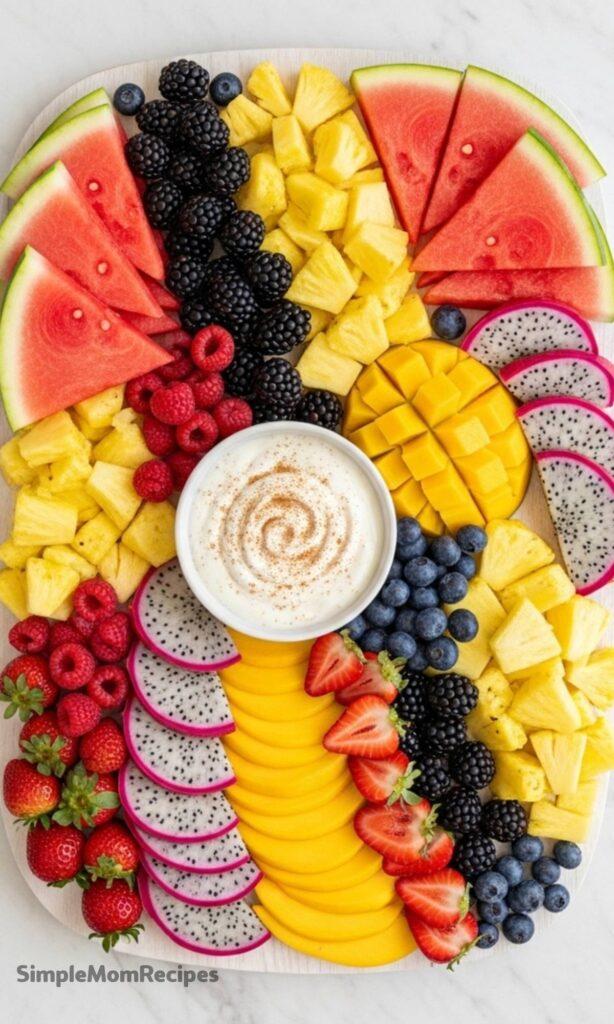
If you’re looking for a show-stopping appetizer that’s vibrant, fresh, and secretly one of the easiest things you can make, learning how to make a fruit charcuterie board is the answer.
A fruit charcuterie board is colorful, customizable, crowd-friendly, and naturally healthier than many party snacks—yet it still feels indulgent and special. Whether you’re hosting a brunch, baby shower, summer party, holiday gathering, or just want a beautiful centerpiece for a casual get-together, a fruit charcuterie board delivers every time.
With a rainbow of ripe fruit, a creamy honey-yogurt dip, and thoughtful arrangement, you can create a platter that looks straight out of a magazine—without any culinary stress.
Below, you’ll find a complete, step-by-step guide on how to make a fruit charcuterie board, using the provided recipe as the factual base while expanding with expert tips, creative ideas, and presentation tricks to make your board unforgettable.
What Is a Fruit Charcuterie Board?
Traditionally, the word charcuterie refers to cured meats and accompaniments, but modern entertaining has embraced the concept far beyond meats and cheeses.
A fruit charcuterie board takes the same idea—beautiful presentation, variety, balance, and abundance—and applies it to fresh fruit and complementary dips or add-ins.
The result is a platter that’s:
- Bright and visually striking
- Naturally sweet and refreshing
- Easy to adapt for any season or dietary preference
- Perfect for large crowds
And best of all, it proves that food is supposed to be fun.
Why You’ll Love Making a Fruit Charcuterie Board
There are plenty of reasons fruit boards have become a go-to for hosts:
- Healthy but festive: Fresh fruit feels light and nourishing while still looking celebratory
- Minimal cooking required: Most of the work is washing, slicing, and arranging
- Customizable: Use what’s in season, what you love, or what your guests prefer
- Great for all ages: Kids and adults alike gravitate toward colorful fruit
- Pairs well with everything: From brunch spreads to cocktails and crisp white wine
How Much Fruit Do You Need Per Person?
A common question when learning how to make a fruit charcuterie board is quantity.
A good rule of thumb:
- 4–5 ounces of fruit per person
If the board is one of several appetizers, lean toward the lower end. If it’s the star of the table, plan a bit extra—fruit tends to disappear quickly.
The Best Fruits for a Fruit Charcuterie Board
The best fruit for your board is, quite simply, the fruit you love most. That said, using a rainbow approach creates visual impact and variety in flavor and texture.
Rainbow Fruit Guide
Red / Pink
- Strawberries
- Cherries
- Raspberries
- Dragon fruit
- Pomegranate seeds
- Watermelon
Orange
- Orange slices or segments
- Dried apricots
- Mango
Yellow
- Pineapple
- Starfruit
Green
- Green grapes
- Kiwi
- Watermelon rind (as an accent)
Blue
- Blueberries
Purple / Violet
- Blackberries
- Purple grapes
A Note About Apples
Apples can be used, but they tend to brown quickly. If you include them, toss the slices generously in lemon juice to help them stay fresh and bright.
Ingredients for a Classic Fruit Charcuterie Board
Using the provided recipe as a base, this combination creates a balanced, colorful, and crowd-pleasing board for about 10 people.
Fresh Fruit
- 1 small seedless watermelon, sliced into small wedges
- 1 pineapple, cut into chunks
- 2 yellow mangoes, sliced
- 1 dragon fruit, sliced
- 1 pound strawberries
- 12 ounces blackberries, rinsed
- 12 ounces blueberries, rinsed
- 8 ounces raspberries, rinsed
Creamy Yogurt Fruit Dip
- 1 cup plain yogurt
- 2 tablespoons honey
- ½ teaspoon cinnamon
- ¼ teaspoon vanilla extract
This simple dip adds richness and warmth, balancing the fresh acidity of the fruit beautifully.
How to Make a Fruit Charcuterie Board (Step by Step)

1. Choose the Right Board or Tray
Select a large serving board, cutting board, or platter. Wood boards add warmth, while marble or white platters make colors pop. Bigger is always better—you want room to spread out.
2. Prep All the Fruit First
Wash, dry, peel, and slice all fruit before you start arranging. Uniform, bite-sized pieces make the board easier to eat and more visually appealing.
3. Make the Fruit Dip
In a small bowl, stir together the yogurt, honey, cinnamon, and vanilla extract until smooth. Taste and adjust sweetness if needed.
4. Place the Dip Strategically
Start by placing the dip in a small bowl on the board—often in the center or slightly off-center. This gives you a natural anchor point for arranging the fruit.
5. Add Large Fruits First
Begin with bigger items like watermelon wedges, pineapple chunks, and mango slices. These create structure and guide the layout of the rest of the board.
6. Fill In with Smaller Fruits
Nestle berries, grapes, and smaller slices around the larger fruit sections. Let some items spill naturally for a relaxed, abundant look.
7. Adjust and Balance
Step back and look at the board. Adjust colors, fill gaps, and rotate pieces until the arrangement feels balanced and intentional.
Ideas for Arranging Your Fruit Charcuterie Board
If you’re unsure how to lay everything out, try one of these beginner-friendly styles:
- Concentric circles: Arrange fruit in rings around a central dip
- Clusters and piles: Group each fruit together for a clean, organized look
- Wavy ribbons: Create flowing lines of fruit across the board
- Mixed sizes: Use large piles with smaller fruits tucked into gaps
- Bowls and nests: Use small bowls for berries, nuts, or dried fruit
- Rainbow layout: Arrange fruit by color for a striking visual effect
Add mozzarella pearls as “clouds” for a playful twist.
Creative Additions to Elevate Your Board
While fruit alone is beautiful, thoughtful extras can take your board to the next level:
- Slices or cubes of angel food cake or pound cake
- Chocolate truffles, cookies, or chocolate-covered pretzels
- Soft cheeses like brie, camembert, or goat cheese logs
- Edible flowers or fresh herbs for garnish
- Cookie-cutter fruit shapes (watermelon stars are always a hit)
How Long Can Fruit Sit Out?
Once sliced, fresh fruit should sit at room temperature for no more than 2 hours.
For stress-free hosting:
- Prep fruit ahead of time
- Store it in airtight containers in the refrigerator
- Assemble the board shortly before serving
This keeps everything fresh, safe, and visually appealing.


Fruit Charcuterie Board
Description
For your next party, make a fresh fruit charcuterie board! This beautiful board is healthy and colorful, and includes an easy fruit dip recipe.
ingredients
For the yogurt fruit dip:
Instructions
-
Prepare large serving trays, a large board or a cutting board.
-
In a small bowl, mix the ingredients for the yogurt dip. Place the dip on the serving tray.
-
Arrange fruit in desired pattern (see article above for ideas).
-
Cover and place in refrigerator until ready to serve, chilled.
Nutrition Facts
Servings 10
- Amount Per Serving
- Calories 126kcal
- % Daily Value *
- Total Fat 1g2%
- Cholesterol 1mg1%
- Sodium 16mg1%
- Total Carbohydrate 30g10%
- Dietary Fiber 6g24%
- Sugars 22g
- Protein 3g6%
* Percent Daily Values are based on a 2,000 calorie diet. Your daily value may be higher or lower depending on your calorie needs.
Note
- How much fruit do I need per person? Plan on 4–5 ounces of fruit per person.
- What fruits should I use? Use a rainbow of fruits: strawberries, cherries, raspberries, dragon fruit, pomegranate seeds, watermelon, oranges, mango, pineapple, kiwi, blueberries, blackberries, purple grapes.
- Prevent browning: Toss apple slices in lemon juice if using.
- Serving tip: Once sliced, fruit should only sit at room temperature for about 2 hours.