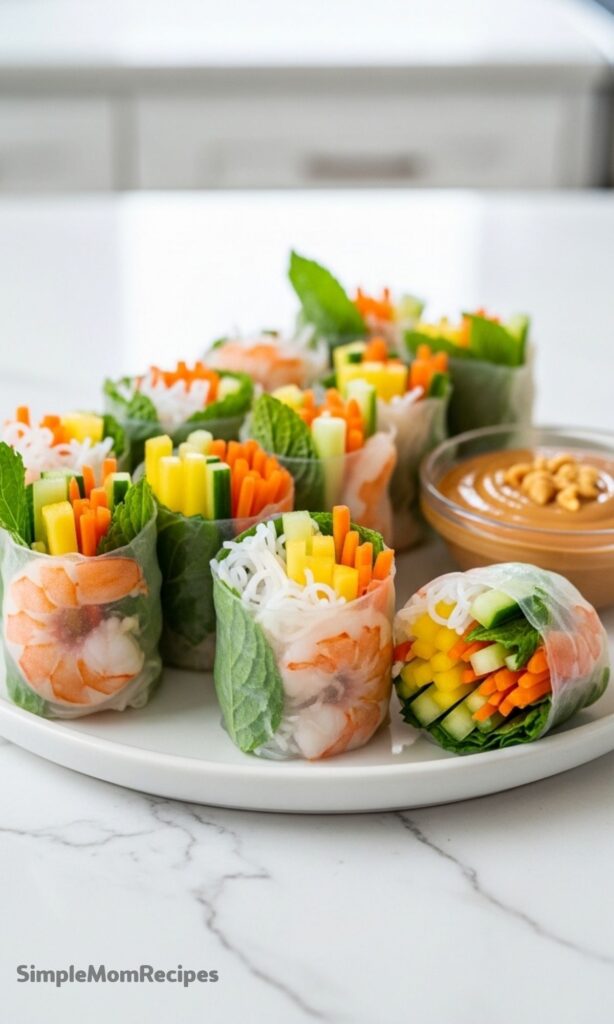
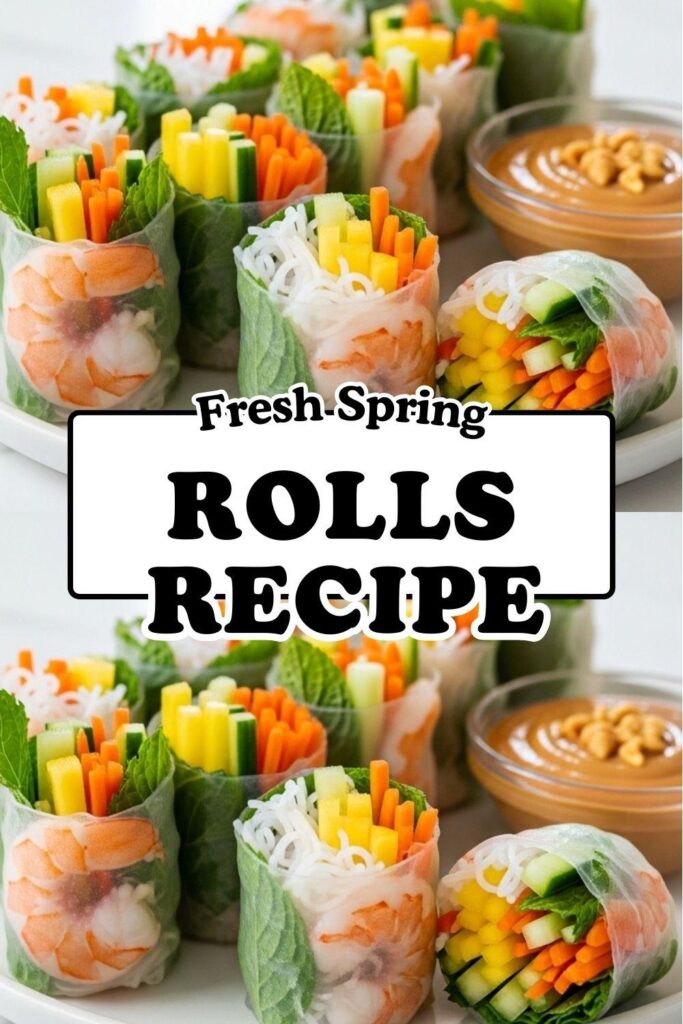
I make these fresh spring rolls when I want something light but still satisfying. Not the kind of food that makes you want to nap afterward. More like the kind you keep grabbing from the plate while standing in the kitchen.
Rice paper felt strange to work with and I soaked it way too long. It turned into this floppy mess that stuck to everything. Counter, fingers, itself. But once I figured out the timing, things got easier.
What I love most about these is how flexible they are. Some days I fill them with shrimp and herbs. Other days I toss in whatever vegetables are hanging out in my fridge. Bell peppers, avocado, even leftover chicken once. Somehow it still works.
And the dipping sauce. I’m not exaggerating when I say the peanut sweet chili sauce might be the best part. I’ve caught myself dipping random vegetables into it long after the rolls were gone.
Ingredients I Used for the Recipe
1 package spring roll rice wrappers - the thin round sheets that hold everything together.
1 package vermicelli rice noodles - cooked and cooled, they add a soft texture inside the rolls.
2 mangos, peeled and sliced into thin strips - I like the sweetness against the herbs and shrimp.
1 large carrot, peeled and shredded or sliced thin - adds crunch and color.
1 large English cucumber, peeled and thinly sliced - fresh and crisp.
1 pound small cooked shrimp, deveined with tails removed - the main protein in my version.
1 bunch fresh mint leaves - gives that cool, fresh flavor.
1 bunch fresh basil leaves - adds a little depth and aroma.
1 bunch fresh cilantro - bright and slightly citrusy.
3/4 cup sweet chili sauce - the base of the dipping sauce.
1/3 cup peanut butter - makes the sauce creamy and rich.
1/2 teaspoon low sodium soy sauce - adds a little salty balance.
1/2 teaspoon hoisin sauce - deepens the flavor of the peanut sauce.
How to make Fresh Spring Rolls?
Step 1 - Cook the noodles
I start with the vermicelli noodles because they need a few minutes to cool. I drop them into boiling water and cook them according to the package instructions. Usually it only takes a couple minutes.
After draining them, I rinse them under cold water. This stops the cooking and keeps them from clumping into one big noodle blob. I learned that the hard way once.
Step 2 - Prep all the fillings
Before touching the rice paper, I get everything ready. Mango sliced, cucumber thinly cut, carrot shredded, herbs washed, shrimp ready to go.
If I skip this step I regret it immediately. Rice wrappers soften quickly and there’s no time to start chopping things once they’re ready. Having everything laid out makes the rolling part feel almost relaxing.
Step 3 - Soften the rice paper
I fill a wide bowl or pie dish with about an inch of water. Then I dip one rice wrapper in for around 10 to 15 seconds.
This part confused me at first. The wrapper still feels a little firm when I pull it out. That’s actually what you want. It softens more once it sits on the counter.
If it sits in the water too long it becomes delicate and tears when rolling. I ruined several wrappers before realizing that.
Step 4 - Add the filling
I lay the softened wrapper on a plate or clean counter. Then I start layering ingredients on the third of the wrapper closest to me.
Usually a little pinch of noodles, a couple shrimp, mango strips, carrot, cucumber, and a few leaves of mint, basil, and cilantro. Not too much though. Overfilling makes the roll explode open later.
Step 5 - Roll it up
I fold the sides inward first. That helps keep everything tucked in.
Then I pull the bottom edge up and over the filling and roll forward tightly, kind of like rolling a burrito. The wrapper sticks to itself naturally, so there’s no sealing step needed.
The first couple rolls always look awkward. By the third or fourth one they start looking like actual spring rolls.
Step 6 - Make the peanut dipping sauce
For the sauce I add sweet chili sauce, peanut butter, soy sauce, and hoisin sauce into a blender or small food processor.
I blend until smooth and creamy. Sometimes I add a tiny splash of warm water if it feels too thick. That’s optional but it makes dipping easier.
I always taste it before serving. Sometimes I add a little extra peanut butter because I like it richer.
A Few Things I Learned After Making These Many Times
First thing. Don’t soak all the wrappers at once. I tried that during a dinner party and ended up with a stack of sticky rice paper sheets that refused to separate.
Work with one at a time. It keeps everything under control.
Second thing. Less filling is better than too much. I know it’s tempting to pack them full, but the wrapper can only stretch so far.
I aim for balance. A little noodle, a little crunch, a little herb, and some shrimp.
Also, herbs matter more than people think. Mint, basil, and cilantro bring the freshness that makes these rolls taste bright instead of bland. If I skip them, the rolls feel flat.
If someone doesn’t like shrimp, I’ve swapped in cooked chicken before and it worked great. I’ve even made vegetarian ones with avocado and extra vegetables.
Another thing I discovered accidentally. These rolls are fun to assemble with other people. I once laid all the ingredients out on the table and let everyone roll their own. The shapes were questionable, but everyone had fun with it.
Extra Filling Ideas I Sometimes Use
Once you get comfortable with the basic recipe, it’s easy to change things up. I do this all the time depending on what’s in the fridge.
Bean sprouts for extra crunch
Sliced avocado for creaminess
Cooked chopped chicken instead of shrimp
Thin bell pepper strips for color and sweetness
Romaine lettuce leaves for a little extra structure
There’s really no strict rule here. If it’s fresh and sliceable, it probably works.
Tips
Work on a slightly damp surface
If the counter is completely dry, the wrapper sometimes sticks too aggressively. I wipe the surface lightly with a damp cloth and that usually solves the problem.
Keep finished rolls from sticking
Fresh rolls love sticking to each other. I place them slightly apart on a plate or put a small piece of parchment between them if I’m making a big batch.
Serve them soon after making
They’re best when fresh. The wrapper stays soft and the herbs taste bright.
I’ve stored them in the fridge before, covered with a damp paper towel and plastic wrap. That works for a few hours, but overnight they start to firm up.
Don’t stress about perfection
Some rolls will look beautiful. Others will look like they had a rough day.
Honestly, once they’re dipped in peanut sauce nobody notices the difference.
And that’s kind of the charm of making fresh spring rolls at home. They’re simple, colorful, a little messy, and somehow always disappear from the plate faster than I expect.
These fresh spring rolls are healthy, flavorful, and incredibly adaptable. Packed with vibrant veggies, tender shrimp, fragrant herbs, and soft rice noodles, all wrapped in delicate rice paper. They're served with a simple yet irresistible peanut sweet chili dipping sauce that takes them over the top. Perfect for warm weather gatherings, light lunches, or a fun hands-on meal the whole family can assemble together.
Ingredients
For the Spring Rolls
1package spring roll rice wrappers (found in the Asian foods section at the grocery store)
1package vermicelli rice noodles (found in the Asian foods section at the grocery store)
2 mangos (peeled and sliced into thin strips)
1large carrot (peeled and shredded or sliced into thin strips)
1large English cucumber (peeled and thinly sliced)
1pound small cooked shrimp (deveined, tails removed, or substitute chicken)
1bunch fresh mint leaves
1bunch fresh basil leaves
1bunch fresh cilantro
For the Peanut Dipping Sauce
3/4cup sweet chili sauce
1/3cup peanut butter (smooth or crunchy)
1/2teaspoon low-sodium soy sauce
1/2teaspoon hoisin sauce
Instructions
Prepare the Fillings
1
Cook vermicelli noodles in boiling water for just a few minutes, according to package instructions. Drain and rinse with cold water.
2
Gather all topping ingredients together, including chopped veggies, herbs, and cooked shrimp.
Assemble the Spring Rolls
3
Add about 1 inch of water to a large, deep dish or pie pan. Place one rice wrapper into the water and let soak for just 10-15 seconds. It should still feel pretty firm as you remove it and lay it on your counter or plate.
It will soften up as you add the filling ingredients, but if you let it soak for too long it will get too soft and will tear when you roll it up.
4
Layer 1-2 slices of each veggie, a few shrimp, a few leaves of each herb, and a pinch of noodles on the third of the spring roll that is closest to you.
5
Fold the sides of the spring roll in over the ingredients. Then pull the side closest to you up and over the ingredients, sealing everything together tightly, and rolling it up like a burrito.
Make the Peanut Dipping Sauce
6
Add all sauce ingredients to a food processor or blender and pulse until smooth.
Nutrition Facts
Servings 15
Amount Per Serving
Calories200kcal
% Daily Value *
Total Fat3.6gg6%
Saturated Fat0.5gg3%
Trans Fat0gg
Cholesterol27mgmg9%
Sodium200mgmg9%
Potassium250mgmg8%
Total Carbohydrate32gg11%
Dietary Fiber2.5gg10%
Sugars8gg
Protein9gg18%
Calcium 4 mg
Iron 10 mg
* Percent Daily Values are based on a 2,000 calorie diet. Your daily value may be higher or lower depending on your calorie needs.
Note
Make it your way: This recipe is extremely forgiving. Try adding bean sprouts, sliced avocado, cooked chopped chicken, romaine lettuce leaves, or sliced bell peppers.
Prep ahead: Chop all veggies and herbs ahead of time for quick assembly when ready to serve.
Keep wrappers pliable: Cover assembled spring rolls with a damp towel to prevent rice paper from drying out.
Sauce storage: Peanut dipping sauce can be made up to 3 days ahead and stored in an airtight container in the refrigerator.
Keywords:
fresh spring rolls, Vietnamese spring rolls, healthy appetizer, shrimp spring rolls, peanut dipping sauce, gluten free, light meal
Kelsey Perez
Food & Lifestyle Blogger
I’m a London-based food writer, recipe developer, and home cook who has been passionate about cooking for over 15 years. What started as a way to recreate my mother’s traditional dishes turned into a lifelong love for experimenting with flavors, writing about food, and helping others feel more confident in the kitchen.