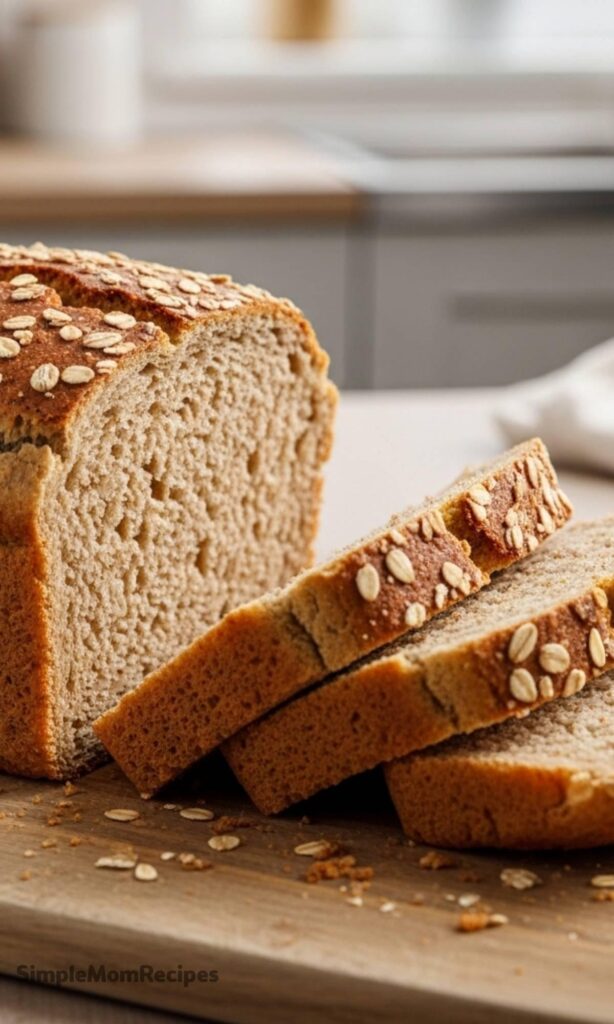
I bake it when I want my kitchen to feel warm and lived in, when I want something simple that doesn’t require planning three hours ahead.
The first time I made Irish brown bread, I expected it to be fussy. It wasn’t. No yeast. No waiting around. Just a bowl, a spoon, and that quiet satisfaction of pulling a real loaf of bread out of the oven.
It’s hearty, a little nutty, slightly sweet, and meant to be eaten with butter while still warm. That last part is not optional in my house.
I’ve made this on busy weekdays, lazy Sundays, and once at 9 p.m. because I wanted toast the next morning. It fits into real life, which is probably why I keep coming back to it.
Why I Keep Coming Back to This Bread
This isn’t the kind of bread that tries to be soft and fluffy. It has texture. It has personality. It actually tastes like grain, like oats, like something you made instead of something engineered in a factory.
What I love most is how forgiving it is. I’ve mixed it too quickly, baked it a little too long, even forgotten to sprinkle oats on top. It still turns out good. Not perfect. Just good in the way homemade food should be.
It’s also not sugary like a lot of quick breads. There’s just enough brown sugar to balance the whole wheat flavor, not enough to make it feel like dessert pretending to be breakfast.
And because there’s no yeast, I don’t have to plan my day around dough rising. I can decide I want bread and actually have bread within the hour.
Ingredients I Used for the Recipe
2 cups whole wheat flour - This gives the bread its hearty base and deep flavor.
1 cup all-purpose flour - Helps keep the loaf from getting too dense.
1 cup old-fashioned oats - Adds texture and that rustic chew you want in brown bread.
2 tablespoons wheat germ - Brings a subtle nuttiness and makes the bread feel wholesome.
2 tablespoons wheat bran - Adds structure and that classic grainy character.
2 tablespoons dark brown sugar - Just enough sweetness to round out the flavors.
1 teaspoon baking soda - This is what makes the bread rise since we are skipping yeast.
1 teaspoon salt - Keeps the flavor from falling flat.
2 tablespoons cold butter, cut into small pieces - Adds richness and keeps the crumb tender.
1 3/4 cups buttermilk - Brings everything together and gives the bread a slight tang.
How to make Easy Irish Brown Bread?
Make this recipe yours—just save it to your Pinterest board!"
Step 1 - Preheat and Prepare
I start by heating the oven to 375°F and greasing a standard loaf pan. Sometimes I line the bottom with parchment if I’m feeling cautious, especially if the pan has betrayed me before.
Step 2 - Mix the Dry Ingredients
In a big bowl, I whisk together the whole wheat flour, all-purpose flour, oats, wheat germ, wheat bran, brown sugar, baking soda, and salt. This is where the bread starts to smell nutty even before it’s baked.
Step 3 - Work in the Butter
I add the cold butter pieces and rub them into the dry mixture with my fingers. It should look a little like coarse crumbs. Not smooth. Not perfect. Rustic is exactly right here.
Step 4 - Add the Buttermilk
I pour in the buttermilk and stir with a spoon just until everything is combined. This is the part where I remind myself not to overmix. The dough should look shaggy, thick, and slightly messy.
Step 5 - Transfer to the Pan
I scrape the dough into the prepared pan and spread it gently. No pressing it down. No smoothing it like cake batter. This is bread, and it likes to look a little rough.
Step 6 - Bake Until It Smells Like You Did Something Right
The loaf bakes for about 40 to 45 minutes. The top gets golden brown, and the kitchen starts smelling like toasted grain and butter, which is my personal definition of success.
Step 7 - Let It Rest (Even Though You’ll Want to Cut It Immediately)
I let the bread cool in the pan for about 15 minutes, then move it to a rack. If you slice it too soon, it can crumble. I have tested this mistake multiple times.
How I Like to Serve It
This bread is at its best slightly warm with salted butter melting into it. The butter seeps into the crumb and suddenly you understand why simple food sticks around for generations.
In the morning, I toast a slice and add a drizzle of honey. In the afternoon, I eat it plain with tea. With soup, it turns into the kind of meal that makes you slow down whether you planned to or not.
It’s sturdy enough for spreads, but not so dense that it feels heavy. That balance is hard to get in quick breads, but this one nails it.
If there are leftovers, which is rare, they make incredible toast the next day. The edges get crisp while the inside stays tender.
Tips
This is the number one rule. Stir just until combined. Overworking it makes the bread tough, and this loaf is supposed to feel relaxed, not strained.
I’ve done this many times. Add a tablespoon of lemon juice or vinegar to regular milk, let it sit a few minutes, and it works beautifully.
Quick oats disappear into the dough and change the texture. The heartier oats are what give this bread its character.
I stick a toothpick right into the center. If it comes out clean, it’s done. No gadgets needed.
I know this is hard. I fail at this sometimes. But giving it time helps the crumb set so you get nice slices instead of a crumbly pile.
I wrap leftover slices tightly and freeze them. They toast straight from the freezer like they were made that morning.
What This Bread Taught Me About Baking
I used to think baking had to be precise and a little stressful. This bread changed that for me. It showed me that some of the best recipes are the ones that don’t demand perfection.
It’s the kind of loaf that invites you to trust your instincts. If the dough looks right, it probably is. If the top cracks a little while baking, that’s part of its charm.
Now I make it without overthinking. I don’t measure my oats obsessively. I don’t panic if the surface looks uneven. That relaxed approach somehow makes the bread turn out even better.
There’s something grounding about baking a loaf that people have been making in one form or another for ages. No trends. No shortcuts. Just real ingredients doing what they’re supposed to do.
And every time I slice into it, I get that same feeling. This is why we bake. Not for perfection, but for the quiet joy of pulling something warm and real from the oven.
Dense, delicious Irish Soda Bread made with whole wheat flour. No yeast needed so it's quick and easy to make. Tastes like the brown bread served in Irish pubs - slightly sweet, dense, and wonderful. Perfect for St. Patrick's Day or any day of the year!
Ingredients
1 ¾cups all purpose flour
1 ¾cups whole wheat flour
3tablespoons wheat bran (found in baking aisle)
3tablespoons wheat germ (found in baking aisle)
2tablespoons old-fashioned oats (not quick oats)
2tablespoons dark brown sugar (for deeper caramel flavor)
1teaspoon baking soda
½teaspoon salt
2tablespoons cold butter (cut into pieces)
2cups buttermilk (acidity helps tenderize)
Instructions
1
Preheat oven to 425°F (218°C). Butter a 9 x 5 x 3-inch loaf pan and set aside.
2
Combine all dry ingredients in a large bowl and mix to combine.
3
Add butter, and rub into dry mixture with fingers till it resembles cornmeal.
4
Stir in buttermilk and mix to form a soft dough being careful not to over-mix the batter.
Over-mixing activates gluten and creates a tougher texture
5
Place dough into loaf pan. Bake until a toothpick inserted into the center of the bread comes out clean, about 40 minutes.
Internal temperature should reach 200-210°F
6
Remove bread from the pan and cool on a rack for 15 minutes before slicing.
Nutrition Facts
Servings 12
Amount Per Serving
Calories178kcal
% Daily Value *
Total Fat3gg5%
Saturated Fat2gg10%
Trans Fat0gg
Cholesterol7mgmg3%
Sodium287mgmg12%
Total Carbohydrate32gg11%
Dietary Fiber3gg12%
Sugars4gg
Protein6gg12%
* Percent Daily Values are based on a 2,000 calorie diet. Your daily value may be higher or lower depending on your calorie needs.
Note
Buttermilk substitute: Add 1 tablespoon lemon juice or vinegar to a 1-cup measuring cup, fill with milk to the 1-cup mark, wait a few minutes until it curdles.
Dark brown sugar substitute: Mix 1 cup light brown sugar with 1 tablespoon molasses. For this recipe, use ⅓ cup light brown sugar with 1 teaspoon molasses.
Pan preparation: Line the bottom with parchment paper for easy release if worried about sticking.
Do not over-mix: Use a spoon, not a mixer, to avoid activating gluten and creating a tough texture.
Extra flair: Sprinkle oats on top of the dough before baking for added texture and appearance.
Keywords:
Irish brown bread, soda bread, quick bread, no yeast bread, St. Patrick's Day, whole wheat bread, Irish recipe
Kelsey Perez
Food & Lifestyle Blogger
I’m a London-based food writer, recipe developer, and home cook who has been passionate about cooking for over 15 years. What started as a way to recreate my mother’s traditional dishes turned into a lifelong love for experimenting with flavors, writing about food, and helping others feel more confident in the kitchen.