I didn’t grow up loving potlucks. I kind of dreaded them, honestly. There was always that one dish sitting there that made me question every life choice that led me to the table. Something jiggly, slightly suspicious, and definitely not something I wanted on my plate.
So I played it safe. I stuck to the dishes I recognized. And macaroni salad was always one of them. Creamy, simple, no surprises. It felt reliable in a room full of mystery casseroles.
Now I’m the one bringing it. And I don’t overthink it. I just make it the way I know works, the way I actually want to eat it.
Ingredients I Used for the Recipe
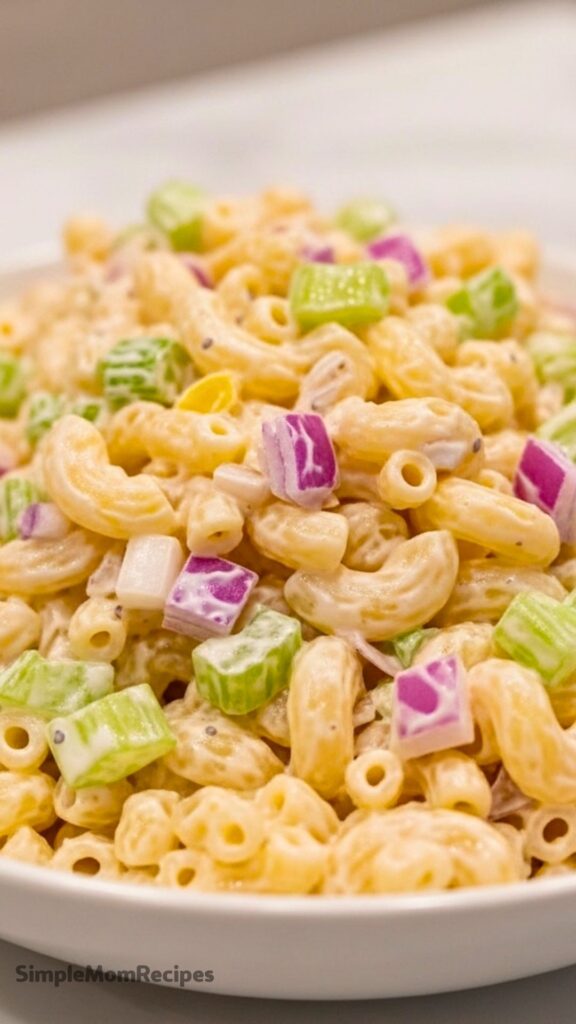
3 cups uncooked elbow macaroni - this is the base, soft and chewy, and it soaks up all that creamy dressing
1/2 medium red onion, finely diced (about 1 cup) - adds a little bite and color, but I tame it down before using
1 rib celery, finely diced (about 1/3 cup) - gives that fresh crunch that breaks up the creaminess
1/2 green bell pepper, finely diced (about 1/3 cup) - slightly bitter, slightly sweet, and it balances everything
1 cup mayonnaise - this is where the creaminess comes from, rich and smooth
1 tablespoon yellow mustard - adds that classic tang that makes it taste like, well, macaroni salad
3 tablespoons white vinegar - sharp and bright, keeps the whole thing from feeling too heavy
1/2 teaspoon black pepper - just enough to give it a little edge
2 teaspoons white sugar - not sweet exactly, just rounds out the flavors
1 teaspoon salt - pulls everything together
1/2 teaspoon granulated garlic - a subtle savory note without being overpowering
1/2 teaspoon onion powder - layers in flavor without adding more texture
How to make Classic Macaroni Salad?
Step 1 - Cook the pasta just right
I start by boiling the macaroni in salted water. Nothing fancy here. I just cook it until it’s tender but not mushy. That line is thinner than people admit.
Once it’s done, I drain it and immediately run cold water over it. I used to skip this step, and yeah, that was a mistake. The pasta kept cooking and turned soft in a bad way.
Step 2 - Cool it down completely
I don’t rush this part anymore. Warm pasta and mayo don’t get along the way you think they would. It just turns greasy and weird.
So I let the pasta sit until it’s fully cooled. Sometimes I spread it out a bit to speed things up if I’m impatient, which I usually am.
Step 3 - Soften the onion bite
I used to toss raw onion straight in. Big mistake. It overpowered everything and left this sharp aftertaste.
Now I soak the diced red onion in cool water for about five minutes, then drain it. It still has flavor, just not that aggressive punch.
Step 4 - Mix the dressing
In a separate bowl, I stir together the mayo, mustard, vinegar, sugar, salt, pepper, garlic, and onion powder. It looks simple, but this is where the magic sits.
I give it a taste right here. Always. Sometimes I add a tiny bit more vinegar if it feels too heavy, or a pinch of salt if it tastes flat.
Step 5 - Add the crunch
Into that dressing, I mix in the celery, bell pepper, and the drained onion. This step makes it feel like an actual salad and not just pasta with sauce.
I like everything diced pretty small. Big chunks just don’t work for me here. I want a little bit of everything in each bite.
Step 6 - Combine pasta and dressing
I add the cooled pasta to a big bowl and pour in about half of the dressing. Not all of it. I learned that the hard way.
The pasta soaks it up as it sits, so if you add everything now, it ends up dry later. Half now, half later is the move.
Step 7 - Let it rest
I cover it and stick it in the fridge for at least a couple of hours. Longer is even better.
This part used to annoy me because I wanted to eat it right away. But it honestly tastes so much better after it sits. The flavors settle in and everything just works.
Step 8 - Finish before serving
Right before serving, I add the rest of the dressing and toss it again. This brings back that creamy texture.
Then I taste it one last time. Sometimes it needs a little more salt or pepper. It always tells you if you pay attention.
What I’ve learned after making this too many times
I used to think macaroni salad was foolproof. Just mix stuff together and call it a day. Turns out, small details make a huge difference.
Like the pasta. Overcook it once and you’ll never forget that texture. It sticks in your memory in the worst way.
And the dressing. It’s easy to go too heavy on mayo and end up with something that feels thick and kind of dull. That little bit of vinegar and mustard saves it.
I also realized texture matters more than I expected. Without the crunch from celery and pepper, it feels flat. Almost boring. I didn’t think I’d care about that, but I do.
And honestly, I stopped trying to make it fancy. No extra add-ins just for the sake of it. No weird twists. This is one of those recipes that works because it’s simple.
Tips
Things I wish I knew earlier
Rinse the pasta with cold water - it stops cooking and keeps it from turning sticky
Don’t skip soaking the onion - it really does mellow out the flavor
Add dressing in two stages - this keeps the salad from drying out later
Let it chill before serving - the flavor gets better, not worse
Always taste before serving - it almost always needs a small adjustment
I’ll be honest, I still tweak it a little every time. Not in a big way, just small things depending on my mood. Maybe a little more mustard one day, a bit more vinegar the next.
But the core of it stays the same. And every time I bring it somewhere, it disappears faster than anything else on the table. Which still surprises me a little, even now.
Funny how the dish I once trusted the most as a kid turned into the one I rely on as an adult. Feels full circle in a weird way.
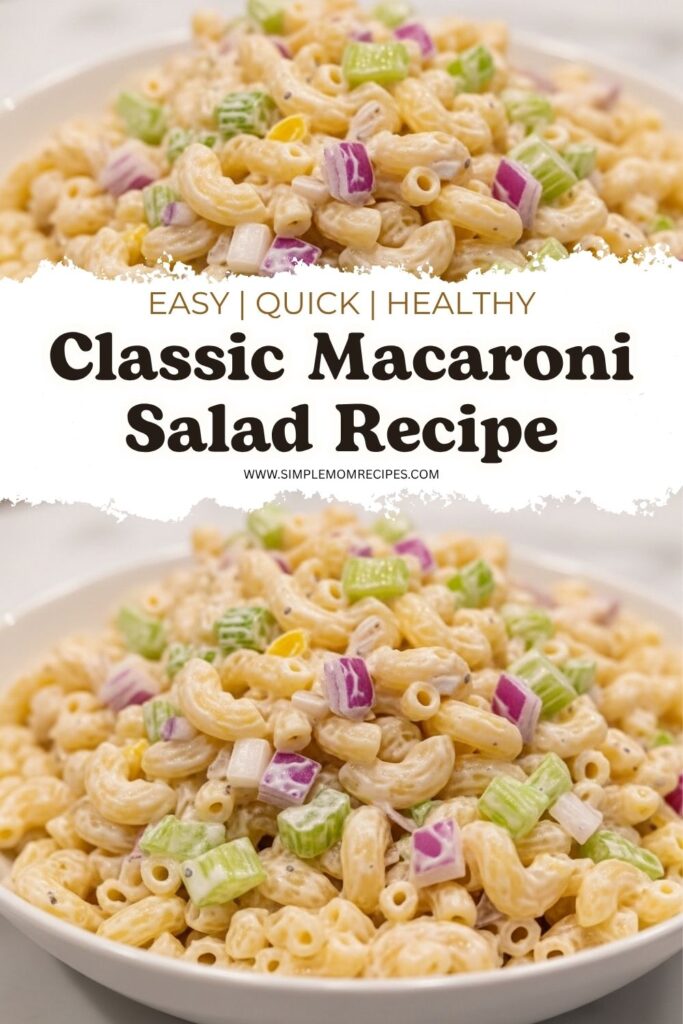
Enjoy the nostalgic flavors of Classic Macaroni Salad, a beloved potluck staple throughout the South. This easy and filling pasta side dish brings creamy texture with tangy and savory notes that everyone loves.
Ingredients
3cups uncooked elbow macaroni
1/2medium red onion (finely diced; about 1 cup)
1rib celery (finely diced; about 1/3 cup)
1/2green bell pepper(finely diced; about 1/3 cup)
1cup mayonnaise (Duke's preferred)
1tablespoon yellow mustard
3tablespoons white vinegar
1/2teaspoon black pepper
2teaspoons white sugar (granulated)
1teaspoon salt
1/2teaspoon granulated garlic (garlic powder can substitute)
1/2teaspoon onion powder
Instructions
1
Cook macaroni according to package directions using salted water. Drain and run cool water over the pasta until completely cooled.
2
In a separate bowl, stir together mayonnaise, mustard, vinegar, pepper, sugar, salt, granulated garlic, and onion powder. Add the diced red onion, celery, and bell pepper. Mix well.
3
In a large bowl, add the cooled pasta and about half of the dressing. Toss to coat evenly. Cover and refrigerate the pasta and remaining dressing for at least 2 hours.
4
When ready to serve, add the remaining dressing and toss to coat. Taste and add additional salt and pepper as needed.
Nutrition Facts
Servings 8
Amount Per Serving
Calories375kcal
% Daily Value *
Total Fat20g31%
Saturated Fat3g15%
Cholesterol15mg5%
Sodium680mg29%
Potassium120mg4%
Total Carbohydrate42g15%
Dietary Fiber2g8%
Sugars5g
Protein7g15%
Calcium 3 mg
Iron 8 mg
* Percent Daily Values are based on a 2,000 calorie diet. Your daily value may be higher or lower depending on your calorie needs.
Note
Shock the pasta with cold water immediately after cooking to stop the cooking process and remove excess starch so pasta doesn't stick together.
Soak your diced onions in cool water for about 5 minutes before adding to reduce the sharpness of the red onion flavor.
Add dressing in stages - add half the dressing first, refrigerate, then add the rest when ready to serve to prevent dry salad.
Taste test before serving flavors change as the salad rests. Add extra salt and pepper to taste right before serving.
Duke's mayonnaise is recommended but any quality mayonnaise works well in this recipe.
I’m a London-based food writer, recipe developer, and home cook who has been passionate about cooking for over 15 years. What started as a way to recreate my mother’s traditional dishes turned into a lifelong love for experimenting with flavors, writing about food, and helping others feel more confident in the kitchen.