

I used to walk right past cabbage at the store. It just felt… boring. Like something you buy when you don’t know what else to cook. Then one night I had half a head sitting in my fridge, already a little neglected, and I decided to cook it low and slow the same way I do onions.
That was the moment everything changed. The smell alone caught me off guard. Sweet, a little nutty, and way deeper than I expected. I kept tasting it straight from the pan, telling myself “just one more bite,” until I realized I had basically eaten dinner standing over the stove.
Now I make this caramelized cabbage all the time. Not because it’s fancy. Because it turns something simple into something I actually crave.
Ingredients I Used for the Recipe
- 1 tablespoon olive oil – this is what gets everything started and helps the cabbage soften and brown without sticking
- 1 medium head green cabbage, thinly sliced – the main ingredient, it shrinks a lot as it cooks and turns sweet
- 1 medium yellow onion, thinly sliced – adds extra sweetness and depth as it caramelizes
- ½ to ¾ teaspoon kosher salt – helps draw out moisture and brings out the natural flavor
- ⅛ to ¼ teaspoon crushed red pepper flakes – just a little heat to balance the sweetness
- 3 garlic cloves, minced – added at the end for that sharp, warm flavor
- ¼ to ½ teaspoon ground nutmeg – this one surprised me, but it adds a subtle warmth
- 2 tablespoons fresh parsley, chopped – brightens everything right at the end
How to make Caramelized Cabbage Recipe?
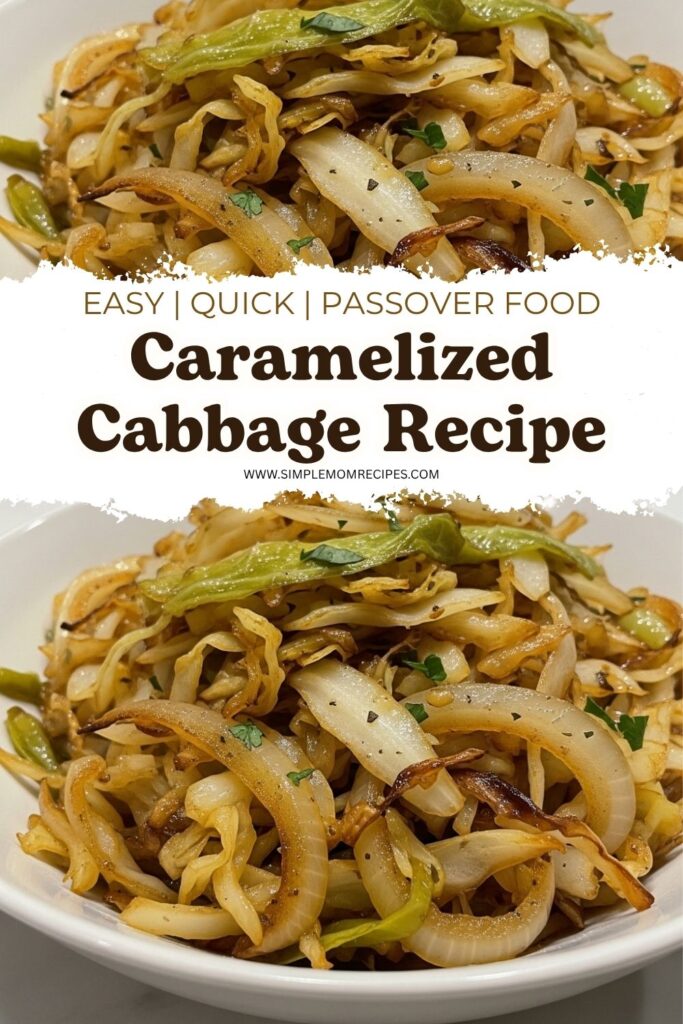
Step 1 – Slice everything thin
I start by cutting the cabbage in half, removing the core, and slicing it as thin as I can without stressing about perfection. Same with the onion. Thin slices matter here because they cook evenly and soften faster.
I used to rush this part and regret it later when I had uneven pieces. Now I just take a few extra minutes. It pays off.
Step 2 – Heat the oil properly
I heat the olive oil in a large pan over medium-high heat. Not low, not blasting hot either. Somewhere in the middle where things sizzle but don’t burn right away.
If the oil isn’t hot enough, everything just steams. I learned that the hard way. No color, no flavor.
Step 3 – Add cabbage and onion all at once
This is the chaotic part. The pan looks ridiculously full. Like there’s no way it’s all going to fit. But it does.
I toss everything with the oil using tongs at first. It feels like too much, but within a few minutes, it starts collapsing into itself.
Step 4 – Let it cook down and keep moving it
Once it softens a bit, I switch to a wooden spoon. I keep stirring pretty often, scraping the bottom where those browned bits start forming.
This is where the magic happens. The cabbage goes from pale and crunchy to soft, golden, and slightly sticky in spots. I usually lose track of time here because I’m just watching it change.
Step 5 – Season halfway through
After about 10 minutes, I add the salt and red pepper flakes. I don’t dump everything in at the start anymore. Adding it halfway feels like it builds flavor better.
Sometimes I taste it and adjust as I go. I don’t measure perfectly every time, and honestly, it still works out.
Step 6 – Cook until golden and slightly jammy
This takes around 20 minutes total, give or take. I look for a deep golden color, not just soft cabbage. That color means flavor.
If I rush this step, it just tastes like sautéed cabbage. Still fine, but not the same thing.
Step 7 – Add garlic and nutmeg at the end
I stir in the garlic and nutmeg right at the end and cook for about a minute. Garlic burns fast, so I don’t add it earlier.
The nutmeg is subtle. You don’t taste it directly, but if I skip it, something feels missing.
Step 8 – Finish with parsley and serve
I turn off the heat and mix in the parsley. That fresh hit at the end really lifts everything.
Then I serve it right away, usually straight from the pan because I’m impatient.
How I actually like to eat this
I’ve tried this a bunch of different ways, and honestly, it fits into almost anything. Some nights I just eat a bowl of it on its own. No shame.
It works great next to roasted meat, especially something simple like chicken or pork. The sweetness balances everything out. I’ve also piled it onto toast with a fried egg on top, which sounds random but is weirdly perfect.
One time I mixed leftovers into rice with a little yogurt on the side. That might have been one of my favorite lazy meals ever.
Tips
It always looks like too much cabbage at the start. Every single time. But it cooks down a lot. I remind myself of that instead of grabbing a second pan.
If it’s not turning golden, I know I need to be more patient. The browning is what makes this dish special.
I used to stir nonstop, thinking I was helping. Turns out, letting it sit for a minute or two helps it brown better. Now I stir, pause, then stir again.
I always taste before serving. Sometimes it needs a pinch more salt, sometimes not. I stopped trying to get it perfect on the first try.
I thought it would get soggy, but it actually holds up pretty well. I reheat it in a pan instead of the microwave when I can. It brings some of that texture back.
What surprised me the most about this recipe
I didn’t expect cabbage to taste this rich without adding anything heavy. No butter, no sugar, nothing complicated. Just time and heat.
It also made me rethink a lot of other vegetables. Now I catch myself wondering what else I’ve been underestimating. Because if cabbage can turn into this, there are probably a few more surprises waiting in my kitchen.
And yeah, I still buy cabbage more often than I ever thought I would. Not because I feel like I should. Just because I actually want to eat it.
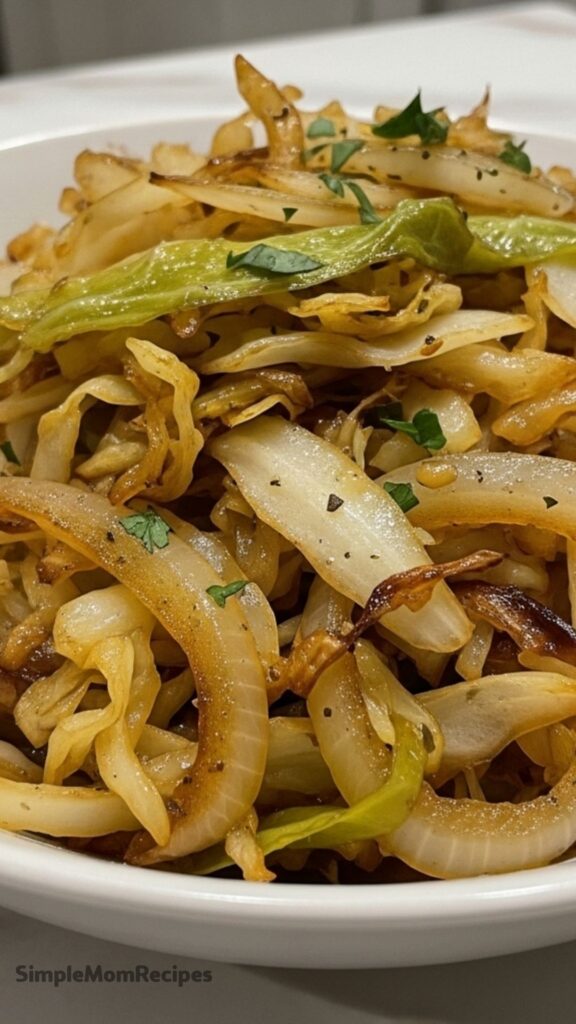
Caramelized Cabbage Recipe
Description
This easy caramelized cabbage and onions recipe is a spectacularly delicious side dish! Naturally sweet and savory with a delightfully rich flavor, this plant-based recipe capitalizes on the natural flavors of caramelized vegetables. Perfect for St. Patrick's Day or as an easy side dish any time of the year.
ingredients
Instructions
- Heat the olive oil over medium-high heat in a large nonstick or ceramic skillet or braiser pan with high sides. If you don't have a skillet with high sides, use a large saucepan.
- Add the sliced cabbage and onion. The skillet will be very full, but the cabbage will cook down quickly. Use tongs to toss the cabbage and onions with the olive oil.
- Once the mound of cabbage cooks down and becomes more manageable, use a wooden spoon or wooden spatula to stir the cabbage as it cooks, scraping any browned bits off the bottom of the pan.
- After about 10 minutes, stir in the kosher salt and red pepper flakes.
- Continue to cook, stirring very frequently and scraping browned bits off the bottom, until the vegetables are golden brown, about 20 minutes total.
- Add the garlic and nutmeg. Cook for 1 minute.
- Stir in the parsley. Serve warm.
Nutrition Facts
Servings 4
- Amount Per Serving
- Calories 80kcal
- % Daily Value *
- Total Fat 3.5gg6%
- Saturated Fat 0.5gg3%
- Trans Fat 0gg
- Cholesterol 0mgmg0%
- Sodium 300mgmg13%
- Potassium 300mgmg9%
- Total Carbohydrate 12gg4%
- Dietary Fiber 4gg16%
- Sugars 6gg
- Protein 2gg4%
- Calcium 4% mg
- Iron 4% mg
* Percent Daily Values are based on a 2,000 calorie diet. Your daily value may be higher or lower depending on your calorie needs.
Note
- Cabbage variety: Green, Savoy, or purple cabbage all work well. Avoid delicate varieties like napa cabbage as they cook faster and become limp.
- Add protein: For a heartier dish, stir in cooked bacon, pancetta, or chopped corned beef after caramelizing.
- Make it creamy: Dollop plain Greek yogurt or sour cream on top for a hint of creaminess.
- Leftovers: Store in an airtight container in the refrigerator for up to 4 days. Reheat gently in a skillet over medium-low heat.
