
I used to think mimosas were only for fancy brunches or holidays where someone irons a tablecloth. Turns out I was very wrong. The first time I made them at home, it was a random Sunday, still in pajamas, kitchen slightly messy, and I just wanted something bright and cheerful.
That first sip surprised me. Light, bubbly, citrusy, not too sweet, not too strong. It felt like one of those recipes that doesn’t try too hard but still delivers every single time.
Now I make mimosas for birthdays, lazy mornings, when friends come over, or honestly when I just want to make scrambled eggs feel a little more exciting. They are ridiculously easy, but there are a few small things that make the difference between “fine” and “wow, that’s good.”
What Makes a Classic Mimosa Actually Work
A mimosa is only two main ingredients, which means there’s nowhere to hide. If one thing is off, you taste it immediately. I learned that the hard way after using warm sparkling wine once. Never again.
The magic is in the balance. Equal parts sparkling wine and orange juice. That’s it. Not complicated. Not trendy. Just a clean, perfect ratio that keeps the drink refreshing instead of sugary or overly boozy.
I also used to pour the juice first. Big mistake. It foams up, makes a sticky overflow, and suddenly you’re wiping down the counter before you’ve even taken a sip. Pouring the sparkling wine first fixes everything. It mixes naturally and stays crisp.
Another thing I didn’t expect was how much fresh orange juice matters. The flavor is brighter, slightly tart, and doesn’t weigh the drink down. Store-bought works in a pinch, but fresh juice just tastes alive.
Ingredients I Used for the Recipe
- 1 bottle (750ml) chilled dry sparkling wine – This is the bubbly base. I look for something labeled “dry” or “brut” so the drink stays balanced and not sugary. It doesn’t need to be expensive, just something I’d enjoy drinking on its own.
- 3 cups chilled orange juice – Freshly squeezed if possible. This gives the mimosa its bright citrus flavor and keeps it tasting clean and refreshing.
- Optional: 1/2 cup orange liqueur like Grand Marnier – I add a splash sometimes when I want a slightly deeper, more celebratory flavor. Totally optional but fun.
- 6 to 8 fresh oranges (if squeezing juice) – These are what I use to make about 3 cups of juice. Juicy oranges make a huge difference.
How to make The Best Classic Mimosa?

Step 1 – Chill Everything First
This step matters more than people think. I chill the sparkling wine for several hours and make sure the orange juice is cold too. A mimosa should feel crisp, not lukewarm and flat.
If I forget to chill something, I pause and fix that before continuing. Warm ingredients ruin the whole vibe.
Step 2 – Juice the Oranges
I cut the oranges in half and squeeze them fresh. Sometimes I strain the juice if there’s a lot of pulp because I like a smoother drink, especially when serving guests.
When I’m feeling lazy, I skip the straining. It still tastes great.
Step 3 – Pour the Sparkling Wine First
I fill each champagne flute about halfway with the chilled sparkling wine. Always first. This prevents overflow and helps the drink mix naturally without stirring.
Also, no aggressive pouring. Slow and gentle keeps the bubbles intact.
Step 4 – Top with Orange Juice
Next I add the orange juice until the glass is nearly full. The classic ratio is equal parts, and sticking to that keeps everything balanced.
The juice settles into the wine and blends on its own. No spoon needed.
Step 5 – Add Optional Liqueur If Using
If I want something slightly richer, I add about a tablespoon of orange liqueur to the glass before the other ingredients. It gives a subtle depth without overpowering the drink.
I don’t always do this. Usually only when it’s a special occasion or I want to pretend it is.
Step 6 – Serve Immediately
Mimosas are not meant to sit around. I serve them right away while they’re lively and bubbly. Letting them sit too long flattens the sparkle, and that’s kind of the whole point.
Little Ways I Change It Depending on the Day
Even though I love the classic version, sometimes I tweak things just slightly based on what I have in the kitchen. Not enough to call it a new recipe, just enough to make it feel different.
If I find really good strawberries, I’ll slice a few into the glass. If I have blood oranges, I use those instead and the color turns this gorgeous deep sunset shade.
Once I tried grapefruit juice because that’s all I had. I expected it to be weird, but it was actually sharp and refreshing in a totally different way. Now I do that on purpose sometimes.
For gatherings, I set out juices and let people mix their own. It becomes less about perfection and more about everyone having fun experimenting.
And yes, I’ve made a non-alcoholic version with sparkling water when needed. Still festive. Still works.
Tips
You don’t need the most expensive bottle, but if you wouldn’t drink it by itself, don’t use it here. The flavor really comes through.
I didn’t believe this at first. I thought juice was juice. It’s not. Fresh-squeezed tastes lighter, brighter, and less sugary.
It’s tempting to eyeball it, but equal parts really is the sweet spot. Too much juice makes it taste like breakfast. Too much wine makes it feel heavy.
This saves you from sticky counters and overflowing foam. Also helps the drink mix naturally.
Warm mimosa equals sad mimosa. I even chill the glasses sometimes if I’m feeling extra.
Don’t Overthink It
This is supposed to be easy. Some of my best batches were made while chatting, half distracted, not measuring perfectly. It’s a forgiving drink.
The beauty of a classic mimosa is that it doesn’t demand precision or skill. Just good ingredients, a little attention, and the willingness to slow down and enjoy it. Every time I make one, it feels like pressing pause for a minute, which might be the real reason I keep coming back to it.
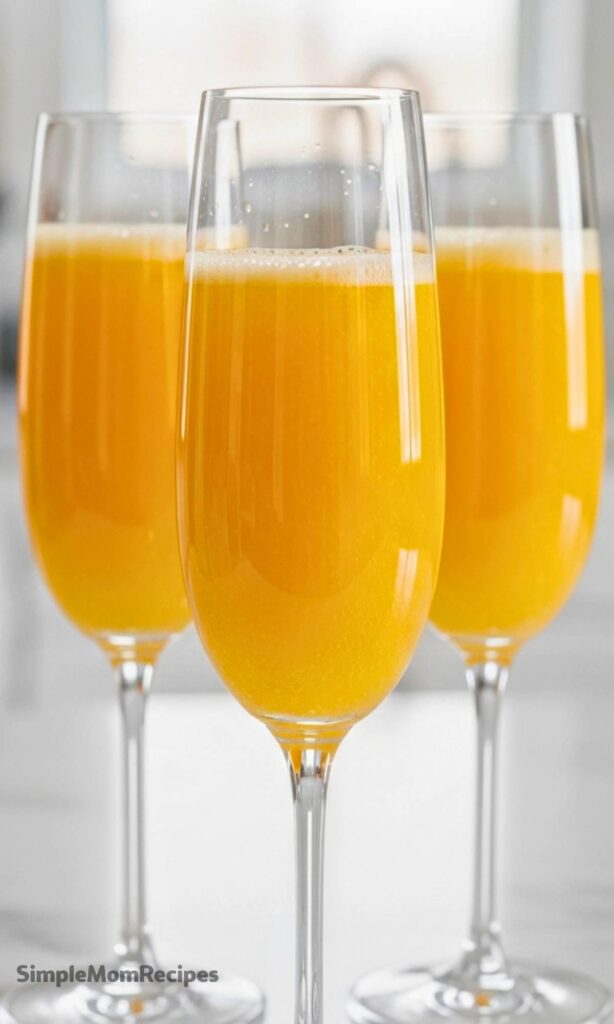
The Best Classic Mimosa Recipe
Description
This is our favorite mimosa recipe, and it's so easy to make. These are light, bubbly, refreshing, and perfect for brunch or any celebration. The classic ratio is equal parts sparkling wine and orange juice, creating a perfectly balanced cocktail that's not too sweet and not too boozy.
ingredients
Instructions
- Chill both the sparkling wine and orange juice thoroughly before making the cocktails.
- Fill eight champagne flutes half full with chilled sparkling wine.
- Top each flute with orange juice, filling to the top.Pour wine first, then juice to prevent sticky mess
- For Grand Mimosas, add one tablespoon of Grand Marnier to each glass before adding the wine and orange juice.Optional variation
- Serve immediately while cold and bubbly.
Nutrition Facts
Servings 8
- Amount Per Serving
- Calories 156kcal
- % Daily Value *
- Total Fat 0 gg0%
- Saturated Fat 0 gg0%
- Trans Fat 0 gg
- Cholesterol 0 mgmg0%
- Sodium 10 mgmg1%
- Potassium 200 mgmg6%
- Total Carbohydrate 15 gg5%
- Dietary Fiber 0 gg0%
- Sugars 9 gg
- Protein 1 gg2%
- Calcium 20 mg mg
- Iron 0.5 mg mg
* Percent Daily Values are based on a 2,000 calorie diet. Your daily value may be higher or lower depending on your calorie needs.
Note
- Use dry sparkling wine: Look for "dry" or "brut" on the bottle for the best taste, not sweet.
- Fresh orange juice is best: Freshly squeezed orange juice tastes fresher, lighter, and more delicate than store-bought.
- Make ahead for parties: Keep both ingredients thoroughly chilled and pour as guests arrive, or make a pitcher with 1 bottle sparkling wine and 3 cups orange juice.
- Try variations: Substitute blood orange or grapefruit juice, add fruit purée, or make it a mocktail with sparkling water.
