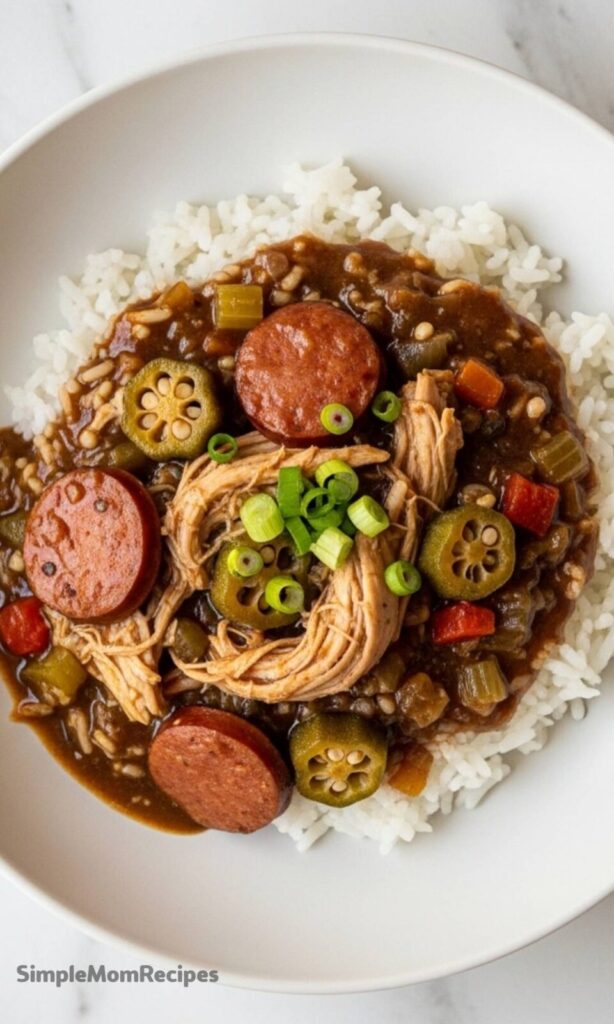
There's something special about a pot of gumbo simmering on the stove. It’s not just dinner, it’s a whole experience, filling the kitchen with smells that tell a story.
For me, making gumbo is a weekend ritual. It asks for a little patience, but it gives back so much more in flavor and comfort.
This recipe walks you through the real deal, from making your own stock to nursing a roux to that perfect deep color. Let’s get started.
Why The Process Matters
Gumbo isn't a race. The slow-cooked elements are what build its incredible depth. You can't rush a good roux or skip caramelizing those onions.
Think of it as building layers of flavor, one careful step at a time. Each stage adds something important to the final bowl.
Embrace the pace. Put on some music, and enjoy the process. The result is absolutely worth every minute.
Ingredients Needed for the Recipe
Whole Chicken: This is our two-for-one ingredient, providing both tender meat and a rich, homemade stock base.
Andouille Sausage: Its smoky, spicy kick is essential. It also adds a great texture to the finished gumbo.
Vegetable Oil: The traditional fat for making our roux, as it has a neutral flavor and can handle the long cooking time.
All-Purpose Flour: Combined with the oil to create the roux, which thickens the gumbo and gives it a nutty, toasty foundation.
The "Trinity" (Onions, Celery, Green & Red Bell Pepper): The heart of so many Cajun dishes. It creates the aromatic base.
Garlic: Because a little garlic makes everything better. We add it right after the trinity.
Cajun Seasoning: Use a good store-bought blend or make your own. This is where a lot of the characteristic flavor comes from.
Bay Leaves: They add a subtle, herbal background note that just belongs in a stew like this.
Okra: It's a classic gumbo thickener and adds a unique, slightly grassy flavor. Fresh or frozen works perfectly.
Salt & Pepper: For final seasoning adjustments at the very end.
How to make Authentic Cajun Gumbo?
Step 1 - Building the Flavor Foundation
First, we make the chicken stock. Place the whole chicken in your largest pot and cover it with a gallon of water.
Let it simmer gently for about an hour and a half. You'll know it's ready when the meat is falling-off-the-bone tender.
While that simmers, start on the sausage and vegetables. In another large, heavy-bottomed pot, sear the andouille slices in a bit of oil.
We just want good color on them. Take the sausage out and set it aside, leaving the flavorful oil in the pot.
Step 2 - The Low and Slow Onion
Here’s a tip I swear by. Add your diced onions to that same pot, but turn the heat way down.
Let them cook slowly, stirring now and then, for a good 45 minutes. They should become deeply golden and sweet.
This caramelization is a flavor secret. It adds a richness you just can't get from a quick sauté.
Step 3 - Finishing the Vegetable Base
Once the onions are perfect, turn the heat up to medium. Add the diced celery and bell peppers.
Cook them until they soften and pick up a little color, about six to eight minutes. Then, stir in the minced garlic.
Cook it just until it smells amazing, which is less than a minute. Scoop this entire vegetable mixture out into a bowl.
Step 4 - Prepping the Chicken
Your stock should be done by now. Carefully pull the whole chicken from the pot and onto a plate.
Let it cool just enough so you can handle it. Strain the beautiful golden stock through a fine mesh sieve.
Pour it back into a pot and keep it warm on a low burner. Now, pull all the meat from the chicken.
Discard the skin and bones, chop the meat roughly, and set it aside with the seared sausage.
Step 5 - The Heart of the Gumbo: The Roux
Wipe out the pot you cooked the veggies in. Add the three-quarters cup of vegetable oil and heat it over medium-low.
Whisk in the flour until it's smooth. Now, the commitment begins. You must stir it almost constantly.
It will slowly transform from pale, to peanut butter, to a milk chocolate color, and finally to a dark copper penny.
This dark roux stage takes about 30 minutes. It's the soul of your gumbo, so don't walk away from it.
Step 6 - Bringing It All Together
When your roux is that perfect dark reddish-brown, immediately add back the cooked vegetable mixture.
This will stop the roux from cooking further. Stir it all together-it will be very thick.
Add the Cajun seasoning and stir for another minute to wake up the spices. Now, ladle in a few cups of the warm stock.
Whisk vigorously until it's completely smooth and thick like gravy. This helps prevent lumps.
Step 7 - The Final Simmer
You can now pour in the rest of the stock, along with the reserved chicken, sausage, and the sliced okra.
Drop in the bay leaves. Give it a good stir and bring the whole pot to a boil.
Once boiling, immediately reduce the heat to a low simmer. Cover the pot and let it cook peacefully for one hour.
The flavors will marry, and the gumbo will thicken to that perfect, spoon-coating consistency.
Step 8 - Serving Your Gumbo
After the hour, taste it. This is when you adjust the seasoning with salt and pepper.
Remember, the andouille and Cajun seasoning are salty, so go easy at first. Ladle the gumbo over hot, fluffy white rice.
A sprinkle of gumbo filé powder or some sliced green onions on top is a lovely finishing touch.
Serving Ideas & Traditions
While rice is the classic partner, don't be afraid to explore other traditions. In some Louisiana households, a scoop of creamy potato salad is served right alongside, or even plopped right into the bowl.
It might sound unusual, but the cool, creamy salad with the spicy, hot gumbo is a fantastic contrast. Hard-boiled eggs are another occasional addition, simmered in the gumbo during the last hour.
They soak up all that amazing flavor. For a simple side, buttery cornbread or a crisp green salad works beautifully.
Tips
No andouille sausage? A good quality smoked sausage will work in a pinch. The smokiness is key.
When making your chicken stock, toss in any leftover onion skins, celery tops, or herb stems for extra flavor. Just avoid bell pepper scraps as they can make the stock bitter.
If you have the time, let the finished gumbo simmer for an extra 30 to 60 minutes. It only gets better.
Gumbo is famously better the next day. The flavors continue to develop and deepen overnight in the fridge.
Stir your roux with a flat-edged wooden spatula or whisk. It helps you scrape every corner of the pot to prevent burning.
Storing Your Gumbo
Gumbo stores and freezes exceptionally well. Let it cool completely before transferring it to airtight containers.
It will keep in the refrigerator for 4 to 5 days. For longer storage, freeze it for up to 6 months.
To reheat, thaw it overnight in the fridge if frozen. Warm it gently in a pot over low heat, stirring occasionally.
You may need to add a splash of water or broth if it has thickened too much. Give it a final taste and adjust the seasoning before serving again.
You'll love this delicious authentic Gumbo recipe jam-packed with chicken, andouille sausage, and okra in a tasty homemade chicken stock. The flavors in this dish are nothing short of incredible—a true Louisiana classic that’s rich, hearty, and deeply satisfying.
ingredients
1pound whole chicken
1gallon water
2large yellow onions, peeled and small diced
1.5pounds andouille sausage, cut into ¼” thick slices
0.75cup vegetable oil (plus 3 tablespoons for searing sausage)
4ribs celery, small diced
1 red bell pepper, seeded and small diced
1 green bell pepper, seeded and small diced
5cloves garlic, finely minced
1cup all-purpose flour
2tablespoons Cajun seasoning
2 bay leaves
1pound fresh or frozen okra, thick sliced
Instructions
1
Add the whole chicken to a large pot, cover with 1 gallon of water, and simmer on low to medium heat for 75–90 minutes or until fully cooked.
2
Meanwhile, heat 3 tablespoons of vegetable oil in another large pot over medium heat. Sear the andouille sausage slices for 5–6 minutes until browned. Set aside.
3
In the same pot, add the diced onions and cook over low heat for 45–60 minutes until deeply caramelized.
4
Add celery, red and green bell peppers. Sauté over medium heat for 6–8 minutes until tender and slightly browned.
5
Stir in garlic and cook for 45–60 seconds until fragrant. Transfer vegetables to a bowl and set aside.
6
Remove cooked chicken from its pot. Strain the stock through a fine-mesh strainer and keep warm over low heat.
7
Remove skin from chicken and shred meat from bones. Roughly chop and set aside.
8
Return the vegetable pot to the stove. Add ¾ cup vegetable oil and heat 2–3 minutes over medium-low heat.
9
Slowly whisk in flour to make a roux. Stir constantly for about 30 minutes until it reaches a dark penny color.
10
Add back the cooked vegetables, stir in Cajun seasoning, then gradually mix in 2–3 ladles of warm chicken stock until smooth and creamy.
11
Pour in all remaining chicken stock, add shredded chicken, seared sausage, bay leaves, and okra. Stir well.
12
Bring to a boil over high heat, then reduce to low-medium, cover, and simmer for 1 hour.
13
Season with salt and pepper to taste. Serve hot over rice, optionally with potato salad or gumbo file on the side.
Nutrition Facts
Servings 10
Amount Per Serving
Calories752kcal
% Daily Value *
Total Fat49g76%
Saturated Fat14g70%
Cholesterol125mg42%
Sodium1480mg62%
Potassium920mg27%
Total Carbohydrate46g16%
Dietary Fiber6g24%
Sugars8g
Protein33g66%
Calcium 8 mg
Iron 20 mg
* Percent Daily Values are based on a 2,000 calorie diet. Your daily value may be higher or lower depending on your calorie needs.
Note
Make-Ahead: Gumbo tastes even better the next day! Prepare up to 1 day ahead and reheat gently.
Storage: Keeps refrigerated for 4–5 days or frozen for up to 6 months.
Sausage Substitute: If andouille is unavailable, use any good-quality smoked sausage.
For extra depth: Simmer gumbo uncovered for an additional hour to concentrate flavors.
I’m a London-based food writer, recipe developer, and home cook who has been passionate about cooking for over 15 years. What started as a way to recreate my mother’s traditional dishes turned into a lifelong love for experimenting with flavors, writing about food, and helping others feel more confident in the kitchen.